Questions to Ask a Roofer Before Hiring Them
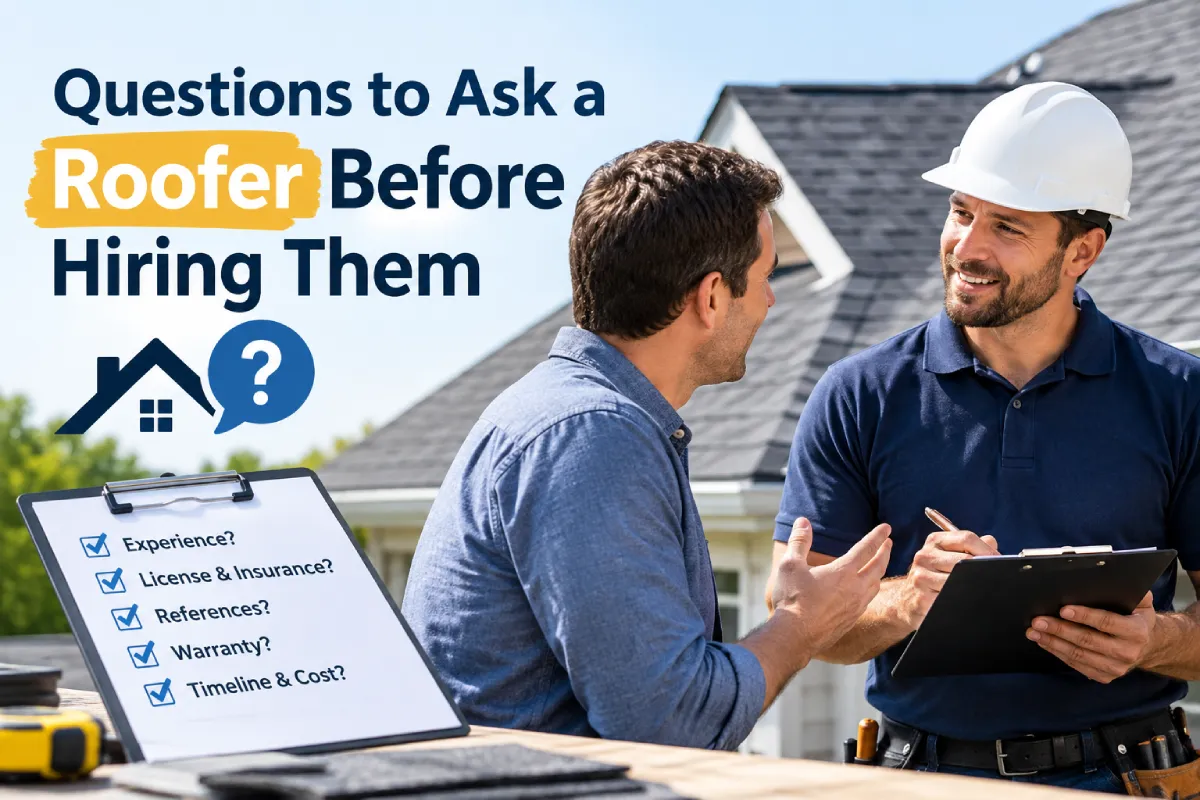
Hiring a roofing contractor is a major decision, and like any major decision, it benefits from good information. You would not buy a car without asking questions about its history, features, and warranty. You should not hire a roofer without asking questions that help you understand who they are, how they work, and what you can expect from the experience.
The right questions reveal more than just facts — they reveal professionalism, transparency, and the contractor’s willingness to engage with you as a partner in the project. A good contractor will welcome your questions and answer them thoroughly. A contractor who dismisses your questions, gives evasive answers, or pressures you to skip the conversation and just sign the contract is telling you something important about how they operate.
This article covers the essential questions to ask a roofing contractor before hiring them, organized by topic. You do not need to ask every single question on this list during a single conversation — but you should feel confident that you have clear, honest answers to the ones that matter most for your situation.
Questions About Their Business and Credentials
These questions establish the contractor’s legitimacy, experience, and stability as a business.
How long have you been in business?
Experience matters in roofing. A contractor who has been installing roofs for many years has seen a wide range of situations, solved a wide range of problems, and built a track record you can evaluate. A brand-new company is not necessarily bad, but an established company gives you more data points to assess.
Are you licensed to perform roofing work in this area?
This is a non-negotiable question. Ask for their license number and verify it independently with your state or local licensing authority. A legitimate contractor will not hesitate to provide this information.
Do you carry general liability insurance and workers’ compensation insurance?
Ask for certificates of insurance and verify them. This protects you from liability if something goes wrong during the project. If the contractor cannot provide proof of insurance, walk away.
What is your physical business address?
A legitimate contractor has a verifiable business location. This gives you confidence that they are a real, established business and that you know where to find them if you need to reach them after the project.
Do you have references from recent projects I can contact?
A contractor who is proud of their work will happily provide references. Contact those references and ask about their experience. Ideally, ask for references from projects similar to yours — similar roof size, material, and scope.
Questions About the Work Itself
These questions help you understand what the contractor proposes to do and how they plan to do it.
Will you perform a thorough inspection of my roof before providing an estimate?
A responsible contractor will inspect your roof — either by climbing onto it or using technology such as drones — before giving you an estimate. An estimate given without an inspection is a guess, not a quote. Be cautious of contractors who quote a price based solely on satellite imagery or a look from the street.
What is the current condition of my roof, and do I need a repair or a full replacement?
A trustworthy contractor will give you an honest assessment. If a repair is sufficient, they should tell you that — even though a replacement would be more profitable for them. If a replacement is needed, they should explain why in terms you understand.
What specific materials do you recommend for my project, and why?
The contractor should be able to explain the materials they recommend — the brand, the product line, the expected performance, and the warranty — and why those materials are the right choice for your home, climate, and budget.
Will you remove the existing roof, or will you install over it?
Full tear-off is the standard practice and the recommended approach for most situations. An overlay — installing new shingles over old ones — is cheaper but hides problems, adds weight, and may void material warranties. A contractor who recommends an overlay as the default should explain why, and you should understand the trade-offs.
How will you handle the flashing around my chimney, walls, and other penetrations?
Flashing is one of the most critical elements of a watertight roof. The contractor should describe their flashing approach in detail — new flashing at every penetration, not reuse of old flashing. This is an area where shortcuts are common, so the answer to this question tells you a lot about the contractor’s attention to quality.
What underlayment and ice and water shield will you use?
The underlayment is the waterproof barrier under your shingles. Ask what product they use and where ice and water shield will be applied. A quality contractor uses synthetic underlayment and applies ice and water shield in all code-required and vulnerable areas.
What ventilation upgrades will be included?
Proper ventilation is critical to the performance and longevity of your new roof. Ask what the contractor’s plan is for attic ventilation — ridge vents, soffit vents, or other components — and how they will ensure balanced airflow.
What is your process if you discover damaged decking or structural issues during the project?
This is one of the most important questions you can ask. The contractor should have a clear, pre-agreed process for handling unexpected damage. Will they stop and consult with you before proceeding? Will they charge a pre-agreed rate for decking replacement? How will they document the damage so you can see it?
Will your own employees do the work, or subcontractors?
Ask who will actually be on your roof and who will supervise them. Subcontracting is common and not a problem in itself, but the subcontractors should carry their own workers’ compensation and liability insurance, and someone from the company you hired should be responsible for the job day to day.
Who will pull the permit?
In most places, the contractor should obtain the permit and arrange the inspections. Be wary of a suggestion that you pull it yourself as the homeowner, which can leave you responsible for code compliance. Our guide to roof replacement permits explains when one is needed.
Questions About the Project Timeline and Logistics
These questions help you understand what to expect in terms of scheduling, duration, and the logistics of the project.
When can you start?
A contractor’s availability tells you something about their workload. A contractor who can start tomorrow might be desperate for work — which could be a red flag — or might have just had a cancellation. A contractor who is booked months out is in high demand, which is a good sign, but may not fit your timeline.
How long will the project take?
The contractor should give you a realistic estimate of the project duration based on your specific roof. Ask about factors that could extend the timeline, such as weather delays.
What happens if there are weather delays during the project?
Roofing cannot be done in the rain. The contractor should have a clear plan for managing weather interruptions — protecting exposed areas, communicating with you about schedule changes, and resuming work promptly when conditions improve.
What time will the crew start and finish each day?
Knowing the crew’s schedule helps you plan your days during the project. Most crews start early in the morning and work until mid-to-late afternoon.
How will you protect my property during the project?
Ask about measures to protect your landscaping, driveway, siding, and other property during the tear-off and installation process. A quality contractor takes property protection seriously — using tarps, plywood, and careful material staging to minimize impact on your home and yard.
What does your cleanup process include?
Cleanup should include removal of all debris, sweeping the grounds with magnetic nail rollers to pick up fallen nails, clearing gutters, and hauling away the dumpster. Ask about their cleanup standards and what the site will look like when they are done.
Questions About Warranties and After-Service
These questions ensure you understand the protection you are getting and what happens if something goes wrong after the project is complete.
What manufacturer warranty applies to the materials being used?
The contractor should specify the warranty coverage for the shingles or other roofing materials, including the duration, what is covered, and whether the warranty is prorated.
What is your workmanship warranty?
The workmanship warranty covers the installation. Ask how long it lasts, what it covers, and how warranty claims are handled. A longer workmanship warranty reflects the contractor’s confidence in their work.
Is there an enhanced or extended warranty available through the manufacturer?
Some manufacturers offer enhanced warranty programs that cover both materials and labor for extended periods. These programs typically require the contractor to be certified by the manufacturer and to install a complete system of the manufacturer’s products. Ask if this option is available and what the additional cost might be.
How do I file a warranty claim if I have a problem after the project?
The contractor should have a clear process for handling warranty claims — a phone number to call, a response time commitment, and a process for inspection and repair. If the contractor does not have a clear answer to this question, it may indicate that warranty service is not a priority for them.
Will you be available for maintenance or minor repairs in the future?
A good contractor views the project as the beginning of a relationship, not a one-time transaction. A contractor who offers ongoing maintenance, inspection services, and minor repairs is more likely to be around and responsive if you need help down the road.
Questions About Pricing and Payment
These questions ensure you understand the financial aspects of the project and that there are no surprises.
Is this estimate a fixed price or an estimate subject to change?
Understand whether the number you are given is a firm, fixed price or an estimate that could change based on circumstances. A fixed-price contract provides more certainty, but even fixed-price contracts should include a clear process for handling changes in scope.
What is included in the price, and what is not?
Ask the contractor to walk you through the estimate line by line. What does the price cover — tear-off, disposal, materials, labor, flashing, ventilation, permits, cleanup? What items, if any, are excluded and would be additional?
How do you handle change orders if the scope of work changes?
If additional work is needed — decking repair, for example — the contractor should have a clear process for notifying you, getting your approval, and pricing the additional work before proceeding.
Never agree to this
What is your payment schedule?
The payment schedule should be reasonable and tied to project milestones. Avoid contractors who demand full payment upfront. A typical structure includes a deposit at signing, a progress payment, and the final payment upon completion and your satisfaction.
Will you provide lien waivers as I pay?
Lien waivers from the contractor, and from major suppliers and subcontractors where they apply, confirm that the people who supplied labor and materials have been paid, so no one can place a lien on your home over money the contractor owed them. Our guide to what should be in a roofing contract covers how they work.
Do you offer any financing options?
Some roofing contractors offer financing for larger projects. If you are considering financing, understand the terms — interest rate, repayment period, and total cost — before committing.
Questions That Reveal Character
Beyond the factual questions, there are questions that reveal a contractor’s character, integrity, and approach to their work.
Why should I choose your company over your competitors?
This open-ended question allows the contractor to articulate their value proposition. A confident, honest contractor will talk about their experience, their process, their crew quality, and their commitment to customer satisfaction — not just their low price.
What is the most common mistake homeowners make when replacing their roof?
A knowledgeable contractor will have insight into common pitfalls — choosing the cheapest bid, skipping ventilation upgrades, ignoring flashing, or delaying replacement too long. Their answer reveals their expertise and their willingness to educate you rather than just sell you.
Have you ever had a warranty claim or a callback on a project, and how did you handle it?
Every contractor has had a callback at some point. What matters is how they responded. A contractor who owns their mistakes, addresses them promptly, and learns from them is more trustworthy than one who claims they have never had a single issue.
Can I visit a current project site to see your crew in action?
A contractor who is confident in their work will welcome this request. Seeing a crew in action — how they work, how they interact, how clean the site is — tells you more than any estimate or reference can.
How to Use These Questions?
You do not need to treat these questions as a formal interrogation. Most of them can be woven naturally into a conversation during the estimate visit or a follow-up phone call. The goal is not to overwhelm the contractor with a checklist but to engage in a meaningful dialogue that gives you the information you need to make a confident decision.
Take notes during the conversation. Write down the answers so you can compare them across contractors. If a contractor’s answer raises a concern, follow up on it. If a contractor gives you an answer that does not match what you have learned from your own research, ask for clarification.
The way a contractor responds to your questions is as informative as the answers themselves. A contractor who is patient, thorough, transparent, and genuinely helpful during the pre-hiring conversation is likely to bring those same qualities to the project. A contractor who is impatient, vague, dismissive, or evasive is showing you who they are — believe them.
Conclusion
The questions you ask before hiring a roofer are your best tool for separating the professionals from the pretenders. They help you understand what the contractor proposes to do, how they plan to do it, what protections you have, and who you are entrusting with one of your home’s most important systems.
A good contractor will appreciate your questions because they indicate that you are an informed, engaged homeowner — exactly the kind of client they want to work with. So ask your questions, listen carefully to the answers, and choose a contractor who earns your trust through their knowledge, transparency, and professionalism.