How Often Should You Inspect Your Roof?

Most homeowners do not think about their roof until something goes wrong. A stain appears on the ceiling, a shingle blows off in a storm, or a leak develops during heavy rain — and suddenly the roof demands urgent attention. By that point, the damage is already done, and the repair is almost always more expensive than it needed to be.
Regular roof inspections are the simplest way to stay ahead of problems. But how often should you actually inspect your roof, and what should you be looking for?
The answer depends on several factors, including the age of your roof, the climate you live in, and what has happened to it recently.
The General Recommendation
The National Roofing Contractors Association recommends inspecting a roof at least twice a year, and that is a sensible baseline for most homes. The best times are in spring and autumn. A spring inspection catches any damage that occurred during winter — from ice, snow, freeze-thaw cycles, or heavy storms. An autumn inspection prepares you for the colder months ahead by identifying vulnerabilities before winter weather has a chance to exploit them.
Twice a year is enough for a roof that is in good condition and relatively new. However, this baseline assumes normal weather and a roof that has no known issues. Several situations call for more frequent attention.
After Severe Weather Events
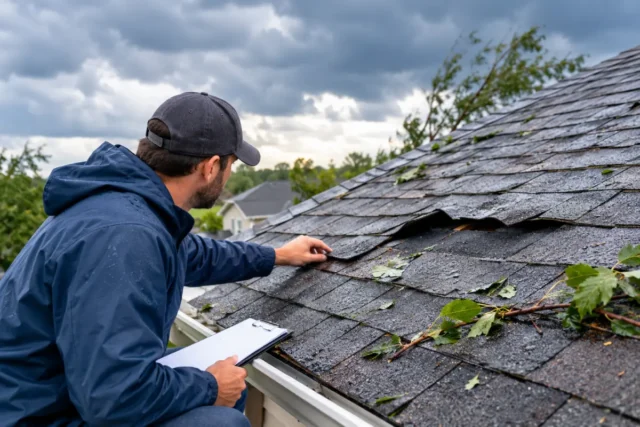
Any time your area experiences a major storm, high winds, hail, or heavy snowfall, your roof deserves an inspection regardless of when you last checked it. Storm damage does not wait for your maintenance schedule.
High winds can lift shingles, break their adhesive seals, or tear them off entirely. Hail can crack shingles, dent metal components, and dislodge granules from asphalt surfaces. Heavy snow adds significant weight, and on a house losing heat into the attic it feeds ice dams that force water under the roofing material.
After a severe weather event, a visual check from ground level is a sensible first step. Look for obvious signs of damage — missing shingles, displaced flashing, debris on the roof, or anything that looks different from how it appeared before the storm. If you notice anything concerning, schedule a professional inspection rather than trying to investigate further on your own. Our guide to spotting storm damage shows what wind and hail damage look like and how to document it.
As Your Roof Ages
The age of your roof is one of the most important factors in determining how often it should be inspected. A roof that is five years old and in good condition does not need the same level of attention as one that is fifteen or twenty years old.
As roofing materials age, they become more vulnerable to damage. Shingles lose their flexibility, flashing deteriorates, sealant cracks, and the overall system becomes less resilient against weather. For a roof that is past the midpoint of its expected lifespan, increasing inspections to three or even four times a year is reasonable.
This does not mean you need to hire a professional every few months. Many of these inspections can be simple visual checks from ground level — scanning for obvious changes, looking at the gutters, and checking ceilings inside the home for new stains. The goal is to stay aware of your roof’s condition so that problems are caught early.
After Nearby Construction or Tree Work
If you have had major construction work done near your home or large trees trimmed or removed close to the roof, it is worth doing a quick inspection afterward. Construction debris, falling branches, and even vibrations from heavy equipment can affect roofing materials.
Tree work is a particularly common source of accidental roof damage. Branches that fall during removal can strike the roof and crack shingles or dent flashing, sometimes without the crew or homeowner noticing. After any significant tree work near the roofline, take a few minutes to check for visible damage from the ground.
When You Notice Something Inside the Home
Sometimes the first sign that your roof needs attention comes from inside. A new stain on the ceiling, a musty smell in an upstairs room, peeling paint near the roofline, or damp insulation in the attic — any of these should prompt an immediate inspection of the roof above.
What a ceiling stain really means
Interior signs of moisture are rarely the first stage of a problem. By the time water shows up inside, the leak has usually been active for some time. But catching it at that stage is still far better than letting it continue unchecked. When you notice an interior sign, inspect the roof as soon as possible to understand the extent of the issue.
What a Basic Inspection Involves
A homeowner-level roof inspection does not require climbing onto the roof. In fact, most of the information you need can be gathered safely from the ground and from inside the house.
From outside, walk around your home and look up at the roof from each side. Check for missing, cracked, or curled shingles. Look at the areas around chimneys, vents, and skylights for any visible gaps or damage. Examine the gutters for clogs, sagging, or separation from the fascia. If you have binoculars, use them to get a closer look at the roof surface without leaving the ground.
From inside, check the ceilings and upper walls on the top floor for stains or discoloration. If you can safely access the attic, look for signs of moisture — dark stains on the underside of the decking, damp insulation, mold growth, or any daylight coming through the roof that does not appear to be an intentional ventilation gap.
These basic checks take only a few minutes and provide valuable information about your roof’s condition.
When to Call a Professional
While homeowner inspections are useful for catching visible problems, they have clear limits. A professional roofing inspection goes further — evaluating the condition of materials up close, checking flashing and sealant in detail, assessing ventilation, and identifying issues that are not visible from the ground.
Scheduling a professional inspection every two to three years is a sensible approach for most homes. For older roofs, an annual professional inspection may be more appropriate. Professional inspections are also advisable after major storms, before buying or selling a home, and any time you suspect a problem but cannot confirm it on your own.
A professional can also provide an honest assessment of how much useful life your roof has remaining, which helps you plan and budget for eventual replacement rather than being caught off guard.
Building an Inspection Habit
The most important takeaway is consistency. A roof that is inspected regularly — even if those inspections are simple visual checks — is far less likely to develop the kind of hidden, progressive damage that leads to expensive repairs.
Set a reminder for spring and autumn inspections. Add a check after any major storm. Pay attention to what you see inside your home. These simple habits cost nothing and take very little time, but they are the foundation of effective roof maintenance.
Your roof protects everything beneath it. Giving it a few minutes of attention a few times a year is a small investment that pays off significantly over time.