How Do You Pay for a Roof Replacement?
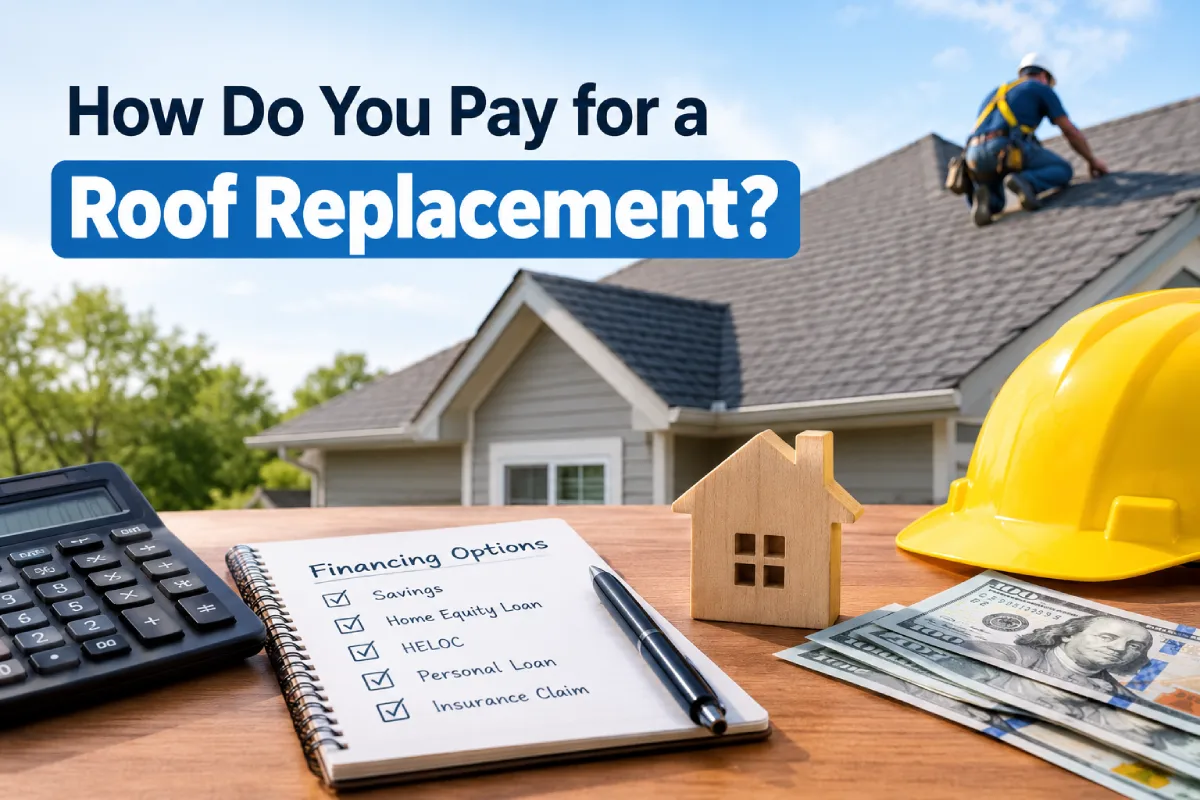
A roof is one of the larger sums a household spends at once, and it usually arrives without much warning. The financing question therefore tends to be settled quickly and badly, often by taking whatever the contractor offers at the kitchen table.
There are several routes, and the differences between them are large. Worth separating two things at the outset: how the payment is structured with the contractor, and where the money comes from. They are independent decisions, and the first one matters even if you are paying cash.
The payment schedule with the contractor
This is the part with the most scope for going wrong, and it is governed by a simple principle: payment should follow progress.
A normal structure is a modest deposit to secure the booking and cover materials, one or more progress payments tied to identifiable stages, and a final balance on satisfactory completion. Holding a meaningful final payment until the work is finished and you have inspected it is the main protection you have.
Whatever is agreed belongs in writing before work starts, with each payment attached to a milestone rather than a date. What should be in a roofing contract covers the rest of the document.
Never do this
Do not pay in full before the work has started, and treat a demand for it as a reason to stop. Homeowners have paid substantial deposits to contractors who never returned, and once the money has gone, there is usually no practical way to recover it. Do not pay in cash without a receipt: use a method that leaves a record, and be aware that a credit card can offer protection a bank transfer does not. If a contractor will only accept cash, or wants the payment made to a person rather than the business named on the contract, that is a serious warning.
Paying from savings
The cheapest option, because it costs no interest, and the one that gives you the most leverage in negotiation.
The caution is not to empty an emergency fund into a roof. A house that has just needed a new roof may need something else, and being unable to respond to the next problem is an expensive form of saving. Paying most of the cost from savings and financing a small remainder is often more sensible than draining the account.
Insurance, where the damage qualifies
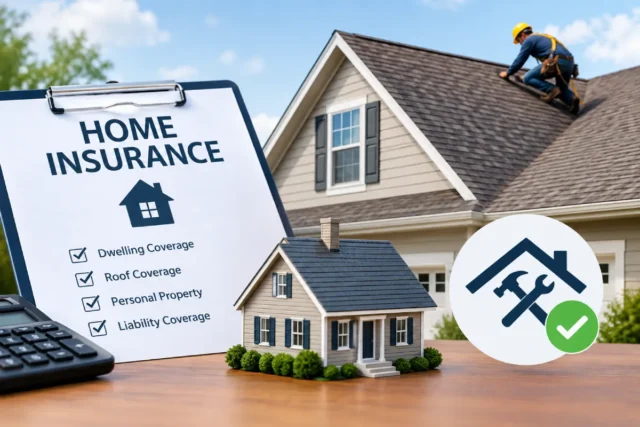
If the roof was damaged by a covered event rather than by age, this may be partly funded for you, and it is worth establishing before you arrange borrowing.
Be aware of the timing though. On a replacement cost policy, the insurer commonly pays the depreciated amount first and releases the remainder only after the work is complete and evidenced, so you may need to bridge the gap. Read the settlement terms in your own policy before you agree a payment schedule, so that gap is planned for rather than discovered.
Borrowing against the house
Home equity products, whether a lump sum loan or a revolving line of credit, generally carry the lowest interest rates available for a sum of this size, because the debt is secured on the property.
That security is exactly the risk. Missing debt payments secured against your home has consequences that unsecured borrowing does not. These products also take time to arrange and involve fees and often a valuation, so they suit a planned replacement better than an emergency one.
Personal loans and cards
An unsecured personal loan is quicker to arrange, carries a higher rate than secured borrowing, and does not put the house at risk. For many households it is the sensible middle option, particularly when the work cannot wait.
Credit cards make sense only for a portion of the cost or where a genuine interest-free period covers the full repayment. At standard card rates, a roof becomes considerably more expensive. Where a card is used for the deposit, the purchase protection it provides can be worth having in itself.
Finance offered by the contractor
Most established roofing companies offer financing arranged through a third-party lender, and it is convenient because it is settled in one conversation.
Convenience is what you are paying for. The rate may be competitive or it may not, and promotional interest-free periods sometimes carry deferred interest that is charged retrospectively if the balance is not cleared in time. Read the terms rather than the headline, and compare the total repayable against a quotation from your own bank before agreeing.
The structural concern is that it removes a comparison step. A contractor who arranges your funding has less reason to sharpen the price, and you have less reason to compare quotations.
Reducing what you need to borrow
Timing helps. Roofing demand is seasonal, and work booked outside the busiest months is sometimes priced more keenly.
Scope helps more. Understanding what actually drives the cost lets you tell the difference between a saving and a false economy. Choosing a mid-range material rather than a premium one is a legitimate saving. Omitting ventilation improvements or new flashing is not, and it costs more later.
Some jurisdictions offer grants or incentives for energy efficiency work carried out alongside a roof, and insulation improvements at the same time are cheaper than doing them separately.
Conclusion
Settle the payment schedule and the funding separately, and get the schedule into the contract before anybody starts. A reasonable deposit, payments tied to progress, and a meaningful balance held until completion.
On funding, cheapest to most expensive usually runs savings, then secured borrowing, then a personal loan, then contractor finance, then cards. Arrange the money before you sign rather than after, because a homeowner who has already committed to the work has lost most of their negotiating position.