Do You Need a Permit to Replace a Roof?
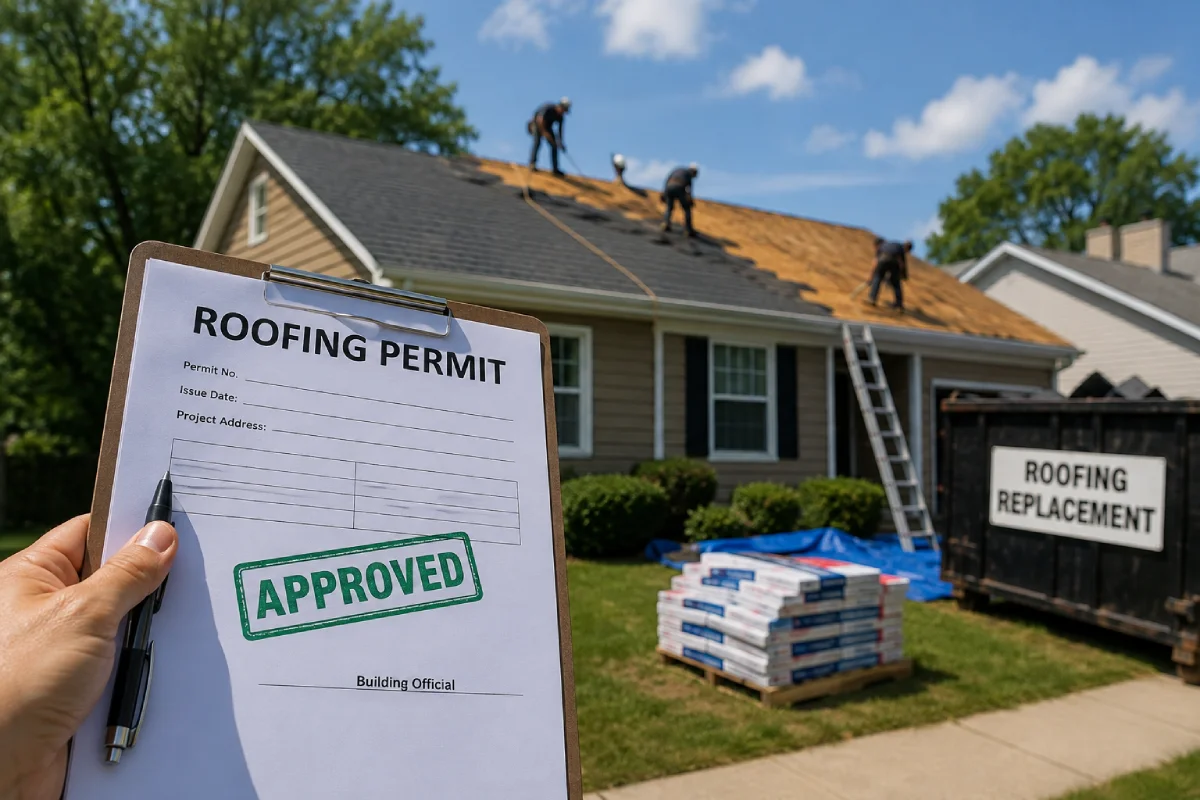
In most places, replacing a roof requires a permit. It is one of the parts of the job homeowners are least aware of, and contractors are least likely to raise unprompted, partly because it adds cost and time, and partly because a surprising number of roofs are replaced without one.
The rules are genuinely local. What follows is how permitting works and what to ask, not a statement of what applies at your address, because that varies by country, state or province, county and often by individual municipality.
Why a roof needs a permit at all
A roof is a structural and weather-resisting element of a building, and permitting exists so that a public record shows the work met the code in force when it was done.
In practice, an inspection on a roof replacement is usually looking at a small number of things: how many layers are on the roof, whether the deck is sound and correctly fastened, whether ice and water protection is present where the local code requires it, whether flashing is properly formed, and whether ventilation meets the requirement. These are exactly the items that are invisible once the covering is on.
When one is usually required
Almost universally for a full replacement, whether it is a strip and re-roof or an overlay. Frequently for structural work such as deck replacement beyond a small area. Often for a change of material, particularly a change to something heavier, which may bring a structural review with it.
Small repairs are more often exempt, and many jurisdictions publish a threshold, expressed as an area or a number of squares, below which no permit is needed. That threshold is the thing to look up rather than assume.
Who is supposed to pull it?
Normally, the contractor, as part of the job, and in many places only a licensed contractor can. The permit fee then appears on your quote, either as a line or folded into the total.
Do not pull the permit yourself
Some jurisdictions allow a homeowner to pull a permit for work on their own home. It sounds like a saving, and it usually is not. Whoever pulls the permit takes on responsibility for the work meeting code, which means a homeowner-pulled permit shifts liability from the contractor to you. If a contractor asks you to pull the permit, that is worth treating as one of the warning signs rather than a favor, because the most common reason for the request is that they cannot.
What it adds to cost and time
Permit fees are usually modest relative to the roof, and are often calculated from the value of the work or the roof area. The larger effect is on the schedule: applications take time to process, and inspections have to be booked. On some jobs, an inspector needs to see the deck before it is covered, which means the crew works around an appointment rather than straight through.
This is worth knowing when a quote promises an unusually short timeline, and it sits alongside the other things covered in how long a roof replacement takes. A schedule that leaves no room for an inspection is telling you something.
What happens if the work is done without one
Often nothing, for years. That is precisely why unpermitted roofs are common, and why the risk is easy to dismiss. The consequences arrive later, and they arrive at inconvenient moments.
- Selling the house. Unpermitted work on a major building element comes up in sale disclosures and home inspections. Buyers ask for retroactive permitting, a price reduction, or both.
- Insurance. A claim involving the roof can become complicated when the work was never permitted or inspected, particularly where the cause of loss relates to how it was built.
- Enforcement. Municipalities can require work to be opened up for inspection, or redone. Rare, but not theoretical.
- The quiet one. No inspection means nobody independent ever looked at the deck, the flashing, or the ventilation. The permit is not only paperwork; it is the one point in the process where somebody with no financial interest in the job checks it.
What to ask, and what to check yourself
Ask every contractor whether the work needs a permit, who pulls it, and whether the fee is in the quote or on top. Differences in the answer are one of the ordinary reasons estimates differ, and a quote that silently omits permitting will always look cheaper than one that includes it.
Then verify independently. Your local building department can confirm whether a permit is required for your address and what it costs, usually in one phone call or from a page on their website. That call takes minutes and settles the question without relying on the person quoting for the work.
Ask to be sent the permit number once it is issued, and keep the final inspection sign-off with your house documents. It is the paperwork a buyer will ask for, possibly many years from now.
What the inspector actually looks at
Knowing this makes the permit feel less like paperwork, because every item on the list is something that becomes invisible the moment the covering goes on.
Where a mid-job inspection happens, it is usually after the strip and before the new covering: the deck is exposed, and the inspector is checking that it is sound, correctly fastened, and thick enough for the rafter spacing. On many jobs this is also when ice and water protection at the eaves and valleys is verified, since it disappears under the shingles immediately afterwards.
A final inspection typically looks at flashing at walls, chimneys and valleys, at the ventilation arrangement, at the number of layers, and at fastening in the field. None of these can be judged from the ground afterwards, which is the whole point.
If your job involves any structural work or a change to a heavier covering, expect more scrutiny and possibly a separate structural review.
Permits, insurance claims and storm work
Roofs replaced through an insurance claim are where permitting is skipped most often, because the work is arranged quickly, frequently by a contractor who arrived after a storm, and the homeowner is focused on the claim rather than the paperwork.
This is exactly the situation where the permit matters most. The insurer is paying for a roof that meets code, and a claim settlement generally assumes permitted work. If the roof is later found to have been replaced without a permit, the position on a subsequent claim can become difficult, and the contractor who did it may be long gone.
Storm chasing operations working outside their normal area are also the group least likely to hold the local license a permit requires, which is why the request to have the homeowner pull it appears so often after severe weather. Verify the license for your jurisdiction, not a neighboring one.
Conclusion
Treat the permit as part of the job rather than as an administrative afterthought. Confirm the requirement with the building department yourself, expect the contractor to pull it, and be cautious with anyone who suggests skipping it or asks you to take it out in your own name.
The fee is small. The inspection is the only independent check anyone performs on work you will never be able to see again.