Why Is My Roof Leaking? Common Causes and What to Do
A water stain spreading across your ceiling is more than an eyesore. It is a sign that water has found a path through your roof and into your home — and the longer it goes unaddressed, the more damage it can cause.
Understanding why your roof is leaking is the first step toward fixing it. In many cases, the cause is straightforward. In others, it takes a closer look to figure out what is going on.
This article walks through the most common reasons roofs leak, how to identify the source of the problem, what you can do right away, and how to reduce the chance of it happening again.
How to Tell If Your Roof Is Leaking
Not every roof leak makes itself obvious with water dripping from the ceiling. Some signs are subtle and easy to miss if you are not looking for them.
- Water stains on ceilings or walls are one of the most common indicators. These usually appear as brown, yellow, or dark rings that grow slowly over time. They may be directly below the leak, or water may travel along rafters and show up in a different location.
- Damp or musty smells in your attic or upper floors can point to moisture getting in. Even if you do not see visible water, a persistent musty odor often means there is hidden moisture somewhere.
- Peeling paint or bubbling wallpaper near the ceiling is another sign. Water behind walls or above a ceiling surface pushes against paint and adhesive, causing it to lift.
- Mold or mildew growth in your attic, on ceiling surfaces, or in corners near the roofline suggests ongoing moisture exposure. Mold needs consistent dampness to develop, so its presence usually points to a recurring issue rather than a one-time event.
- Dripping water during or after rain is the most obvious sign. If you notice water actively coming through, place a bucket or container underneath and mark the area so you can trace the source later.
Common Causes of a Leaking Roof
Roof leaks rarely happen without a reason. Most of the time, there is a specific failure point that allows water in. Here are the most common causes.
Damaged or Missing Shingles
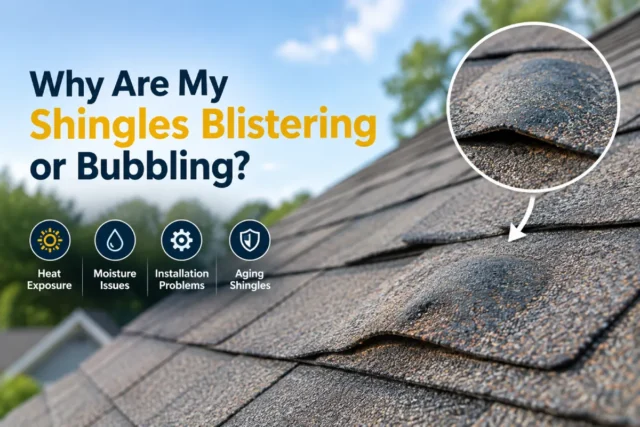
Shingles are your roof’s first line of defense against rain, wind, and sun. Over time, they can crack, curl, warp, or blow off entirely during storms.
When shingles are damaged, the layers underneath are exposed to direct water contact. These underlayers are not designed to handle prolonged exposure, and water can eventually seep through.
This is one of the easiest problems to spot from the ground. If you can see bare patches or shingles that look out of place, that is likely where water is getting in.
Deteriorated Flashing
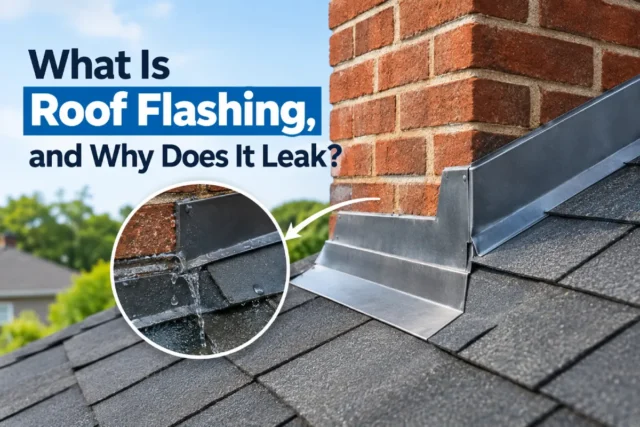
Flashing refers to thin pieces of metal — usually aluminum, steel, or copper — installed at joints and transitions on your roof. You will find it around chimneys, skylights, vents, and where the roof meets a wall.
Flashing exists because these joints are naturally vulnerable to water intrusion. When flashing deteriorates, bends, pulls away, or develops gaps, water can enter at these connection points.
Flashing problems are among the most frequent causes of roof leaks, especially on older roofs. The sealant around flashing dries out and cracks over time, and the metal itself can corrode in certain climates.
Clogged or Damaged Gutters
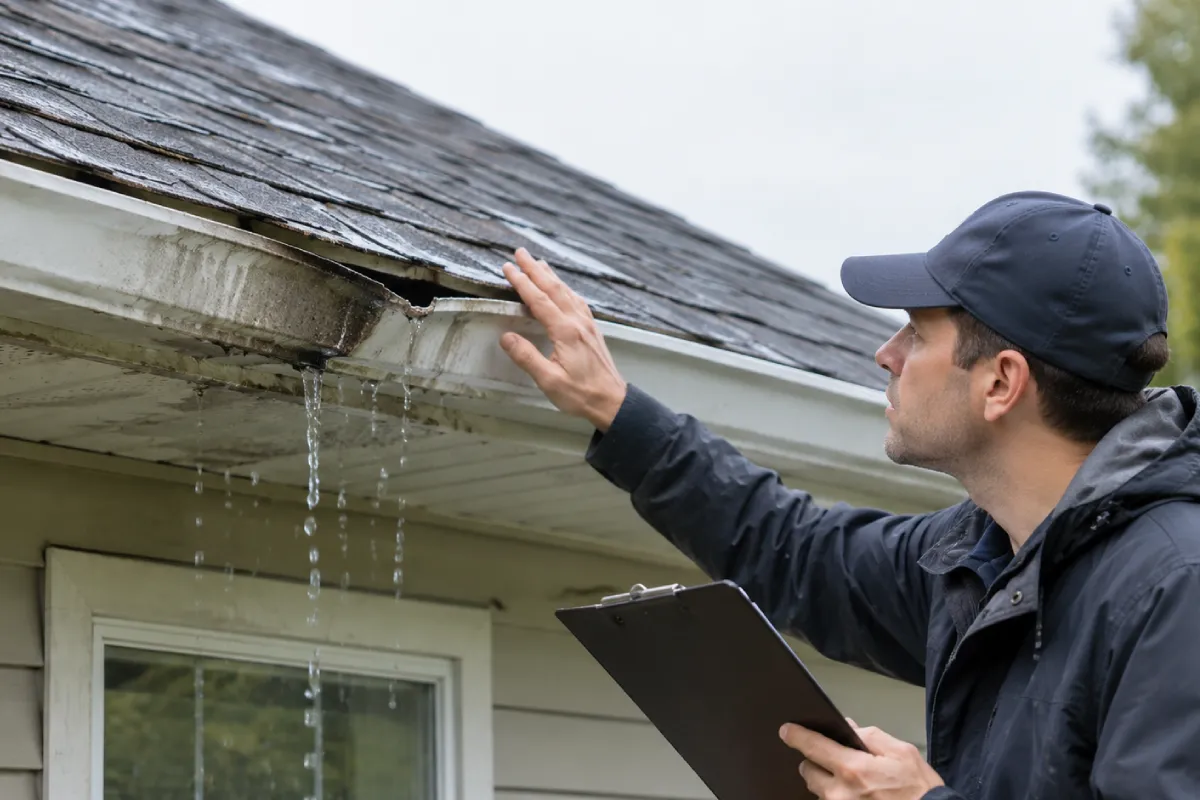
Gutters are designed to carry water away from your roof and foundation. When they are clogged with leaves, dirt, and debris, water backs up and pools along the edge of your roof.
This standing water can work its way under shingles and into the roof deck. Clogged gutters often get blamed for ice dams as well, but ice dams start with heat escaping into the attic; a frozen gutter only helps an existing one build faster.
If your gutters are sagging, pulling away from the house, or overflowing during rain, they may be contributing to your leak.
Cracked or Worn Sealant Around Roof Penetrations
Anywhere something passes through your roof — a plumbing vent, an exhaust fan, a satellite dish mount — there is a seal or boot that keeps water out. These rubber or silicone seals degrade with sun exposure and temperature changes.
A cracked vent boot is an extremely common source of leaks. The rubber around the pipe dries out, splits, and creates a direct path for water. These are usually inexpensive parts, but if they go unnoticed, they can cause significant interior damage.
Ice Dams
In regions with freezing winters, ice dams form when heat from the attic melts snow on the upper part of the roof. That meltwater runs down to the colder eaves, refreezes, and builds up a ridge of ice.
Water then pools behind this ice ridge and can push back under the shingles. Even a roof in good condition can leak during an ice dam event because the water is being forced upward and sideways in a direction it was never meant to go.
Ice dams are not purely a roofing problem — they are usually caused by warm air leaking into the attic, combined with too little insulation and ventilation. Sealing those air leaks and fixing the attic is the long-term fix, as our guide to what causes ice dams explains.
Poor or Deteriorated Roof Valleys
A roof valley is where two slopes of the roof meet, forming a V-shaped channel. Valleys handle a high volume of water during rain, which makes them more prone to wear.
If the valley metal or the shingles in the valley are damaged, improperly installed, or worn thin, water can find its way through. Valley leaks can be particularly tricky because water often travels along the valley before dropping down, making the source hard to locate inside the house.
Age-Related Wear
Every roofing material has a lifespan. Asphalt shingles typically last between 15 and 30 years depending on the quality, climate, and installation. Metal roofing, tile, and slate can last much longer, but no roof lasts forever.
As a roof ages, materials become brittle, seals break down, and the cumulative effect of years of sun, rain, wind, and temperature swings takes its toll. An older roof that starts leaking may need targeted repairs or, depending on its condition, a full replacement.
Age alone does not mean a roof will leak, but it does increase the likelihood that small vulnerabilities become real problems.
Cracked Chimneys
Chimneys are complex structures that interact with the roof in multiple ways. The mortar between bricks can crack and erode. The crown — the sloped concrete cap on top of the chimney — can develop cracks. The flashing where the chimney meets the roof can fail.
Any of these issues can allow water in. Chimney-related leaks sometimes show up as damp spots on walls near the chimney rather than on the ceiling directly below it, which can make them confusing to diagnose.
Skylight Issues
Skylights add natural light, but they also introduce another potential entry point for water. Leaks around skylights are commonly caused by deteriorated flashing, failed seals, or improper installation.
Water that appears during or after rain, especially at the edges of the frame, usually points to the flashing or seals rather than the glass. Moisture that forms on the inside of the glass on cold days or after showers, with no rain involved, is usually condensation from indoor humidity, which no roof repair will fix.
Finding the Source of the Leak
One of the most frustrating aspects of a roof leak is that water rarely enters your home directly above where you see the stain. Water can travel along rafters, sheathing, or pipes before it drips down and becomes visible.
- Start in the attic. On a dry day, go into the attic with a flashlight and look for water stains, mold, dark marks, or daylight coming through the roof deck. These clues can help you narrow down the location.
- Check the area around roof penetrations. Vents, chimneys, skylights, and other penetrations are the most common leak points. Look closely at the flashing and sealant around each one.
- Examine your roof from the outside. If it is safe to do so, look for missing shingles, damaged flashing, clogged gutters, or obvious signs of wear. Binoculars can help you inspect from the ground if you do not want to climb up.
- Use the rain test. If you cannot find the source, have someone spray sections of the roof with a garden hose while you watch from inside the attic. Work systematically from the lowest point upward. This takes patience, but it can reveal leaks that are invisible to a casual inspection.
Keep in mind that there may be more than one entry point. Water from a single rain event can travel through multiple paths before showing up inside your home.
It is also worth ruling out condensation. If the wet patches appear after a cold spell with no rain, or you find frost on the underside of the roof deck and on nail tips, the water may be coming from inside the house rather than through the roof. See how to tell a roof leak from attic condensation.
What to Do When You Discover a Roof Leak
Finding a leak is stressful, but taking the right steps quickly can limit the damage.
- Contain the water. Place buckets, bins, or any containers under the drip. If a ceiling is bulging with water, first switch off power to any light or ceiling fan in that area at the breaker, then carefully puncture the lowest point of the bulge with a screwdriver to let the water drain into a container. This prevents the water from spreading across the ceiling and causing a larger collapse.
- Move belongings. Remove furniture, electronics, and valuables from the affected area. Water damage can spread fast, and protecting your possessions should be a priority.
- Dry the area. Use towels, a wet/dry vacuum, or fans to dry standing water as quickly as possible. The sooner you remove moisture, the less chance mold has to develop.
- Document the damage. Take photos and notes for your records. If you plan to file an insurance claim, documentation matters. Photograph the water stains, the dripping, any damaged belongings, and the exterior of the roof if you can safely see the problem.
- Apply a temporary fix if possible. If you can safely identify the source and access it, a piece of roofing cement or a patch of roofing tape can serve as a short-term measure. For a missing shingle, sliding a replacement into place or even laying a tarp over the area can help until a proper repair is made.
These are temporary measures. They are meant to reduce damage until the root cause is properly addressed.
When to Call a Professional
Some minor roof repairs are within the ability of a handy homeowner. Replacing a single shingle or resealing a vent boot might not require professional help if you are comfortable working on a roof and have the right safety equipment.
When to stop and call somebody:
Many situations, though, call for a professional.
- The leak is large, persistent, or getting worse. If you have tried basic troubleshooting and water is still coming in, the problem is likely more involved than a surface-level fix.
- You cannot find the source. Professional roofers have experience tracing leak paths and identifying entry points that are not obvious. What might take you hours of guessing, an experienced roofer may identify quickly.
- The roof is steep, high, or difficult to access. Safety is not something to compromise on. If getting on your roof involves real risk, let someone with proper equipment and training handle it.
- There is widespread damage. If multiple areas of the roof are compromised, patching one spot may not solve the overall problem. A professional can assess whether targeted repairs are sufficient or whether the roof needs more extensive work.
- You suspect structural damage. If water has been leaking for a long time, the wood framing and decking beneath the shingles may have started to rot. Structural damage is not something that can be fixed with a surface patch. It needs professional evaluation.
When contacting a roofing professional, describe what you have observed — where the water appears, when it happens, and what you have found during your own inspection. This information helps them diagnose the issue faster.
How to Prevent Roof Leaks
Not every roof leak is preventable, but regular maintenance goes a long way toward reducing the risk.
- Inspect your roof at least twice a year. A visual check in the spring and fall — and after any major storm — helps you catch problems early. Look for damaged or missing shingles, worn flashing, and debris buildup.
- Keep your gutters clean. Clogged gutters cause water to pool at the roof edge. Clean them at least twice a year, or more often if you have overhanging trees. Gutter guards can reduce the amount of debris that accumulates.
- Trim overhanging branches. Trees that hang over your roof drop leaves, twigs, and other debris that clog gutters and hold moisture against the roofing surface. Branches can also damage shingles directly during windstorms.
- Address small problems quickly. A cracked seal, a lifted shingle, or a small piece of damaged flashing might not seem urgent. But small problems become big problems when water has time to work its way in. Fixing something early almost always costs less than repairing the damage a leak causes.
- Ensure proper attic ventilation and insulation. Poor ventilation traps heat and moisture in your attic, which accelerates roof material deterioration and contributes to ice dams in winter. Good insulation keeps your attic temperature stable and reduces the conditions that lead to condensation and moisture buildup.
- Pay attention after severe weather. High winds, hail, and heavy snow can damage a roof that was previously in good condition. After a significant weather event, it is worth taking a look even if you do not see obvious signs of a problem from inside.
What to Take Away
A leaking roof is a problem that rarely fixes itself. The most common causes — damaged shingles, failed flashing, clogged gutters, worn sealant, and age-related deterioration — are all issues that tend to worsen with time if left unaddressed.
If you discover a leak, your priority is containing the water and protecting your home from further damage. Document what you find, and make reasonable temporary fixes if you can do so safely.
For anything beyond a minor, clearly localized repair, professional evaluation is the right call. An experienced roofer can identify the true source of the problem and recommend the most effective fix.
The best defense against future leaks is consistent maintenance. A few hours of attention each year — clearing gutters, inspecting the roof surface, and addressing small issues promptly — can save you from costly water damage down the road.