What Are the Signs Your Gutters Are Failing?
A blocked gutter and a failing gutter look similar from the ground and need completely different responses. One is a cleaning job. The other means the gutter, or the timber it is fixed to, has reached the end of its life, and cleaning will not help.
Telling them apart matters because a failing gutter that keeps getting cleaned quietly damages the roof edge and the wall for years while everybody assumes the problem is leaves.
Sagging and what it usually means
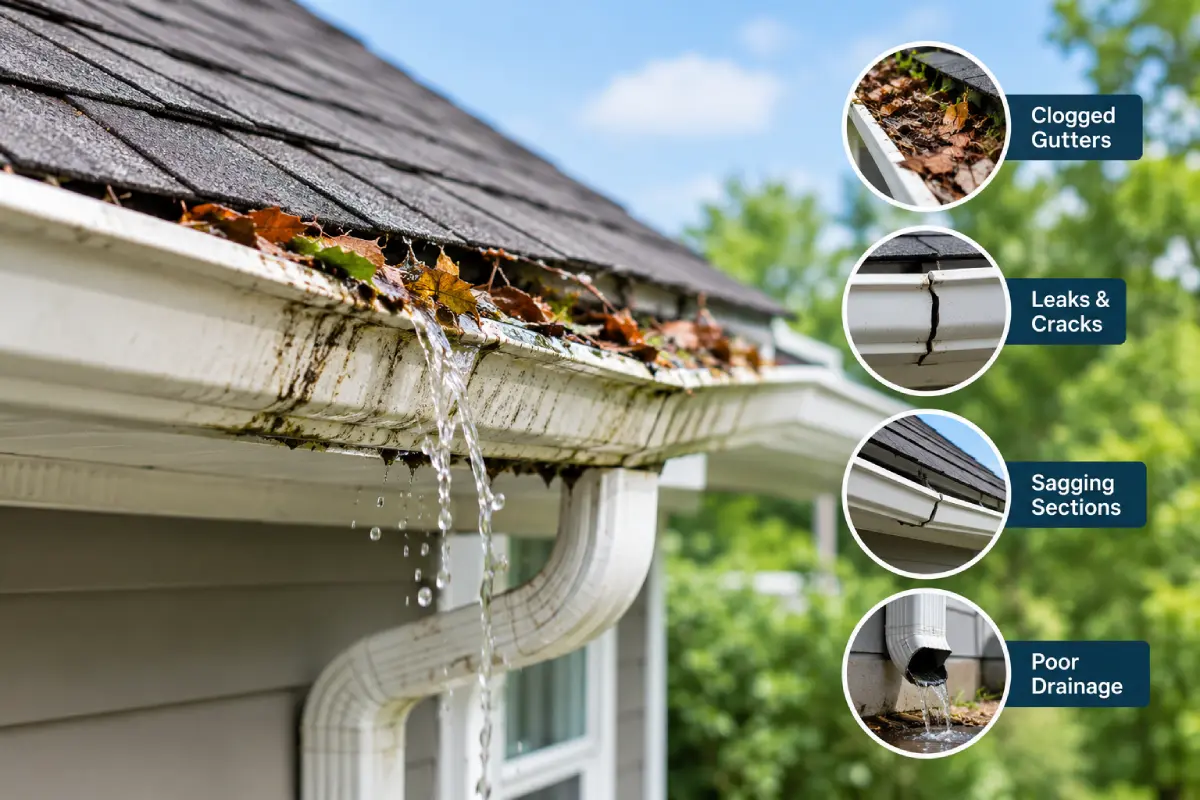
A gutter should run in a straight line with a slight, barely perceptible fall towards the downspout. A visible dip or a section pulling away from the fascia is the most common sign of failure.
The usual cause is not the gutter. It is the fascia behind it. Water escaping the back of a blocked gutter soaks the board, the timber rots, and the fasteners lose their grip. The gutter then sags, drains worse, holds more water, and accelerates the rot. By the time the sag is visible from the ground, the timber underneath is generally already soft.
Weight can also cause it: a gutter that has held standing water or a winter of ice may be pulled out of line permanently even after the load has gone.
Leaking joints and seams
Sectional gutters are joined, and joints are where they fail. Look for staining on the wall below a joint, drips during rain that do not come from the front edge, or visible gaps where sections meet.
Sealant in a gutter joint has a limited life, and it is a repair rather than a rebuild. Repeated failures at multiple joints, though, usually mean the system has moved, and resealing one joint at a time becomes an annual event.
Seamless gutters remove most of this, since the only joints are at corners and outlets.
Corrosion, splitting and holes
The material tells you what to look for. Steel rusts, usually starting in the bottom of the trough where silt holds moisture. Aluminum corrodes at fasteners, particularly where a dissimilar metal has been used. Plastic becomes brittle with ultraviolet exposure and splits, often at a bracket or a joint, and it fades and distorts before it goes.
Pinholes are worth taking seriously even when they look trivial, because they concentrate water into a single point on the wall below rather than spreading it.
What the wall tells you
Some of the clearest evidence is nowhere near the gutter.
A vertical stain that reappears in the same place on the wall means water is escaping at a fixed point above it. Green algae or moss on the wall below the gutter line means it is habitually wet. Peeling paint, loose stucco, or damp inside on an upstairs wall in the same position all point the same way.
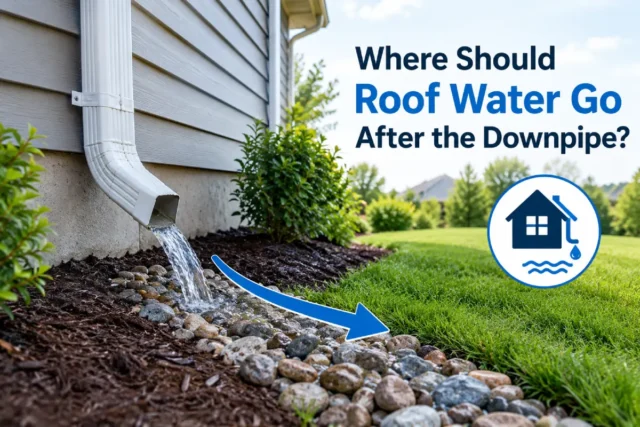
Below that, look at the ground. Erosion in a flower bed directly under the eave, a channel worn in gravel, or splashing marks on the lower wall all mean water is landing there rather than leaving through the downspout.
The test that separates the two
Clear the gutters properly, then watch what happens during the next heavy rain. If water now runs to the downspout and leaves, it was a blockage. If it still sheets over the edge, still drips at a joint, or still pools in a section that never empties, the gutter itself has failed, and no amount of further cleaning will change that. Doing this in that order stops you from either replacing gutters that only needed clearing, or cleaning a system that has already gone.
Standing water after rain
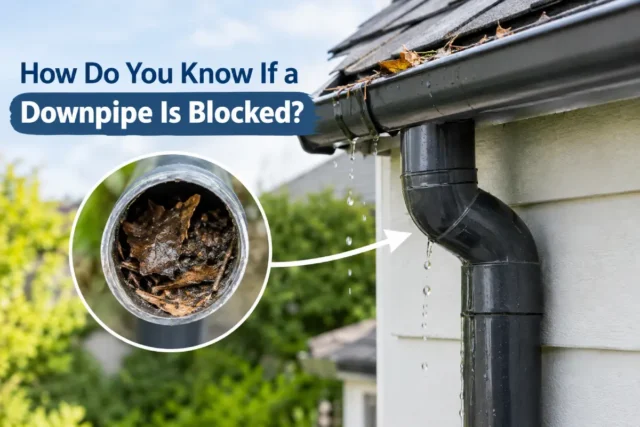
A gutter should be more or less empty within a short time after the rain stops. Water that remains in a section hours later means either the fall is wrong, the gutter has sagged, or the outlet is blocked.
This is worth checking specifically, because standing water is what causes most of the secondary damage. It is heavy, it holds silt, it accelerates corrosion, and in winter it freezes.
Checking the timber behind it
Since the fascia is usually the real problem, it is worth assessing directly.
From the ground with binoculars, look for dark staining, flaking or blistered paint, a board that has lost its line, or visible gaps between the fascia and the gutter back. Green growth on the fascia means it is wet. Soffit panels sagging or displaced below suggest water has been getting behind for some time.
Rotten fascia also opens the roof edge to birds and squirrels, which is how a drainage problem becomes a different problem entirely.
Repair or replace
Individual failures repair well. A single leaking joint, one loose bracket, a split section on an otherwise sound run: all worth fixing.
Replacement becomes the sensible answer when several joints are failing, when the material is generally corroded or brittle, when the fall is wrong along a whole run, or when the fascia behind needs replacing anyway. Once the fascia is coming off, the gutter comes off with it, and refitting an old gutter onto new timber is a false economy.
If you are not sure the gutters are big enough for the roof, the Gutter and Downspout Calculator works out gutter size and the number of downspouts from your roof area and local rainfall.
Conclusion
Sagging, leaking joints, standing water after rain, staining on the wall and erosion in the bed below are the signs that a gutter has failed rather than filled. The fascia behind it is usually the underlying cause, and it decides whether this is a repair or a rebuild.
Clear the gutters first, then watch during heavy rain. That single test tells you which of the two you are dealing with, and it costs nothing but patience and a window.