Clay vs. Concrete Roof Tiles: Which Is Right for Your Home?
Clay and concrete roof tiles are two of the most durable and visually distinctive roofing materials available. Both offer excellent longevity, strong weather resistance, and a look that sets a home apart from the asphalt-shingled majority. They are often mentioned in the same breath, and to an untrained eye, they can look quite similar once installed. But the differences between them — in weight, cost, maintenance, appearance, and performance — are significant enough to matter when making a choice for your home.
Understanding how clay and concrete tiles compare in practical terms helps you decide which material is the better fit for your priorities and your home’s structure.
What They Are Made Of
Clay
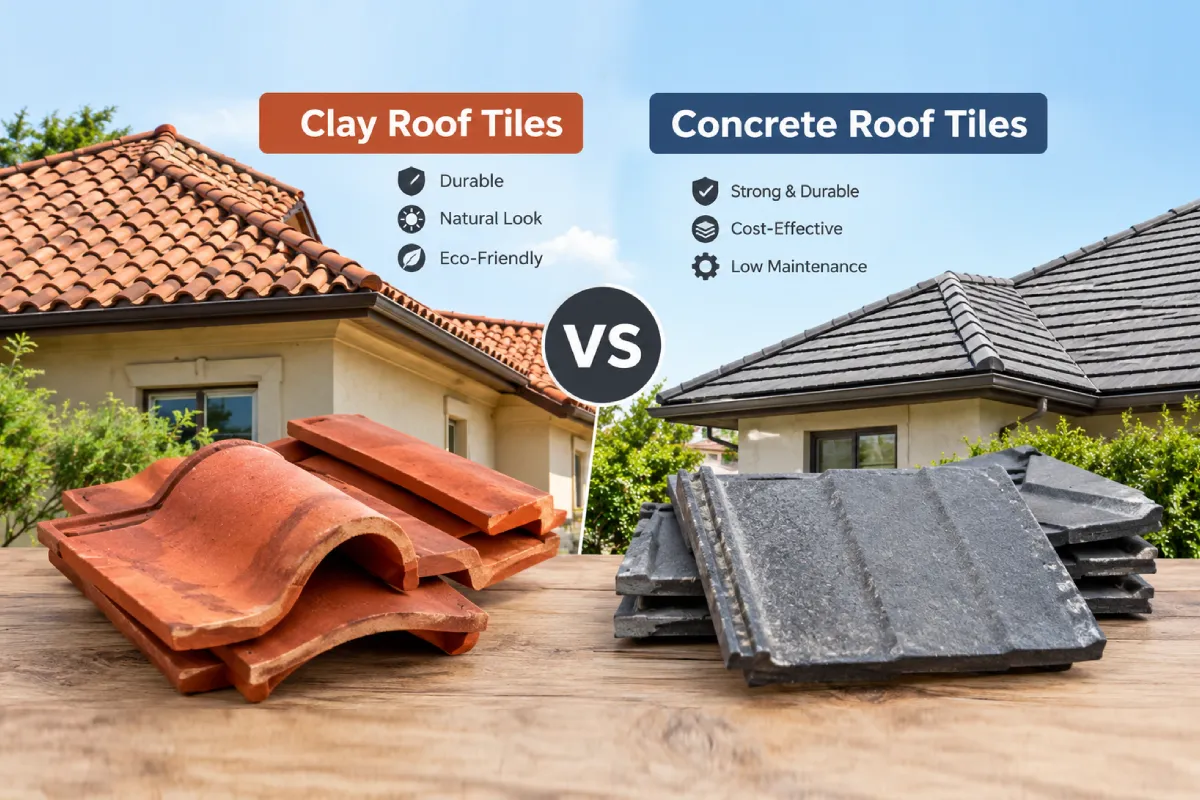
Clay tiles are made from natural earthen clay that is shaped and then fired in a kiln at high temperatures. The firing process hardens the clay, gives it its characteristic color, and makes it extremely resistant to moisture absorption. Clay tiles have been used in construction for thousands of years and are known for their distinctive warm tones — typically shades of terracotta, red, orange, and brown, though glazed and coated versions are available in a wider range of colors.
Concrete
Concrete tiles are made from a mixture of sand, cement, and water, formed under high pressure and cured rather than fired. They are heavier and denser than clay tiles and can be manufactured in a wide variety of shapes, profiles, and colors. Concrete tiles can be made to mimic the appearance of clay, slate, or even wood shakes, offering more versatility in terms of style.
The fundamental difference in composition affects nearly every aspect of how these materials perform, from their weight and durability to their cost and maintenance needs.
Appearance and Style
Both materials offer attractive, high-end appearances, but they have distinct visual characters.
Clay Tiles
Clay tiles have a warm, natural look that is difficult to replicate exactly. The colors are inherent to the clay itself and the firing process, which means they tend to be rich and long-lasting. Traditional clay tiles have a slightly uneven, handcrafted quality that many homeowners find appealing. The most recognizable clay tile profiles include the barrel or Mission style — the half-round tiles commonly associated with Mediterranean and Spanish architecture — as well as flat and S-shaped profiles.
Concrete Tiles
Concrete tiles offer more variety in terms of shape, texture, and color. Because concrete is a manufactured material, it can be molded into virtually any profile and pigmented to match almost any color scheme. Concrete tiles can convincingly replicate the look of clay, slate, or wood, giving homeowners more design flexibility. However, some homeowners feel that concrete tiles do not quite capture the same depth and warmth of color that natural clay provides.
Over time, clay tiles tend to hold their color well because the color is baked into the material during firing. Concrete tiles may experience some color fading over the years, particularly in strong sun, though modern pigments and surface treatments have improved their color retention significantly.
Weight and Structural Requirements
Both clay and concrete tiles are significantly heavier than asphalt shingles or metal roofing, and this weight is one of the most important practical considerations.
Concrete Tiles
Concrete tiles are the heavier of the two. A concrete tile roof can weigh two to four times as much as an asphalt shingle roof covering the same area. This weight requires that the roof structure — rafters, trusses, and decking — be engineered or reinforced to support the load. On new construction, this is accounted for in the design phase. On existing homes, a structural assessment is essential before switching to concrete tiles. Lightweight concrete tiles are made to reduce that load, though even they are considerably heavier than shingles.
Clay Tiles
Clay tiles are lighter than concrete but still substantially heavier than asphalt shingles. The exact weight depends on the tile profile and thickness, but clay tiles generally weigh less per square foot than concrete tiles of a comparable style. This weight advantage can be meaningful for existing structures, though a structural assessment is still necessary.
For older homes that were not originally designed for tile roofing, the cost of reinforcing the structure should be factored into the overall project budget. In some cases, the structural work needed to support tile roofing can be a significant expense on its own.
Durability and Lifespan
Both materials are exceptionally long-lasting, but clay has the edge in pure longevity.
Clay Tiles
Clay tiles routinely last 75 to 100 years or more. Some clay tile roofs in Europe and other parts of the world have been in place for centuries. Clay does not absorb much moisture, does not rot, and is not vulnerable to insect damage. Its color does not fade significantly because it is a product of the firing process rather than a surface coating.
Concrete Tiles
Concrete tiles typically last 50 to 75 years. While this is still an impressive lifespan — far exceeding asphalt shingles — concrete is more porous than clay and absorbs more moisture over time. This moisture absorption can lead to gradual surface wear, and in freeze-thaw climates, the absorbed water can cause the tiles to crack as it expands and contracts.
Clay is not automatically safe in cold climates either. Clay roof tiles are graded under ASTM C1167, and only Grade 1 tiles are rated for severe frost exposure, so in a freeze-thaw climate, confirm the grade of any clay tile you are quoted.
Both materials can be damaged by heavy impact — such as a falling tree branch or a person walking on the roof carelessly — and individual tiles that crack or break should be replaced promptly. However, because tiles are individual units rather than continuous sheets, replacing a damaged tile is a straightforward repair that does not affect the surrounding tiles.
The tiles are rarely the first thing to wear out. The underlayment beneath them is what actually keeps water out, and it typically lasts somewhere around 20 to 30 years depending on the material and climate, far less than the tiles. When it fails, a roofer can often lift the existing tiles, replace the underlayment, and relay the same tiles, a job usually called a lift and relay or tile reset, which avoids paying for new tile.
Cost Considerations
Clay Tiles
Clay tiles are the more expensive option. The material itself costs more than concrete, and the installation is more labor-intensive because clay tiles are more fragile during handling and require careful placement. The total cost of a clay tile roof — materials, installation, and any necessary structural reinforcement — is typically at the higher end of the residential roofing spectrum. As a rough national guide, clay tile runs about $8.00 to $25.00 per square foot installed and concrete tile about $7.00 to $19.00, before any structural work; our cost per square foot guide covers what moves those numbers.
Concrete Tiles
Concrete tiles are less expensive than clay, making them the more budget-friendly choice among tile roofing options. They are still more expensive than asphalt shingles, but the price gap between concrete and clay tiles is significant enough to make concrete a more accessible option for homeowners who want the tile look without the premium price.
Both materials offer excellent long-term value when measured by cost per year of service life. A roof that lasts 75 years — even at a higher upfront cost — can be more economical over its lifetime than one that needs replacement every 25 years.
Maintenance and Repair
Both clay and concrete tiles require relatively little maintenance compared to many other roofing materials, but there are differences.
Clay Tiles
Clay tiles are highly resistant to moisture, moss, and algae growth because of their low porosity and smooth surface. They require minimal cleaning and are unlikely to develop the surface wear that affects more porous materials. The primary maintenance concern with clay tiles is breakage from impact or foot traffic, and individual tiles are relatively easy to replace when damage occurs.
Concrete Tiles
Concrete tiles absorb more moisture and are more susceptible to moss and algae growth, particularly in damp, shaded environments. Periodic cleaning may be needed to address biological growth. Over time, the surface of concrete tiles can erode slightly due to weather exposure, and some homeowners choose to have them sealed or recoated to extend their appearance and performance.
Stay off a tile roof:
Walking on either type of tile roof requires care, as tiles can crack under concentrated weight. Professional roofers experienced with tile roofing know how to walk on the tiles without causing damage — stepping on the lower third of the tile where it is supported by the tile below. This is one reason why tile roof maintenance and inspection should generally be handled by professionals familiar with the material.
Which Material Is Right for Your Home?
Clay Tiles
Clay tiles are the better choice for homeowners who prioritize maximum longevity, natural color retention, and low moisture absorption. They are particularly well-suited to warm, dry climates where their traditional aesthetic fits naturally. If budget is not the primary concern and the home’s structure can support the weight, clay tiles offer a roofing solution that can last a lifetime and beyond.
Concrete Tiles
Concrete tiles are the practical choice for homeowners who want the visual impact and durability of tile roofing at a more moderate cost. They offer more design flexibility in terms of color and profile, and their shorter — though still very long — lifespan is more than adequate for most homeowners. Concrete tiles work well in a variety of climates, though freeze-thaw conditions require attention to maintenance.
Either material represents a significant investment in your home’s appearance and protection. Both outlast most other roofing options by a wide margin, and both add a distinctive character to a home that few other materials can match. The right choice depends on your budget, your home’s structural capacity, your local climate, and the aesthetic you want to achieve. A roofing professional experienced with tile installations can help you evaluate these factors and determine which material is the best fit for your specific situation.