Asphalt Shingles vs. Metal Roofing: Which Is Better?
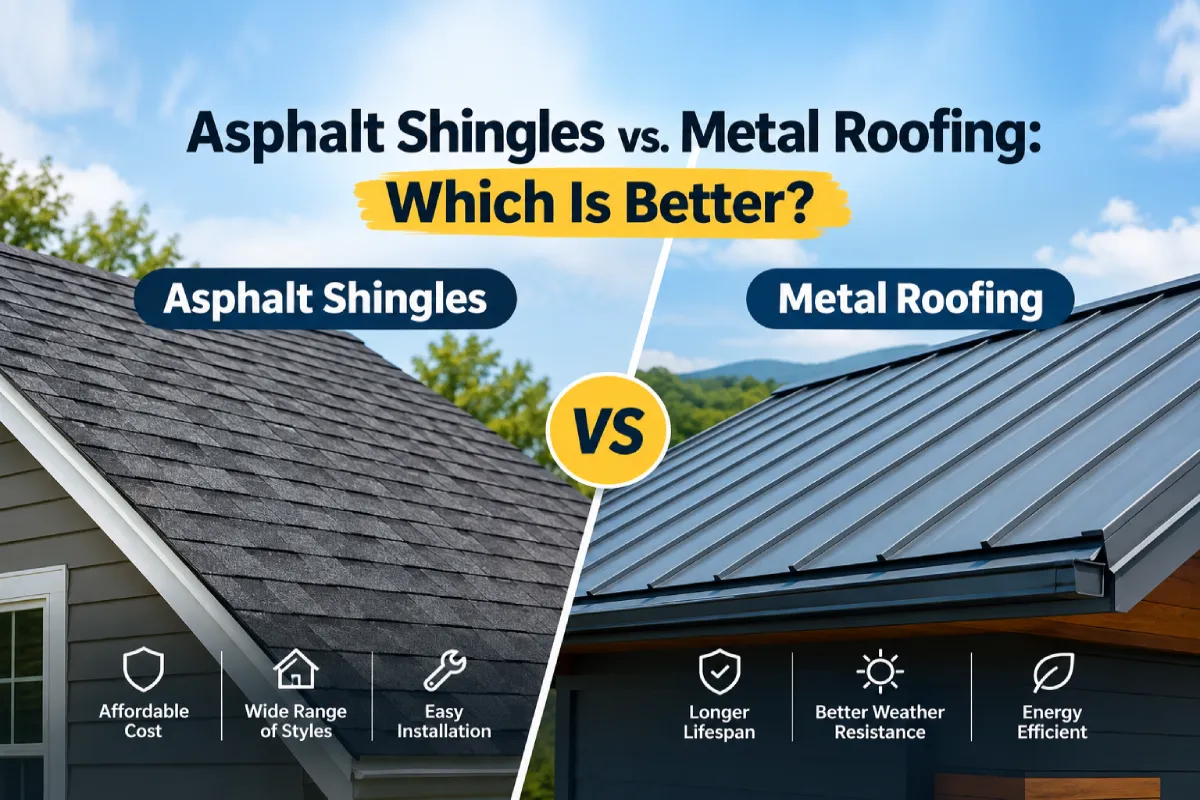
Choosing between asphalt shingles and metal roofing is one of the most common decisions homeowners face when it is time for a new roof. These are the two most popular residential roofing materials in many regions, and each comes with distinct advantages, trade-offs, and cost considerations. Neither option is universally better — the right choice depends on your budget, climate, how long you plan to stay in the home, and what you value most in a roofing system.
This comparison breaks down the practical differences between asphalt shingles and metal roofing so you can make an informed decision based on your specific situation rather than general claims.
Cost Differences
Asphalt shingles
Asphalt shingles are the more affordable option upfront, both in terms of materials and installation. The material itself costs less per square foot than metal, and because asphalt shingle installation is more common, labor costs tend to be lower as well. For homeowners working within a tight budget, asphalt shingles offer a reliable and cost-effective way to get a functional new roof.
Metal roofing
Metal roofing costs significantly more upfront — often two to three times the price of asphalt shingles depending on the type of metal and the complexity of the installation. Standing seam panels, for example, are more expensive than corrugated metal sheets, and both cost more than standard asphalt shingles. As a rough national guide, architectural asphalt shingles run about $4.50 to $7.00 per square foot installed, against about $6.00 to $10.00 for exposed-fastener metal panels and $9.00 to $16.00 for standing seam.
How to compare the two fairly
However, upfront cost is only part of the financial picture. Metal roofing lasts substantially longer than asphalt shingles, which means you may only need to install one metal roof in the time you would go through two or even three asphalt shingle roofs. Over the full life of the home, metal roofing can be the more economical choice despite its higher initial investment.
Lifespan and Durability
This is where the two materials differ most dramatically.
Asphalt shingles
Asphalt shingles typically last between 15 and 30 years, depending on the quality of the shingle, the climate, and how well the roof is maintained. Basic three-tab shingles are at the lower end of that range, while premium architectural shingles can reach the upper end.
Metal roofing
Metal roofing generally lasts 40 to 70 years, with some materials lasting even longer. Steel and aluminum roofs routinely outlast asphalt by decades. Metal is also more resistant to cracking, shrinking, and erosion over time.
In terms of weather resistance, metal roofing handles severe conditions more effectively. Metal panels shed snow easily, resist wind damage better when properly installed, and do not crack under hail impact the way asphalt shingles can. However, large hail can dent metal roofing, particularly softer metals like aluminum or copper, which is worth considering in hail-prone regions.
Appearance and Style Options
Asphalt shingles
Asphalt shingles come in a wide range of colors and styles. Architectural shingles, in particular, offer a textured, dimensional appearance that can mimic the look of more expensive materials like slate or wood shakes. For homeowners who want a traditional look that blends with the surrounding neighborhood, asphalt shingles offer plenty of options.
Metal roofing
Metal roofing has evolved considerably in its appearance. While some homeowners still associate metal roofs with the flat, industrial look of corrugated panels, modern metal roofing is available in a variety of profiles, colors, and finishes. Standing seam panels offer a clean, contemporary look. Metal shingles and tiles can replicate the appearance of slate, clay, or wood. The range of styles available means metal roofing can suit both modern and traditional home designs.
Aesthetic preference is subjective, and both materials can look attractive on the right home. The key difference is that metal roofing tends to have a more distinctive, defined appearance, while asphalt shingles offer a more conventional look that is familiar in most residential neighborhoods.
Weight and Structural Considerations
Asphalt shingles
Asphalt shingles are heavier than metal roofing. A standard asphalt shingle roof adds a significant amount of weight to the structure, though most homes are built to accommodate this load without issue.
Metal roofing
Metal roofing is considerably lighter — often less than half the weight of asphalt shingles. This lower weight places less stress on the roof structure, which can be an advantage for older homes or structures where weight is a concern. The lighter weight also makes metal roofing a viable option for installation over an existing layer of shingles in some cases, though a professional assessment is needed to confirm this.
Maintenance Requirements
Both roofing materials require some degree of maintenance, but the nature of that maintenance differs.
Asphalt shingles
Asphalt shingles need periodic inspection for curling, cracking, missing pieces, and granule loss. Damaged shingles should be replaced promptly to prevent water intrusion. Gutters need to be kept clean to prevent water backup at the roof edges. As the roof ages, maintenance needs increase because the material becomes more vulnerable to damage.
Metal roofing
Metal roofing requires less ongoing maintenance. The panels do not crack, curl, or lose granules. However, metal roofs should still be inspected periodically for loose fasteners, damaged sealant at seams or penetrations, and any signs of corrosion — particularly in coastal environments where salt exposure is a factor. Scratches or chips in the finish should be touched up to prevent rust on steel panels.
Noise Considerations
One concern homeowners often raise about metal roofing is noise during rain or hail. An exposed metal roof without proper underlayment can be noticeably louder than asphalt shingles during heavy rain.
However, modern metal roofing installations typically include solid sheathing, underlayment, and sometimes insulation layers that significantly reduce noise. When properly installed, a metal roof should not be dramatically louder than an asphalt shingle roof. The noise concern is largely a holdover from older installations over open framing without sheathing, which is uncommon in modern residential construction.
Energy Efficiency
Metal roofing
Metal roofing reflects more solar energy than asphalt shingles, which can reduce cooling costs in warm climates. Some metal roofs are rated as “cool roofs” and may qualify for energy efficiency incentives depending on local programs. The reflective properties of metal roofing help keep attic temperatures lower, reducing the load on air conditioning systems during summer months.
Asphalt shingles
Asphalt shingles absorb more heat, particularly in darker colors. While lighter-colored shingles and certain reflective shingle products exist, they generally do not match the reflective performance of metal roofing.
In colder climates, this difference is less significant, and proper attic insulation plays a larger role in overall energy efficiency regardless of the roofing material.
Environmental Considerations
Metal roofing
Metal roofing is often considered the more environmentally friendly option. It contains a significant percentage of recycled content and is fully recyclable at the end of its life. Its longer lifespan also means fewer replacements over time, which reduces waste.
Asphalt shingles
Asphalt shingles are petroleum-based products that are less commonly recycled, though recycling programs do exist in some areas. Their shorter lifespan means more frequent replacement and more material entering the waste stream over the long term.
For homeowners who prioritize environmental impact, metal roofing has a clear advantage in terms of longevity and recyclability.
Resale Value
Neither roof pays for itself when you sell. In the Journal of Light Construction’s 2025 Cost vs Value Report, an asphalt shingle roof replacement recouped an average of 68 percent of its cost at resale nationally, while a metal roof replacement recouped about 50 percent. A new roof of either kind mostly helps a sale by removing an objection, since buyers and their inspectors notice an old roof. If you expect to sell within a few years, that gap is a reason to favor asphalt; if you are staying for decades, metal’s lifespan matters more than its resale return.
Which Is Right for Your Home?
There is no single correct answer. Asphalt shingles make strong sense for homeowners who need an affordable, reliable roof and are comfortable with a 20-to-30-year replacement cycle. They are widely available, easy to install, and offer a traditional appearance that works well in most neighborhoods.
Metal roofing is the better choice for homeowners who plan to stay in the home long enough to benefit from its extended lifespan, who live in areas with severe weather, or who value lower long-term maintenance and better energy performance. The higher upfront cost is offset by decades of additional service life.
The best approach is to consider your budget, climate, long-term plans, and priorities, and to discuss the options with a qualified roofer who can assess your specific home and provide a recommendation based on its structure and your needs.