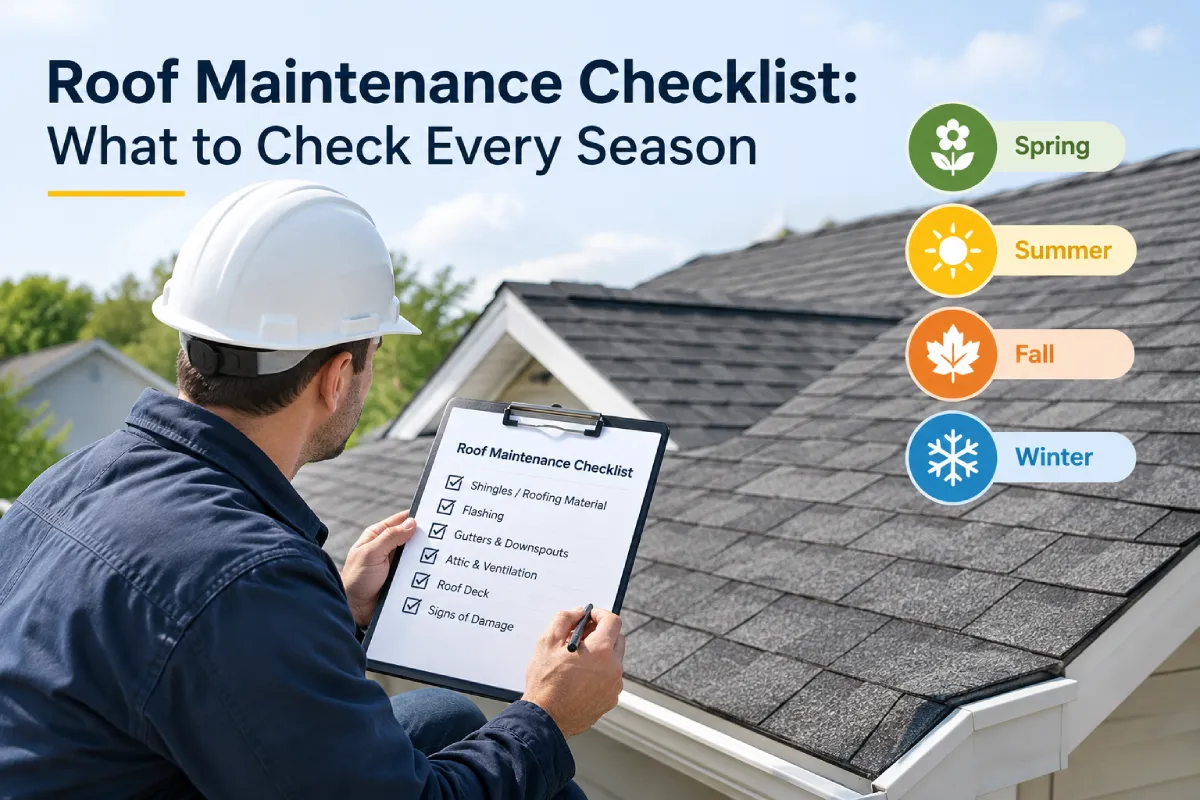
Roof Maintenance Checklist: What to Check Every Season
A well-maintained roof lasts longer, performs better, and is far less likely to surprise you with an unexpected leak. But roof maintenance is not a single task — it is an ongoing process that changes with the seasons. What your roof needs in spring differs from what it needs before winter, and staying aware of those differences keeps small issues from becoming major problems.
This seasonal checklist covers what homeowners should look for and address year-round. None of these tasks require you to climb onto the roof. They are designed to be done safely from ground level and inside your home, with professional help called in when needed.
Spring: Assessing Winter Damage
After months of cold, rain, snow, and freeze-thaw cycles, spring is the time to evaluate how your roof held up through winter.
Visual Inspection
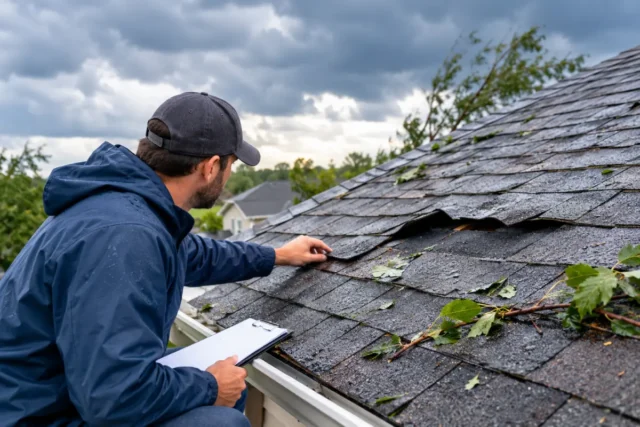
Start with a visual inspection from ground level. Walk around your home and look up at each side of the roof. Check for any shingles that are missing, cracked, curled, or visibly displaced. Winter storms and ice are hard on shingles, and any damage that occurred during the colder months will become more apparent as snow and ice melt away.
Gutter Inspection
Inspect the gutters for debris buildup. Autumn leaves, twigs, and granule accumulation from shingles can clog gutters over winter. Clogged gutters cannot drain properly, which causes water to back up under the roof edge. Clearing gutters in spring ensures they are ready for the rainy season.
Chimneys, Vents, and Skylight Inspection
Check flashing around chimneys, vents, and skylights. Freeze-thaw cycles can cause sealant to crack and metal flashing to lift. From the ground, look for any visible gaps or displacement. If anything looks off, have it inspected by a professional before spring rains arrive.
Attic Moisture Check
Look inside the attic for signs of moisture. Dark stains on the underside of the roof deck, damp insulation, or visible mold growth all indicate that water found its way in during winter. Catching these signs in spring gives you time to address the source before summer heat makes moisture problems worse.
Summer: Monitoring Heat and Ventilation
Summer brings heat, UV exposure, and seasonal storms — each of which affects your roof differently.
Attic Ventilation
Check attic ventilation and temperature. An attic that gets excessively hot in summer accelerates the aging of shingles from below. If your upper floors feel unusually warm, or if you notice that the attic is significantly hotter than the outdoor temperature, your ventilation may be insufficient. Proper ventilation allows hot air to escape and helps shingles last longer.
Signs of UV Damage
Look for signs of UV damage on the roof surface. Prolonged sun exposure can cause asphalt shingles to dry out and become brittle over time. While you cannot reverse this, being aware of it helps you gauge how much life your shingles have remaining.
A Visual Check After Summer Storms
Summer thunderstorms can bring high winds, heavy rain, and occasionally hail. After any significant storm, walk around your home and look for newly missing shingles, debris on the roof, or any visible damage. Addressing storm damage promptly prevents the next rain from causing interior leaks.
Trim Tree Branches
Trim tree branches that hang over or near the roof. Summer is the best time for this because trees are fully leafed out, making it easy to see which branches pose a risk. Branches that touch or overhang the roof drop debris, encourage moss growth, and can cause damage during windstorms.
Autumn: Preparing for Winter
Autumn is arguably the most important season for roof maintenance because the work you do now directly affects how your roof handles winter.
Clean the gutters
Clean the gutters thoroughly. Falling leaves are the primary cause of gutter clogs in autumn, and a gutter that freezes solid while still clogged holds meltwater at the roof edge all winter. Wait until most leaves have fallen, then clear the gutters completely. Check that downspouts are unobstructed and directing water away from the foundation.
Complete Visual Inspection
Do a thorough visual inspection of the roof surface. Autumn is an ideal time to scan for any damage that developed during the year. Look for cracked, curling, or missing shingles. Check that flashing is intact and sealed. If you find any issues, have them repaired before winter weather makes the roof difficult and unsafe to work on.
Attic Insulation
Proper insulation helps regulate the temperature of the roof deck, which reduces the risk of ice dams forming in winter. If insulation is thin, compressed, or missing in certain areas, seal the air leaks into the attic first (around light fixtures, pipes, and the attic hatch), then add insulation before winter.
Signs of Pests
Look for signs of pest activity. Birds, squirrels, and other animals sometimes seek shelter in attics as the weather cools. Check for droppings, nesting material, or chewed areas around the eaves and soffits. Sealing entry points before winter prevents animals from settling in.
Winter: Watching for Warning Signs
Winter is not a time for active roof maintenance — it is a time for monitoring. The roof should be left alone during freezing weather, but there are things to watch for from inside and outside the home.
Watch for ice dams
If you notice icicles forming along the eaves or a ridge of ice building up at the roof edge, an ice dam may be forming. Ice dams occur when heat from the attic melts snow on the upper roof, and that meltwater refreezes at the colder eaves. The ice blocks proper drainage and can force water under the shingles. If ice dams become a recurring issue, it is usually a sign of warm air leaking into the attic, too little insulation, or poor ventilation. Raking the lower few feet of snow off the roof from the ground after a heavy snowfall is the one winter job that helps; our guide to what causes ice dams explains how to do it safely.
Check ceilings and walls for new stains
Winter leaks often appear as stains on ceilings or walls on the upper floors. If you notice a new stain during winter, mark its size and monitor it. If it grows after snow or rain, the leak is active and should be evaluated by a professional as soon as conditions allow.
Do not do this in winter
Avoid climbing onto the roof. Walking on a snow-covered or icy roof is dangerous for you and potentially damaging to the roofing materials. If you suspect a problem during winter, note what you observe and schedule a professional inspection once conditions are safe.
Consistency Matters More Than Complexity
The value of a seasonal maintenance routine is not in doing anything extraordinary. It is in doing simple checks consistently, year after year. A homeowner who walks around the house and looks up at the roof four times a year will catch problems far earlier than one who only notices the roof when something goes visibly wrong.
Each season presents different challenges for your roof. Spring reveals winter damage. Summer tests heat resilience. Autumn is your window to prepare. Winter demands observation. Following this rhythm keeps you informed about your roof’s condition and gives you the best chance of addressing issues before they become costly.