Standing Seam vs. Corrugated Metal: What’s the Difference?
If you have decided on metal roofing for your home, the next decision is which type of metal panel to choose. The two most common options for residential applications are standing seam and corrugated metal roofing. While both are made from similar base materials — typically steel or aluminum — they differ significantly in how they look, how they perform, and what they cost.
Understanding the practical differences between these two styles helps you choose the one that best fits your home, your climate, and your budget.
What Standing Seam Roofing Is
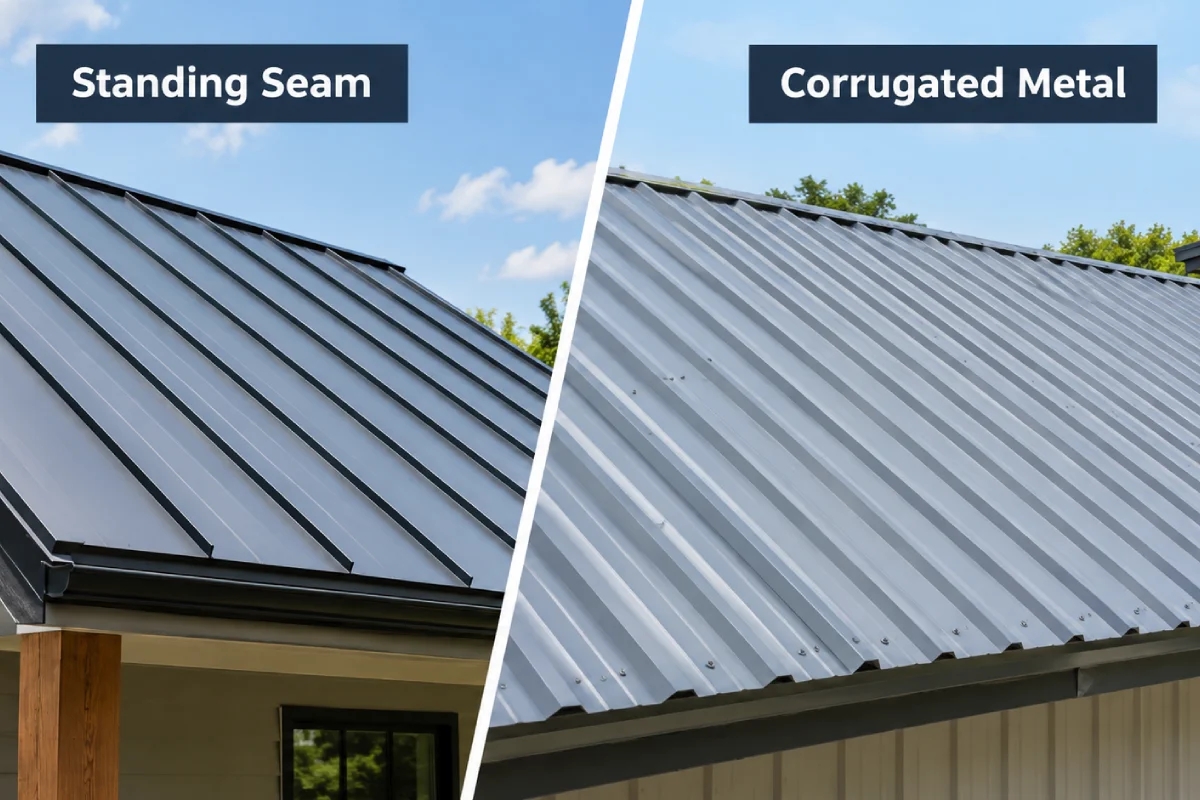
Standing seam roofing consists of flat, broad panels with raised vertical legs — called seams — at each edge. When installed, the seams of adjacent panels interlock, creating a continuous raised ridge that runs from the eave to the ridge of the roof. The fasteners are hidden beneath the seams, so they are not exposed to the weather.
This concealed fastener design is one of the defining features of standing seam roofing. Because the screws or clips that hold the panels in place are hidden, there are no exposed holes in the panel surface where water could potentially enter. This gives standing seam roofs a clean, streamlined appearance and provides excellent weather resistance.
Standing seam panels are typically custom-fabricated to the specific dimensions of the roof, which allows for longer continuous panels with fewer horizontal seams. This reduces potential entry points for water and contributes to the system’s overall weather-tightness.
What Corrugated Metal Roofing Is
Corrugated metal roofing features panels with a repeating wave or ridge pattern. The corrugations give the panels structural rigidity while keeping the material relatively lightweight. Corrugated panels are fastened directly to the roof deck using screws that pass through the panel surface, meaning the fasteners are exposed on the exterior of the roof.
Exposed fastener systems — as corrugated roofing is often called — are simpler and faster to install than standing seam. The panels are pre-manufactured in standard widths and are available from many suppliers, making them widely accessible and generally less expensive. Many residential exposed-fastener roofs today use ribbed profiles such as R-panel rather than true rounded corrugation, but they are fastened the same way and share the same trade-offs.
Corrugated roofing has a more utilitarian appearance that some homeowners find appealing for its industrial or rustic character. It is commonly used on agricultural buildings, workshops, and outbuildings, but it is also a practical and increasingly popular option for residential homes, particularly in rural and contemporary settings.
Weather Performance
The most significant functional difference between the two styles relates to how they handle water and weather.
Standing seam panels are superior in weather resistance because the fasteners are concealed. With no exposed screw holes, there are fewer points where water can penetrate. The interlocking seams create a tight, continuous barrier that sheds water efficiently and resists wind-driven rain. In areas with heavy rainfall, snow, or high winds, standing seam is generally the better-performing option.
The difference that shows up later
Corrugated panels rely on rubber washers on the exposed screws to create a watertight seal. When the roof is new, these washers work well. Over time, however, the rubber can degrade due to UV exposure and temperature cycling, which may allow water to seep around the fasteners. Regular inspection and periodic replacement of fasteners or washers helps maintain the roof’s weather resistance, but this is an ongoing maintenance consideration that standing seam does not require.
In terms of snow shedding, both styles perform well because metal surfaces are naturally slippery. That slipperiness cuts both ways: snow tends to release from a metal roof in a single sheet, so snow guards are worth considering above entrances, walkways, decks, and lower roofs with either style.
Appearance
The visual difference between standing seam and corrugated roofing is distinct, and it often plays a significant role in the homeowner’s decision.
Standing seam
Standing seam has a clean, modern, refined look. The smooth, flat panel surfaces interrupted only by the evenly spaced raised seams give the roof a sleek, architectural quality. Standing seam is widely considered the more visually polished of the two options and works well on contemporary, modern, and transitional home styles. One cosmetic quirk to know about is oil canning, a visible waviness in the flat part of the panel. The panel manufacturer AEP Span describes it as normally an aesthetic concern that does not affect system performance or structural integrity unless the distortion is extreme, and lists striations or stiffening ribs in the flat of the panel, narrower panels, and thicker-gauge metal among the design options that reduce it.
Corrugated
Corrugated roofing has a more textured, industrial appearance. The wave pattern gives it a character that is less formal but can be very attractive on the right building. It suits rustic, farmhouse, and industrial-inspired designs particularly well. The look is more casual and utilitarian, which some homeowners prefer.
Both options are available in a range of colors and finishes, so customization is possible with either style.
Cost Comparison
- Standing seam is the more expensive option — often significantly so. The panels themselves cost more because they are typically custom-fabricated, and the installation is more labor-intensive and requires specialized skills and equipment. The concealed fastener system demands greater precision during installation, which adds to the labor cost.
- Corrugated roofing is more affordable in both materials and installation. The panels are mass-produced in standard sizes, widely available, and faster to install because the exposed fastener method is simpler. For homeowners working within a tighter budget, corrugated roofing provides the benefits of metal roofing — durability, longevity, and weather resistance — at a lower price point.
The cost difference can be substantial. Depending on the specific products and local labor rates, standing seam can cost roughly one and a half to two times more than corrugated metal roofing installed. As a rough national guide, exposed-fastener panels run about $6.00 to $10.00 per square foot installed and standing seam about $9.00 to $16.00; see our cost per square foot guide.
Lifespan and Maintenance
Both standing seam and corrugated metal roofing are long-lasting, but there is a difference in expected lifespan and maintenance needs.
Standing seam
Standing seam roofs typically last 40 to 60 years with minimal maintenance. Because the fasteners are hidden and protected from the elements, there are fewer components that degrade over time. The main maintenance needs are occasional inspections of the seams, flashing, and sealant at penetrations.
Corrugated
Corrugated roofs also last a long time — typically 30 to 50 years — but they require more attention over their lifespan. The exposed fasteners need periodic inspection, and rubber washers may need replacement as they age. If fasteners are not maintained, the roof can develop leaks at the screw points. This does not mean corrugated roofing is unreliable — it simply has a more active maintenance requirement than standing seam.
In terms of the base metal, both styles perform similarly. Steel panels in both styles will last about the same amount of time in a given environment, assuming the coatings are comparable. The difference in longevity comes from the fastener system, not the metal itself.
Roof Pitch
The slope of your roof can make the decision for you. The International Residential Code sets a minimum slope of 3:12 for lapped, exposed-fastener metal panels without applied lap sealant, and 1/2:12 when lap sealant is applied. Standing seam systems are permitted down to 1/4:12. On a low-slope roof, that usually rules out ordinary corrugated panels and leaves standing seam, or a membrane, as the practical choice, and a specific panel’s manufacturer may set a stricter minimum than the code.
Which Should You Choose?
The choice between standing seam and corrugated metal roofing comes down to priorities.
If weather performance, minimal maintenance, and a clean modern appearance are your top priorities — and your budget allows for it — standing seam is the stronger choice. Its concealed fastener system provides better long-term weather resistance, and its lower maintenance needs make it a more hands-off roofing solution over its lifespan.
If budget is a primary concern, or if you prefer the textured, industrial look of corrugated panels, corrugated roofing is a practical and effective option. It delivers the core benefits of metal roofing at a more accessible price point, with the understanding that it will need somewhat more maintenance over time.
Either option is a significant upgrade over asphalt shingles in terms of longevity and weather resistance. The best choice for your home depends on your budget, the look you want, and how much ongoing maintenance you are comfortable with. A qualified roofer who works with both styles can help you evaluate which option suits your specific home and circumstances.