Should You Replace Your Roof Before Installing Solar?

If the roof has less than about ten to fifteen years of life left in it, yes, and the arithmetic is unusually clear for a roofing question. Solar panels last decades. Putting them on a roof that will need replacing partway through their life means paying to remove and refit them, and that cost is entirely avoidable by sequencing the two jobs correctly.
The awkward part is that this decision has to be made before the solar quotation is signed, and solar installers are not always the ones raising it.
The cost of getting the order wrong
Removing an installed array, storing it, replacing the roof and refitting the panels is a substantial job in its own right. Published figures vary widely, commonly quoted somewhere in the range of one and a half to seven thousand, depending on the size of the system and how the mounting was done.
That is money spent achieving nothing. The roof still needs replacing, and the panels end up where they already were. There may also be complications with the solar warranty or the monitoring agreement when a third party detaches the system, which is worth checking in the contract rather than discovering later.
Doing both jobs at once, by contrast, tends to be cheaper than doing them separately, because there is one set of access arrangements and one mobilisation.
Where the threshold sits
The common rule of thumb is that the roof should have at least ten to fifteen years of remaining life before panels go on, and many installers apply something stricter, declining to fit on asphalt shingle roofs beyond a certain age regardless of appearance.
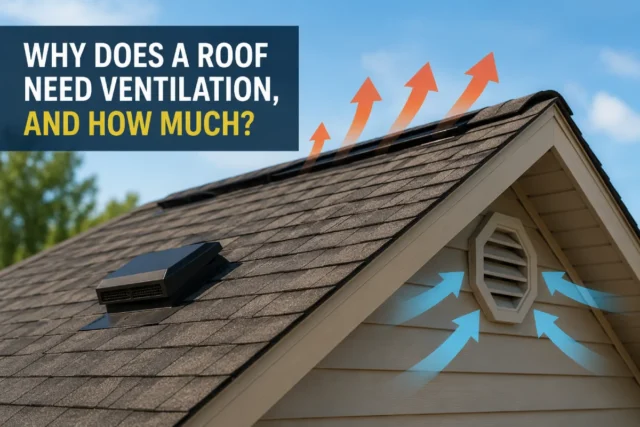
Remaining life is the operative phrase, and it is not the same as age. A twelve-year-old roof that was poorly ventilated may have less left in it than a twenty-year-old roof that was well built. What actually determines this is covered in what affects a roof’s lifespan, and the honest answer usually needs somebody to look.
Get this assessed independently
Have the roof inspected by a roofer you engaged yourself, not by the solar company and not by a roofer the solar company recommends. The two trades have different incentives here: a solar installer is selling a system, and a roof judged marginal is an obstacle to that sale. An independent written assessment of remaining life, before the solar contract is signed, is the single most useful thing you can do. It costs very little compared to the price of removing an array later.
When to replace first
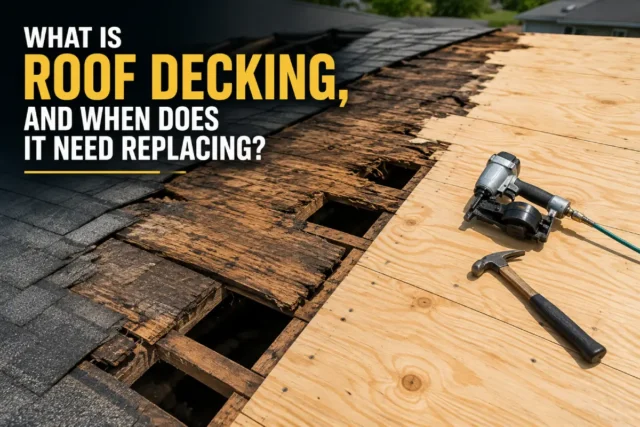
Replace before the panels go on when the roof is at or near the threshold, when there is any active leak or evidence of past leaks, when the decking is suspect, when the covering shows general rather than local wear, or when the roof will need work for any other reason within the next decade.
Replace first also if you want to change the material. Fitting panels onto asphalt and then deciding on metal later means doing the whole exercise twice.
When you do not need to
A roof in the first half of its life, in good condition, with no history of leaks and adequate ventilation, is a perfectly reasonable base for an array. Replacing a sound roof solely because solar is going on is an unnecessary expense.
Panels also shelter the covering beneath them from ultraviolet light and weather, so the shaded area often ages more slowly than the exposed parts of the roof. That is a genuine effect, and it is not a reason to fit panels over a roof that was already marginal.
Doing both together
If the answer is replace first, sequence the two properly rather than treating them as unrelated projects.
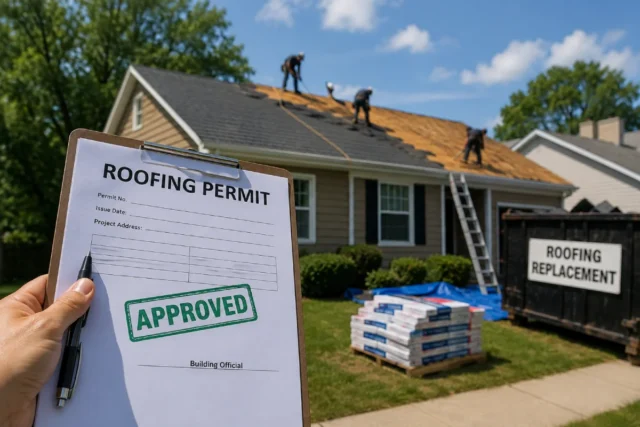
Complete the roof first, then the solar. Tell the roofer that panels are going on, because it affects choices they will otherwise make on their own: where vents and penetrations are placed, what underlayment is specified, and how the flashing details are arranged. Some roofers will fit mounting flashings during the re-roof, which is a much better detail than drilling into a finished roof afterwards.
Consider a longer-life covering while you are there. If a metal roof might last the whole life of the array and beyond, the sequencing question disappears permanently, which is one of the stronger practical arguments for metal roofing.
The question to ask about mounting
Most residential arrays are attached through the covering into the rafters, which means holes in a roof you have just paid for. Done properly, with the correct flashings, this is routine and reliable. Done badly, it is a row of future leaks.
Ask who is responsible if a leak develops at a mounting point, because this is where the two trades point at each other. Get the answer in writing from both, and check whether roof penetrations by another contractor affect your roofing warranty, since work by other trades is a standard exclusion. What a roofing warranty actually covers is worth reading before anybody drills.
Conclusion
Get an independent assessment of remaining roof life before signing anything for solar. If it is under roughly ten to fifteen years, replace the roof first and do the two jobs in sequence rather than paying later to undo one of them.
If the roof is sound, proceed, but settle the mounting and warranty questions in writing first. The expensive version of this mistake is not a bad roof or a bad array. It is discovering in year eight that the two were never considered together.