How Much Does It Cost to Repair a Roof?
Not every roofing problem requires a full replacement. Sometimes, the damage is limited to a small area, the rest of the roof is in good condition, and a targeted repair is the right call. When that is the case, one of the first questions you will ask is: How much is this going to cost?
Roof repair costs vary widely depending on the type and extent of the damage, the roofing material, the roof’s height and accessibility, and the contractor you hire. A minor repair might cost a few hundred dollars. A more involved repair — one that addresses structural damage, multiple leak points, or large areas of compromised roofing — can cost several thousand.
Understanding the typical costs of common roof repairs helps you budget appropriately, evaluate contractor estimates, and decide whether to repair or replace.
Average Roof Repair Costs
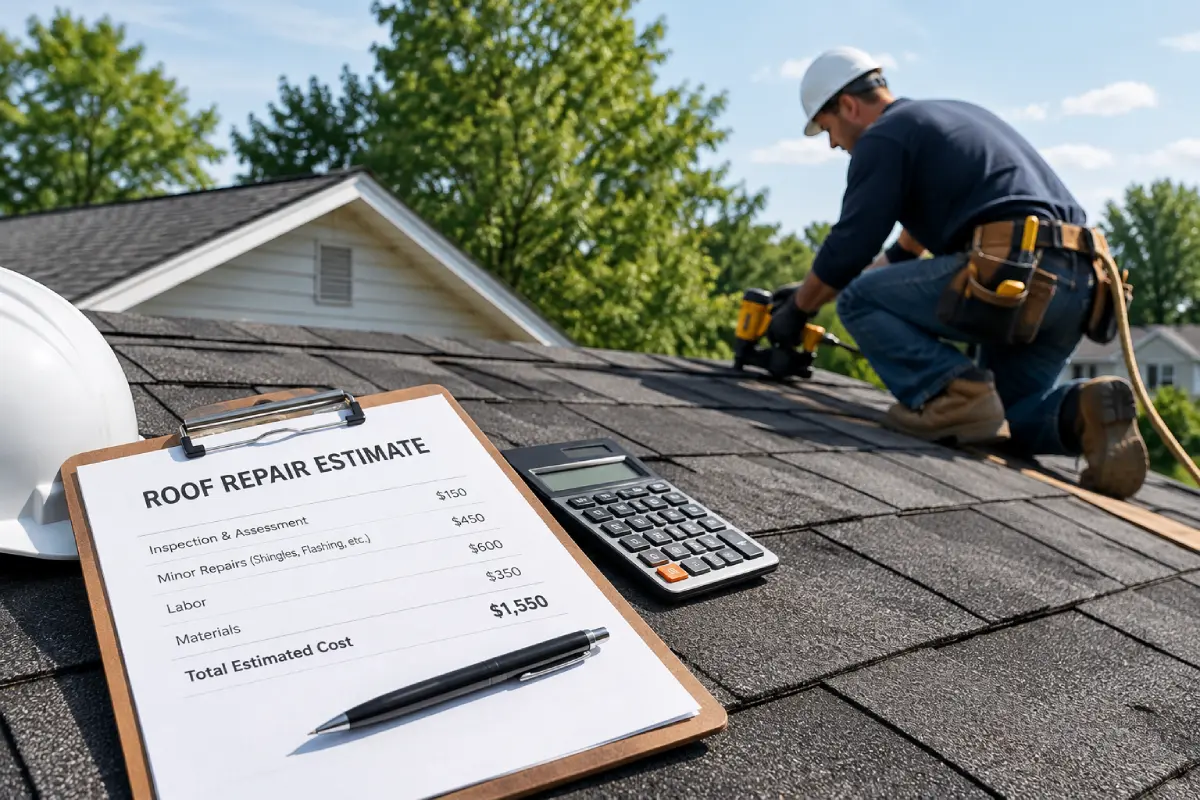
As a general starting point, most homeowners pay between $300 and $1,500 for a typical roof repair by a licensed, insured roofing contractor. That range covers a wide spread of work, from simple shingle replacements to more complex flashing and leak repairs, and current national cost guides put the bigger jobs well above it.
Minor repairs — fixing a small area of damage, replacing a handful of shingles, or sealing a small gap — typically fall in the $150 to $1,000 range. Moderate repairs — addressing a leak, replacing flashing around a chimney or vent, or repairing a section of damaged underlayment — usually cost $1,000 to $3,000. Major repairs — fixing extensive storm damage, addressing structural issues, or repairing large sections of the roof — can run $3,000 to $6,000 or more.
These ranges are general estimates. The actual cost of your repair depends on the specific circumstances of your situation. Let us look at the factors that influence roof repair costs in more detail.
Type of Damage and Repair Needed
The type of problem being addressed is the most significant factor in repair cost. Different types of damage require different materials, techniques, and labor hours.
1. Shingle replacement
Replacing missing or damaged shingles is one of the most common and most affordable roof repairs. If a windstorm has blown off a section of shingles, or if individual shingles have cracked or curled, they can be replaced without disturbing the rest of the roof. The cost depends on the number of shingles being replaced, the type of shingle, and how easily the damaged area can be accessed. Replacing a small area of shingles typically costs $150 to $500.
2. Leak repair
Tracking down and fixing a roof leak is more complex than it might appear. The source of the leak is not always directly above the water stain you see inside your home — water can travel along rafters, sheathing, or other surfaces before dripping down to a visible location. A professional roofer must identify the actual entry point, which may require inspecting the attic, the roof surface, and the flashing at various penetrations. Once the source is found, the repair might involve resealing flashing, replacing a section of underlayment, or patching a hole. Leak repairs typically cost $300 to $1,500 depending on the source and complexity.
3. Flashing repair or replacement
Flashing — the metal strips installed at joints, transitions, and penetrations — is one of the most common sources of leaks. Flashing around a chimney, in a roof valley, at a wall-to-roof transition, or around a plumbing vent can deteriorate, lift, or separate over time. Repairing or replacing flashing involves removing the surrounding shingles, installing new flashing, and re-integrating the shingles. The cost depends on the location and extent of the flashing work. Simple flashing repairs might cost $200 to $500, while more extensive flashing replacement — especially around a chimney — can cost $500 to $2,000 or more.
4. Valley repair
Roof valleys channel large volumes of water and are particularly vulnerable to leaks. If the valley flashing is damaged or the shingles in the valley are deteriorated, the repair involves removing the shingles in the valley area, replacing or repairing the valley flashing or underlayment, and reinstalling shingles. Valley repairs typically cost $500 to $2,000 depending on the size of the valley and the extent of the damage.
5. Vent boot replacement
The rubber or neoprene boot around a plumbing vent pipe is a common failure point. Over time, the boot deteriorates from UV exposure and temperature cycling, cracking and allowing water to enter. Replacing a vent boot is a relatively simple and affordable repair, typically costing $150 to $400.
6. Skylight leak repair
Leaks around skylights can result from deteriorated flashing, failed seals, or cracked glazing. Repair costs depend on the source of the leak and the type of skylight. Resealing or replacing the flashing around a skylight typically costs $300 to $800. If the skylight itself needs to be replaced, the cost is higher — typically $1,000 to $2,500 including the new skylight unit and installation.
7. Gutter-related repairs
While gutters are technically a separate system from the roof, gutter problems often manifest as roof problems. Clogged, damaged, or improperly pitched gutters can cause water to back up under the shingles, leading to leaks and water damage at the roof edge. Gutter repairs typically cost $150 to $600 depending on the extent of the work.
8. Storm damage repair
Storm damage — from wind, hail, or falling debris — can range from minor to severe. A few missing shingles from a windstorm might be a $200 to $400 repair. Hail damage across a larger area may require more extensive work. A fallen branch that has punctured the roof can involve structural repair in addition to roofing work, potentially costing $1,000 to $5,000 or more depending on the severity.
9. Structural repair
If moisture has caused the decking or the rafters underneath to rot, the repair goes beyond the roofing surface. Damaged decking must be cut out and replaced, which costs $70 to $150 per sheet installed. Rafter or truss repair is more involved and may require a structural engineer’s assessment. Structural repairs can cost $3,000 to $6,000 or more depending on the extent of the damage.
Material-Specific Repair Costs
The type of roofing material on your home affects repair costs because different materials require different handling and different skill levels.
- Asphalt shingle repairs are the most affordable because asphalt shingles are widely available, relatively easy to work with, and do not require specialized tools. Most roofing contractors are experienced with asphalt shingle repair, so you have a wide range of options.
- Metal roof repairs can be more expensive because metal panels require specialized tools for cutting, bending, and fastening. Matching the existing panels — especially for standing seam roofs — may require ordering custom pieces from the manufacturer. A simple metal roof repair might cost $500 to $1,500, while more involved repairs can cost more.
- Wood shingle and shake repairs require working with a material that is less commonly installed today. Finding matching wood shingles can be challenging, and the installation process requires more handwork. Wood repairs typically cost 20 to 40 percent more than comparable asphalt repairs.
- Tile roof repairs are among the most expensive because tiles are heavy, fragile, and require careful handling. Walking on a tile roof without breaking tiles requires experience and technique. Replacement tiles must match the existing ones in color, profile, and manufacturer. Tile repairs typically cost $500 to $2,000 or more depending on the extent of the damage and the type of tile.
- Slate roof repairs require specialized skills that relatively few roofers possess. Each slate tile is individually removed, and new tiles must be matched to the existing material. The work is slow and meticulous. Slate repairs are the most expensive, often costing $800 to $3,000 or more for a moderate repair.
Roof Accessibility and Height
The physical characteristics of your roof affect repair costs because they affect the time and safety measures required for the work.
A single-story home with a moderate-pitch roof and easy ground access is the least expensive scenario. Workers can set up ladders easily, transport materials efficiently, and move around the roof safely.
A two-story or three-story home requires more time for setup, material transport, and safety precautions. Workers must climb higher, equipment must be raised further, and the risk increases. These factors add to the labor cost.
Why pitch changes the price
A steep roof — one with a pitch greater than 8:12 — is more difficult and dangerous to work on. Workers need additional safety equipment and cannot move as quickly. The repair itself may take longer because the steep angle makes it harder to handle materials and tools. Steep roofs can add 15 to 30 percent to the cost of a repair.
Limited access — narrow side yards, landscaping obstacles, power lines near the roof, or other obstructions — can also increase costs by making it harder to set up equipment and stage materials.
Emergency and After-Hours Repairs
If your roof is actively leaking during a storm and you need immediate help, you will likely pay a premium for emergency service. Emergency roof repair — especially outside of normal business hours, on weekends, or during severe weather — typically costs 20 to 50 percent more than the same repair performed under normal scheduling.
Emergency service involves a contractor mobilizing a crew on short notice, potentially during dangerous conditions. The premium reflects the urgency, the inconvenience, and the additional risk involved.
If you have a roof leak that is not an active emergency — for example, a slow leak that you have contained with a bucket — scheduling the repair during normal business hours will save you money. However, do not delay too long. A small leak can cause significant water damage if left unaddressed, and the cost of repairing water-damaged ceilings, walls, insulation, and belongings can far exceed the cost of the roof repair itself.
Diagnostic Costs
Some contractors charge a fee for diagnosing the source of a roof leak, especially if the source is not obvious. This diagnostic fee typically ranges from $100 to $300 and may or may not be credited toward the cost of the repair if you hire the contractor to do the work.
The diagnostic process involves inspecting the roof surface, the attic, the flashing, and other potential leak sources. For complex or intermittent leaks — those that only occur during certain wind directions or specific rain conditions — the diagnosis may require more time and effort.
Many roofing companies offer free inspections and estimates for straightforward repairs. However, for complex diagnostic work, a fee is reasonable and reflects the time and expertise required to identify the problem.
Repair Versus Replacement: The Cost Threshold
One of the most important cost calculations in roofing is determining when a repair is no longer cost-effective and a replacement makes more sense. There is no single rule that applies to every situation, but there are some general guidelines.
If the cost of the repair approaches or exceeds 25 to 30 percent of the cost of a full replacement, and the roof is in the second half of its expected lifespan, replacement is usually the better investment. Spending $3,000 to repair a roof that will need to be replaced in two or three years anyway means you are spending $3,000 that would be better applied toward a new roof.
If the damage is limited to a small area and the rest of the roof is in good condition with significant life remaining, a repair makes sense even if the cost is substantial — because the repaired area will perform well alongside the rest of the roof for years to come.
If you are experiencing recurring problems — repeated leaks in the same area, multiple repairs within a short time frame, or a pattern of escalating issues — the roof is likely telling you that the problem is systemic, not isolated. In that case, continuing to invest in repairs is throwing good money after bad.
A trustworthy contractor will help you make this evaluation honestly. They should be willing to perform a repair when a repair is the right call, and they should tell you when replacement makes more sense — even if the replacement is a bigger job for them.
Insurance Coverage for Roof Repairs
If the damage to your roof was caused by a covered event — a windstorm, hail, falling tree, or other sudden, accidental cause — your homeowner’s insurance may cover some or all of the repair cost. Here are some key points to understand.
Insurance typically covers sudden, accidental damage. It does not cover wear and tear, gradual deterioration, or damage resulting from neglect. If your roof is simply old and worn out, that is a maintenance issue, not an insurance claim.
Document the damage thoroughly before making any repairs. Take clear photos and videos from multiple angles. Keep any damaged materials that were removed — your insurance adjuster may want to see them.
File the claim promptly. Most insurance policies have time limits for reporting damage after a loss event. Waiting too long can jeopardize your claim.
Get a professional assessment. A roofing contractor experienced with insurance claims can provide documentation of the damage, an estimate for the repair, and support during the claims process. Some contractors work directly with insurance companies, which can streamline the process.
Understand your deductible. Your insurance policy has a deductible — the amount you pay out of pocket before insurance coverage kicks in. If the repair cost is close to or less than your deductible, filing a claim may not be worthwhile.
Multiple claims can affect your premiums. If you have filed claims recently, filing another one — even for a legitimate repair — may result in higher premiums or non-renewal of your policy. Weigh the cost of the repair against the potential impact on your insurance costs.
Getting Accurate Repair Estimates
To get an accurate estimate for your roof repair, start by finding a reputable, licensed, and insured roofing contractor. Look for contractors with experience in your type of roofing material and positive reviews from other homeowners in your area.
When the contractor inspects your roof, ask them to explain what they found, what is causing the problem, and what they recommend as the repair. A good contractor will show you the damage — either in person on the roof or with photos — and explain the proposed repair in terms you understand.
The estimate should include a description of the work, the materials to be used, the estimated cost, and the expected timeline. If the contractor identifies additional issues during the inspection, they should explain those as well and provide separate pricing for any additional work.
Getting two or three estimates for a repair is reasonable, especially for larger or more complex repairs. However, for minor repairs, the cost of getting multiple estimates — in terms of your time and the contractors’ time — may not be justified. Use your judgment based on the scope of the repair.
Preventing Future Repair Costs
The best way to manage roof repair costs over time is to prevent problems before they start. Regular maintenance and proactive care extend the life of your roof and reduce the frequency and severity of repairs.
Schedule a professional roof inspection every two to three years, and after any major storm. A professional inspection can catch small problems — lifted flashing, cracked caulk, early granule loss — before they become leaks.
Keep your gutters clean and functioning. Clogged gutters cause water to back up under the shingles and accelerate deterioration at the roof edge. Clean your gutters at least twice a year — in the spring and fall — and more often if you have overhanging trees.
Trim trees and branches that overhang your roof. Overhanging branches drop debris, promote moss and algae growth, and pose a risk during storms. Keeping branches trimmed back reduces these risks.
Address moss and algae growth promptly. If you notice moss or algae growing on your roof, treat it before it causes damage. Moss holds moisture against the shingles and can cause them to deteriorate faster. Gentle cleaning without a pressure washer removes it. Zinc or copper strips, or algae-resistant shingles, are worth considering when the roof is eventually replaced, but the Asphalt Roofing Manufacturers Association advises against adding strips to an existing roof. See how to clean roof moss safely.
Do not ignore small problems. A few missing shingles, a small water stain on the ceiling, or a lifted piece of flashing may seem minor, but these small issues can quickly become big problems if water infiltrates the structure. The cost of fixing a small problem now is almost always less than the cost of fixing the big problem it becomes later.
Conclusion
Roof repair costs range from as little as $150 for a simple fix to several thousand dollars for more extensive work. The cost depends on the type and extent of the damage, the roofing material, the accessibility of the roof, and the contractor you hire.
Understanding these cost factors helps you budget for repairs, evaluate contractor estimates, and make smart decisions about when to repair and when to replace. Regular maintenance and prompt attention to small problems are the most effective ways to keep repair costs manageable over the life of your roof.
When a repair is needed, choose a licensed, insured, experienced contractor who will diagnose the problem accurately, explain the proposed solution clearly, and perform the work to a high standard. A quality repair done right the first time is always more cost-effective than a cheap repair that has to be redone.