Roof Repair vs. Replacement: How to Decide
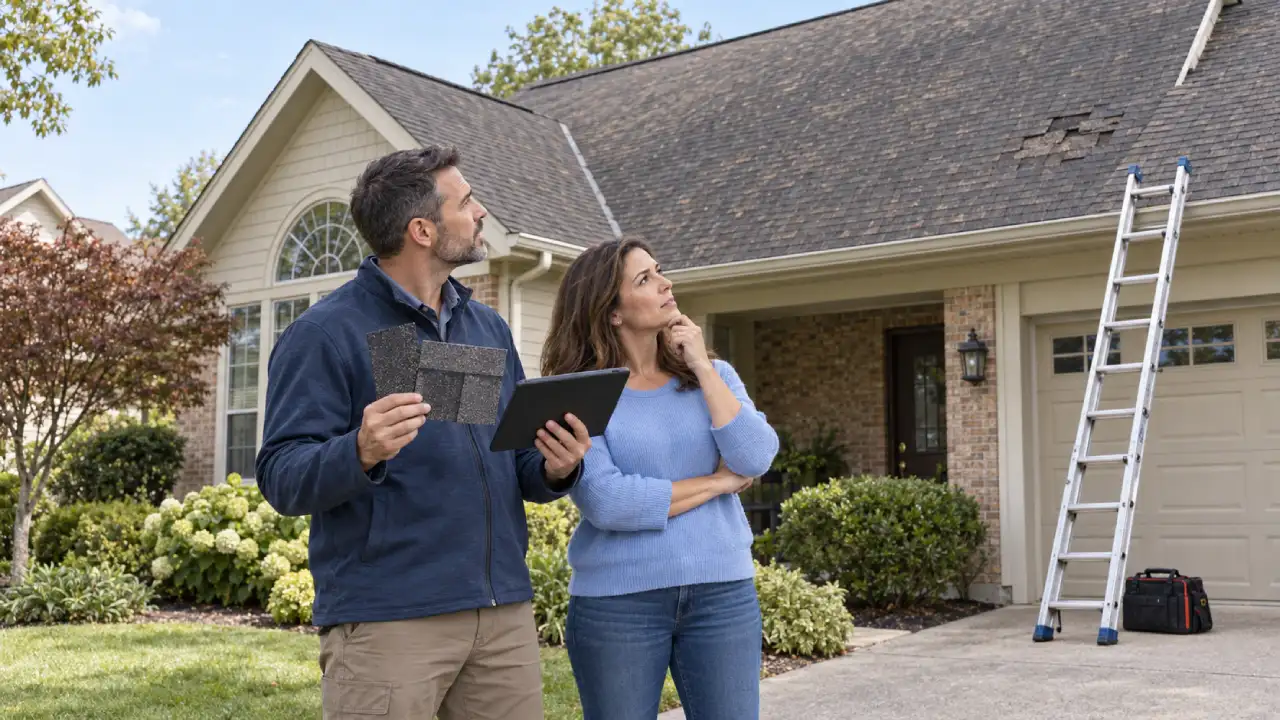
When you spot a leak, a missing shingle, or water stain on your ceiling, the first question that crosses your mind is usually: can this be fixed with a repair, or do I need a whole new roof?
It is a fair question, and the answer matters. A roof repair might cost a few hundred dollars. A full replacement of a standard asphalt shingle roof typically runs from about $8,000 to $15,000, and more for larger roofs or premium materials. But choosing repair when you really need a replacement can cost you even more in the long run — because the underlying problem keeps getting worse while you are only treating the symptoms.
This article will help you understand the difference between roof repair and roof replacement, the factors that determine which one is right for your situation, and how to make a decision you will not regret.
What Counts as a Roof Repair?
A roof repair addresses a specific, localized problem without disturbing the rest of the roof. Common repairs include:
- Replacing a few missing or damaged shingles
- Fixing a small leak around a chimney, vent, or skylight
- Reattaching or replacing lifted flashing
- Sealing minor gaps or cracks
- Patching a small area of damaged underlayment
- Fixing a small section of damaged gutter or downspout
Repairs are appropriate when the damage is limited in scope, the rest of the roof is in good condition, and the roof itself still has significant life left in it. If your roof is relatively young and well-maintained, a targeted repair is often the smart choice.
What Does a Roof Replacement Involve?
A roof replacement means tearing off all the existing roofing materials — shingles, underlayment, flashing in many cases — down to the deck, and then installing an entirely new roofing system. Depending on the scope, it may also include:
- Replacing damaged decking (plywood or OSB)
- Upgrading ventilation (ridge vents, soffit vents)
- Installing new flashing throughout
- Adding ice and water shield in vulnerable areas
- Installing drip edge and starter strips
- Putting on new gutters if needed
A replacement gives you a completely fresh start. Every component is new, installed to current building codes, and backed by new manufacturer and workmanship warranties.
The Key Factors in Your Decision
Deciding between repair and replacement comes down to several interconnected factors. No single factor is usually enough on its own — you need to look at the full picture.
1. The Age of Your Roof
This is often the most important consideration. If your asphalt shingle roof is 20 years old and you are seeing problems, repairs are usually a temporary fix at best. The rest of the shingles are just as old and just as worn — they will start failing soon too.
On the other hand, if your roof is only 8 years old and you have a localized issue from storm damage or an installation error, repair makes perfect sense. The remaining shingles have plenty of life left.
Here is a general rule of thumb: if your roof has used up more than 75 percent of its expected lifespan and you are facing significant repairs, replacement is usually the better investment.
2. The Extent of the Damage
A few missing shingles after a windstorm is a repair. Damage across 30 percent or more of the roof surface is a different story.
The general industry guideline is:
- Less than 25 percent of the roof affected: Repair is usually viable
- 25 to 30 percent affected: A judgment call that depends on age and overall condition
- More than 30 percent affected: Replacement is typically recommended
When damage is widespread, patching individual spots creates a patchwork roof with inconsistent aging and performance. You end up with old materials next to new materials, which can lead to uneven wear and new problems at the transitions.
3. The Condition of the Decking
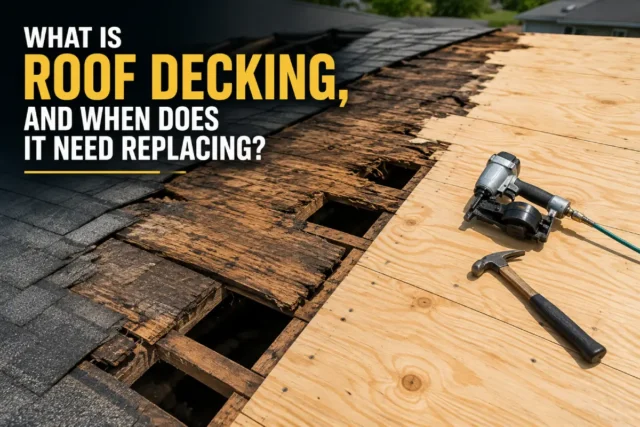
The decking — the flat boards that form the structural base of your roof — is what everything else sits on. If the decking has been compromised by moisture, rot, or pest damage, simply replacing the shingles on top will not solve the problem.
During a professional inspection, a roofer can check for soft spots, discoloration, and structural weakness in the decking. If significant decking damage is found, a replacement that addresses the full structure is necessary.
4. How Many Layers Already Exist
Many areas allow a maximum of two layers of asphalt shingles on a roof. If you already have two layers, you cannot add another one on top. The old layers must be torn off before anything new goes on.
If you are already at two layers and facing issues, a full replacement is your only option. Even if you are at one layer and considering a second overlay (laying new shingles over old ones), most roofing professionals advise against it. Overlaying hides problems, adds weight to the structure, and shortens the lifespan of the new shingles.
5. The Source and Pattern of Leaks
A single, traceable leak — say, from a cracked pipe boot or a piece of lifted flashing — is usually a straightforward repair. But if you are experiencing multiple leaks in different areas, or if leaks keep recurring after previous repairs, the problem is likely systemic rather than isolated.
Recurring leaks are one of the clearest signals that repairs are no longer holding. When water is finding its way in through multiple points of failure, the entire roofing system is compromised.
6. Your Long-Term Plans
How long you plan to stay in your home should influence your decision. If you are selling in the next year or two, a well-executed repair might be all you need to get through the sale — though keep in mind that a buyer’s home inspection will likely flag roof issues.
If this is your long-term home, investing in a full replacement often makes more sense. You get decades of protection, better energy efficiency, improved curb appeal, and the peace of mind that comes with a brand-new roof.
7. Energy Efficiency and Ventilation
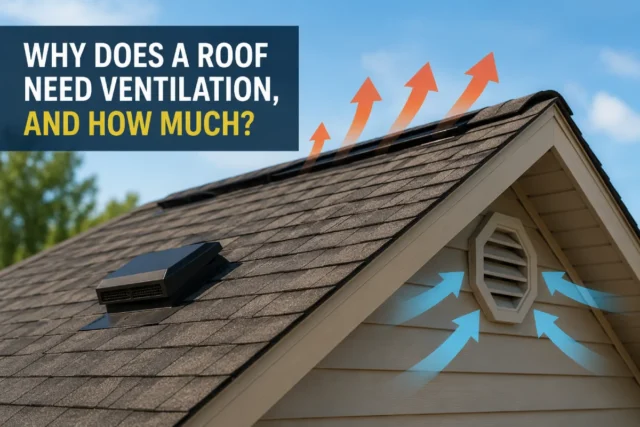
An aging roof often comes with outdated ventilation and insulation. A full replacement gives you the opportunity to upgrade your attic ventilation, add proper insulation, and improve your home’s overall energy performance. These upgrades are difficult to do with a simple repair and can pay for themselves over time through lower energy bills.
The Cost Perspective
It is natural to compare the cost of a repair to the cost of a replacement. But cost should be evaluated in terms of value over time, not just the immediate price tag.
When repair is the right call
A repair makes financial sense when:
- The cost of the repair is modest relative to a replacement
- The roof still has many years of useful life remaining
- The repair addresses the root cause of the problem, not just a symptom
- You are not likely to need additional repairs in the near future
A replacement makes financial sense when:
- You are facing repeated or escalating repair costs
- The roof is near the end of its lifespan
- Energy savings and warranty coverage offset the higher upfront cost
- The damage is too extensive for repairs to address effectively
Think of it this way: if you are spending money on repairs every year or two, those costs add up. At some point, you have paid a significant portion of what a new roof would have cost — without getting the benefit of a new roof.
Insurance Considerations
If the damage to your roof was caused by a covered event — a storm, hail, falling tree — your homeowner’s insurance may help cover the cost of repair or replacement. Here are a few things to keep in mind:
- Report damage promptly. Most insurance policies have time limits for filing claims after a loss.
- Document everything. Take photos and videos of the damage before any repairs are made.
- Get a professional inspection. An adjustor will assess the damage, but having your own contractor’s assessment gives you a second opinion.
- Understand your policy. Some policies cover full replacement cost; others cover actual cash value, which accounts for depreciation. Know which one you have. Many policies now switch roof claims to actual cash value, or to a roof payment schedule that pays less each year, once the roof passes a certain age, and some exclude cosmetic hail damage such as dents in metal.
Insurance typically covers sudden, accidental damage — not wear and tear from age. If your roof is simply old and worn out, that is a maintenance issue, not an insurance claim.
Getting a Professional Opinion
While the information in this article gives you a solid framework, there is no substitute for a professional inspection. A qualified roofing contractor can:
- Assess the age and condition of your current roof
- Identify damage that is not visible from the ground
- Check the condition of the decking, flashing, and ventilation
- Provide an honest recommendation based on what they find
- Give you a detailed written estimate for either repair or replacement
When choosing a contractor, look for one who is licensed, insured, and experienced in your area. Ask for references, read reviews, and get multiple estimates if you are unsure. A trustworthy contractor will not push you toward a replacement if a repair is the right call — and they will not recommend a patch when the roof really needs to come off.
A Quick Decision Framework
To summarize, here is a simple way to think about your situation:
Choose repair if:
- The damage is small and localized
- Your roof is in the first half of its expected lifespan
- The decking and structure are sound
- This is an isolated incident, not a recurring pattern
- The repair cost is reasonable relative to a full replacement
Choose replacement if:
- Your roof is near or past its expected lifespan
- Damage covers a large portion of the roof
- The decking is compromised
- You already have two layers of shingles
- Leaks are recurring despite previous repairs
- You want to upgrade ventilation, insulation, or materials
- You plan to stay in the home long-term
The Bottom Line
Repairing a roof when it only needs a repair is smart. Replacing a roof when it truly needs replacement is also smart. The costly mistake is doing one when the situation calls for the other.
Take the time to understand your roof’s age, condition, and the scope of the problem. Get a professional inspection. Weigh the short-term cost against the long-term value. And make a decision based on the full picture, not just the most visible symptom.
Your roof protects everything underneath it. Whether that means a targeted repair or a full replacement, making the right call now saves you money, stress, and headaches down the road.