Why Do Roofing Estimates Differ So Much?
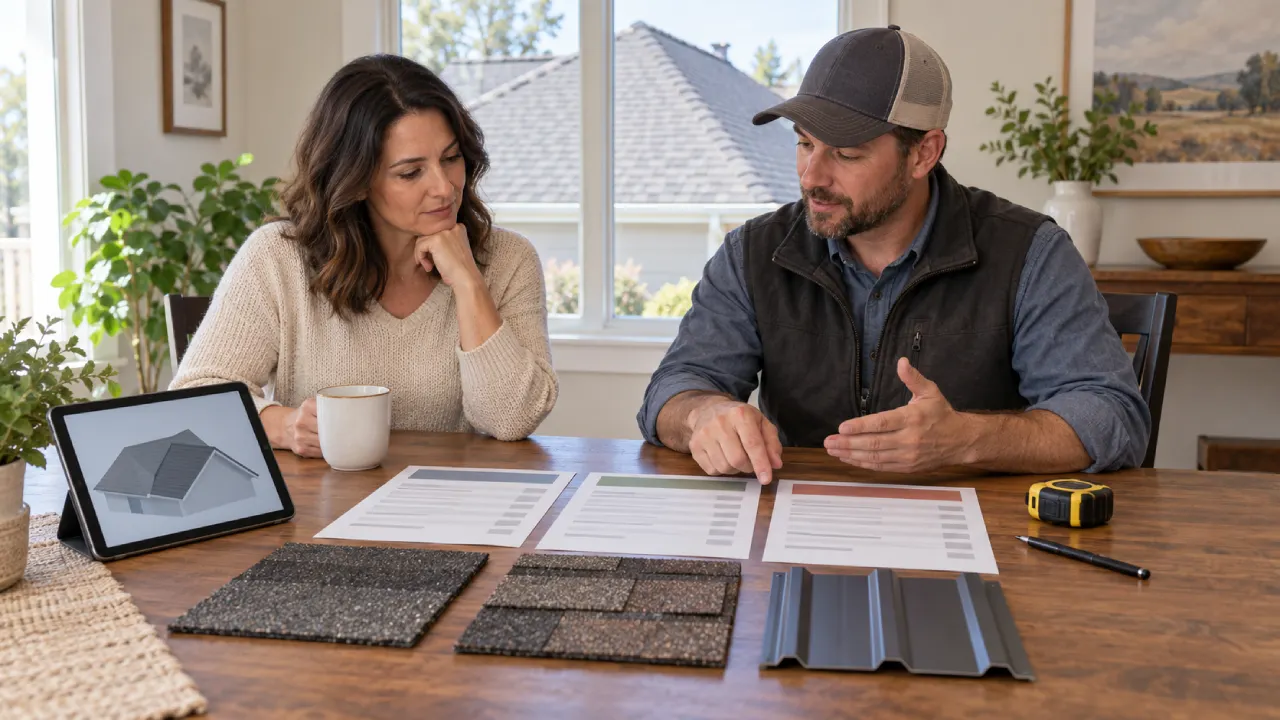
You have done the responsible thing. You called three, four, maybe five roofing contractors to give you estimates for your roof replacement. You expected the numbers to be in the same ballpark. Instead, you are staring at quotes that range from $8,000 to $22,000 — for what seems like the same job. How is that possible? Is someone trying to rip you off? Is the lowest bid cutting corners? Is the highest bid inflated?
Before you make assumptions in any direction, it helps to understand why roofing estimates can differ so dramatically. In many cases, the differences are legitimate and explainable. In some cases, they are red flags. Knowing the difference empowers you to make a smart decision rather than simply choosing the lowest number or the highest.
This article explores the most common reasons roofing estimates vary so much, what those differences mean for you as a homeowner, and how to compare bids fairly so you can choose the right contractor with confidence.
Different Materials at Different Price Points
One of the most common reasons for large differences in roofing estimates is that contractors are quoting different materials — sometimes without making that difference clear.
Within the category of asphalt shingles alone, there is a wide range of products. A basic three-tab asphalt shingle is significantly cheaper than a premium architectural shingle from a top manufacturer. A contractor quoting a budget three-tab shingle will come in thousands of dollars lower than one quoting a high-end dimensional shingle with a 50-year warranty — and both might simply describe the material as “asphalt shingles” in their estimate.
The same applies to underlayment. Synthetic underlayment comes in various grades, from basic to heavy-duty. Some contractors include ice and water shield only in code-required areas, while others apply it more extensively for enhanced protection. One might use a basic felt paper while another uses a premium synthetic membrane that costs several times more per roll.
Flashing materials also vary. Standard galvanized steel flashing is the default for most contractors, but some use aluminum, and premium installations might use copper. The cost difference between these materials is significant.
When comparing estimates, look at the specific materials listed — or ask each contractor to specify exactly what products they are using. Brand names, model numbers, and product grades matter. If an estimate does not specify materials in detail, ask for a written specification before you compare it to other bids.
Scope of Work Differences
Not every contractor includes the same work in their base estimate. This is one of the most significant and most overlooked sources of cost variation.
The most common reason two prices differ
Some contractors include full tear-off and disposal in their base price. Others may quote an overlay (installing new shingles over old ones) as the base option, with tear-off as an additional cost. An overlay is cheaper because it skips the labor-intensive tear-off and disposal process, but it is generally not recommended and may void material warranties.
Some estimates include flashing replacement as standard. Others reuse existing flashing to reduce the bid, which can lead to leaks down the road since old flashing may not integrate properly with new roofing materials.
Ventilation upgrades are another area where scope varies. Some contractors include ridge vent installation and soffit vent evaluation as part of a standard roof replacement. Others treat ventilation as an add-on that increases the total cost beyond the initial estimate.
Decking repair allowances vary. Some contractors include a generous allowance for replacing damaged decking in their base price. Others exclude decking repair entirely, noting it as an additional charge if needed. If the latter contractor’s bid looks lower, it may not be once decking repair is factored in.
Cleanup and disposal practices differ. A thorough contractor will include complete cleanup, magnetic nail sweeping of the grounds, gutter clearing, and dumpster removal. A less thorough contractor might do a minimal cleanup and leave debris behind.
When you compare estimates, create a spreadsheet that lists each component of the work and check whether each contractor includes it. This apples-to-apples comparison often reveals that the bids are closer together than they initially appeared — or that the lowest bid is missing critical components.
Labor Quality and Crew Experience
Roofing labor is not a commodity. The skill, experience, and professionalism of the crew that installs your roof have a direct and significant impact on the quality of the installation and the lifespan of your roof.
Contractors who invest in experienced, well-trained crews pay those workers more. Those higher labor costs are reflected in the estimate. In return, you get a crew that works efficiently, installs materials according to manufacturer specifications, pays attention to flashing details, maintains a clean and safe worksite, and stands behind their work with a meaningful warranty.
Contractors who use less experienced crews, pay lower wages, or rely heavily on subcontractors they may not work with regularly can offer lower bids. The trade-off is a higher risk of installation errors, shortcuts, and quality issues that may not become apparent until years later.
This does not mean that every low bid indicates poor workmanship, or that every high bid guarantees excellence. But labor quality is a real and significant factor in pricing, and it is one of the hardest things for a homeowner to evaluate from a written estimate alone.
To assess a contractor’s quality, look beyond the estimate. Check online reviews, ask for references from recent projects, verify their licensing and insurance, and ask about the experience level of their crews. A contractor who is confident in their work will be happy to share this information.
Overhead and Business Structure
Roofing companies have different business structures and different levels of overhead, and these differences affect their pricing.
A large, established roofing company with a physical office, office staff, fleet vehicles, marketing expenses, and insurance costs has higher overhead than a small operation run by an owner-operator out of a truck. The larger company charges more per job to cover those overhead costs. In return, you may get more reliable scheduling, better communication, stronger warranty backing, and a company that will be around to honor their warranty years down the road.
A smaller contractor with lower overhead can often bid lower on the same job. They may do excellent work, and the lower price does not necessarily indicate lower quality. However, smaller operations may be more vulnerable to scheduling issues, may have less robust warranty backing, and may not be in business years from now if you need warranty service.
Storm-chasing contractors — companies that move into an area after a major weather event, do a large volume of jobs quickly, and then move on — often offer very competitive prices. They can do this because they operate with a temporary, high-volume model. However, warranty service after they leave the area can be difficult or impossible to obtain.
Understanding the business behind the bid helps you evaluate the true value of the estimate — not just the number on the page.
Insurance and Licensing Costs
Legitimate roofing contractors carry general liability insurance and workers’ compensation insurance. These policies protect you as the homeowner if something goes wrong — property damage during the project, a worker injured on your property, or defects in the installation.
Insurance costs money, and the premiums are reflected in the contractor’s pricing. A fully insured contractor will have higher overhead — and therefore higher bids — than an uninsured or underinsured operator. Some contractors skip workers’ compensation insurance, use day laborers without coverage, or carry only minimal liability coverage. This reduces their costs and their bids, but it exposes you to significant financial risk.
If a worker is injured on your property and the contractor does not have workers’ compensation insurance, you could be liable for medical costs and lost wages. If the contractor damages your home and does not carry adequate liability insurance, you may have difficulty recovering the cost of repairs.
Always verify that a contractor carries current, adequate insurance. Ask for certificates of insurance and verify them with the insurance company. A contractor who cannot or will not provide proof of insurance should not be on your consideration list, regardless of how attractive their price is.
Warranty Terms
The warranty offered by a contractor is another factor that influences the estimate — and another area where estimates can differ significantly.
Manufacturer warranties on roofing materials vary widely. Basic asphalt shingles might come with a 25-year warranty, while premium products from the same manufacturer might carry a 50-year or lifetime warranty. The cost of the materials reflects these warranty differences, and that cost shows up in the estimate.
Contractor workmanship warranties also vary. Some contractors offer a one-year workmanship warranty. Others offer five years, ten years, or even lifetime workmanship coverage. A longer workmanship warranty represents greater confidence in the installation and greater risk assumption by the contractor — both of which add value to the estimate.
Some manufacturers offer enhanced warranty programs that require the contractor to be certified or approved by the manufacturer and to install a complete system of the manufacturer’s products. These enhanced warranties — which may cover both materials and labor for extended periods — typically require the contractor to use only that manufacturer’s products from top to bottom, including underlayment, ice and water shield, and ventilation components. This system approach costs more but provides superior protection.
When comparing estimates, compare the warranty terms as carefully as you compare the price. A lower bid with a weaker warranty may end up costing you more if something goes wrong.
Timing and Market Conditions
The timing of your project can affect estimates in ways that have nothing to do with your specific roof.
Roofing is a seasonal business in many regions. Contractors are busiest in late summer and fall, when weather is favorable and homeowners want projects completed before winter. During peak season, demand is high, crews are stretched thin, and prices tend to be higher.
In the slower seasons — late winter and early spring in many areas — contractors may offer more competitive pricing to keep their crews busy. Getting estimates during the off-season might result in lower bids than the same project quoted during peak season.
Market conditions also play a role. After a major storm, demand for roofing contractors surges in the affected area. Prices increase as contractors manage the surge, and homeowners may have fewer options as the best contractors fill their schedules quickly. In contrast, during periods of low demand, contractors compete more aggressively for work and prices may be more favorable.
Material costs fluctuate with supply chain conditions, raw material prices, and manufacturing capacity. Significant increases in the cost of petroleum (a key ingredient in asphalt shingles), steel, aluminum, or other raw materials are passed through to the consumer. If material prices have recently increased, newer estimates will be higher than older ones for the same scope of work.
Profit Margins
Every legitimate business needs to make a profit to survive. Roofing contractors are no exception. However, the profit margin they build into their estimates varies.
Some contractors operate on thin margins, aiming for high volume and repeat business. Others build in a higher margin to account for the risks and uncertainties of the business. Neither approach is inherently right or wrong — they represent different business strategies.
A contractor with an unusually thin margin may be less flexible if unexpected issues arise during the project. A contractor with a healthy margin has more room to absorb surprises without hitting you with change orders.
It is worth noting that an estimate that seems unreasonably low — far below other bids for the same scope of work — may indicate a contractor who is either cutting corners, planning to make up the difference with change orders, or operating unsustainably. Extremely low bids are often the most expensive in the long run.
How to Compare Estimates Fairly
Given all these variables, how do you compare roofing estimates and choose the right contractor? Here is a practical approach.
First, make sure every contractor is bidding on the same scope of work. Provide each contractor with the same information and ask them to include the same components in their estimate. If one contractor proposes a different scope, understand why and account for the difference in your comparison.
Second, ask each contractor to specify materials by brand, model, and grade. This allows you to make a direct comparison on materials and understand what you are paying for.
Third, evaluate the contractor beyond the estimate. Check licensing, insurance, reviews, references, and warranty terms. A slightly higher bid from a well-established, fully insured contractor with strong reviews and a solid warranty is usually a better value than a lower bid from a contractor who cannot provide those assurances.
Fourth, ask questions. If an estimate is significantly higher or lower than others, ask the contractor to explain the difference. A professional contractor will be happy to walk you through their estimate and explain what is driving the cost. If they cannot or will not explain, that is a red flag.
Fifth, trust your instincts. If something feels off about a contractor — high-pressure sales tactics, reluctance to provide documentation, vague estimates, or unrealistic promises — move on. There are plenty of reputable contractors who will treat you fairly and transparently.
The Bottom Line
Roofing estimates differ because roofing projects differ. Different materials, different scopes of work, different crew quality, different overhead structures, different warranty terms, and different market conditions all contribute to the range of prices you will see.
The key to making a good decision is not finding the lowest bid — it is finding the best value. That means understanding what is included in each estimate, evaluating the quality and reputation of each contractor, comparing warranty terms, and choosing a partner you trust to do the job right.
Your roof protects your home for decades. The estimate you choose today determines the quality of that protection for years to come. Take the time to compare carefully, ask questions, and choose wisely.