Metal Roofs: Pros, Cons, Costs, and Lifespan
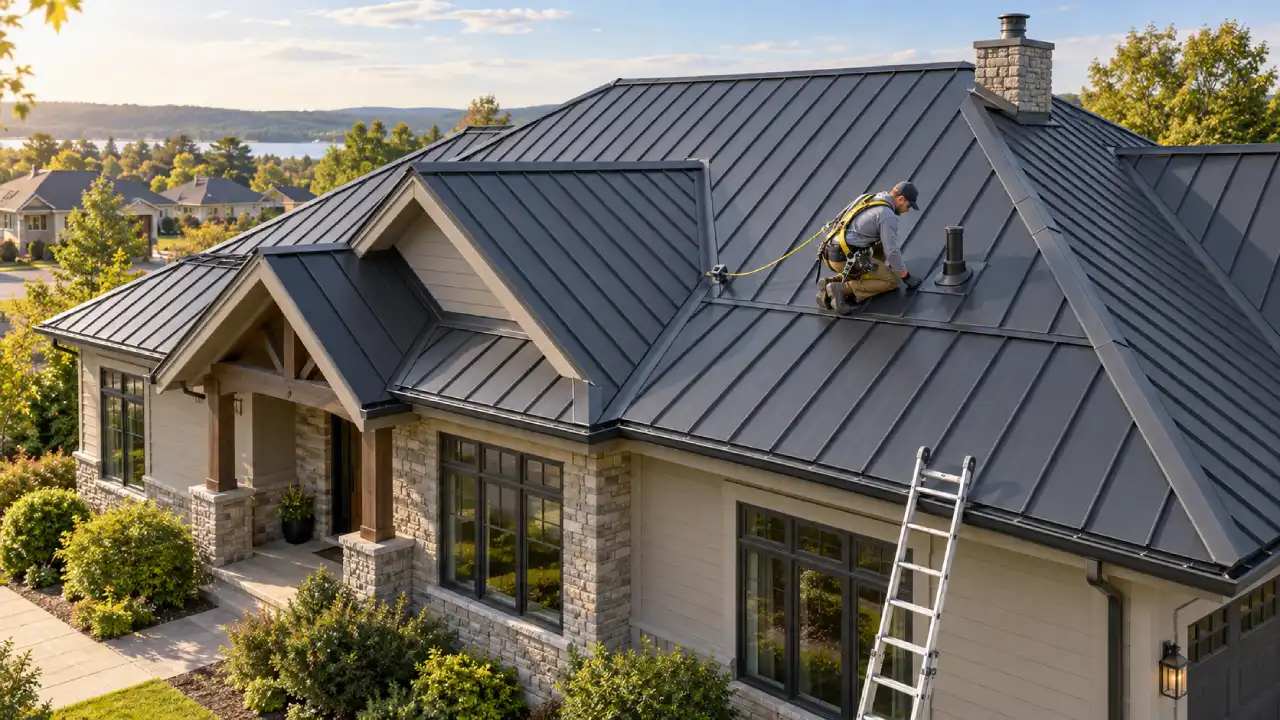
Metal roofing has grown significantly in popularity over the past two decades. Once associated mainly with agricultural buildings and commercial properties, metal roofs are now a common sight on residential homes in neighborhoods of every style. Homeowners are drawn to metal roofing for its durability, longevity, and modern appearance, but like any roofing material, it comes with trade-offs that are worth understanding before making a commitment.
This article covers the practical advantages and disadvantages of metal roofing, what you can expect to pay, and how long a metal roof typically lasts under real-world conditions.
The Advantages of Metal Roofing
Longevity is the most compelling reason homeowners choose metal. A properly installed metal roof can last 40 to 70 years depending on the material, which is two to three times the lifespan of a typical asphalt shingle roof. Some metals, like copper and zinc, can last well over a century. This extended lifespan means fewer replacements over the life of the home, which has both financial and practical benefits.
Durability against weather is another major advantage. Metal roofing handles severe weather better than most alternatives. Metal panels shed snow efficiently, resist wind uplift when properly fastened, and do not crack or warp under temperature extremes. In regions that experience heavy snow, high winds, or hail, metal roofing offers a level of resilience that asphalt shingles struggle to match.
Low maintenance requirements make metal roofing attractive to homeowners who do not want to spend much time or money on roof upkeep. Metal does not rot, does not support moss or algae growth as readily as asphalt, and does not lose granules. Periodic inspections and occasional maintenance of fasteners and sealant are generally all that is needed.
Fire resistance is an important safety benefit. Metal is noncombustible, and most metal roofing systems achieve a Class A fire rating, the highest available, when installed over the underlayment or deck specified in their tested assembly. Metal does not ignite, making it one of the safest roofing choices in areas prone to wildfire or where fire resistance is a priority.
Energy efficiency is a benefit in warm climates. Metal roofing reflects a significant portion of solar energy, which reduces heat absorption and can lower cooling costs during summer months. Reflective coatings and light-colored finishes enhance this effect further.
The Disadvantages of Metal Roofing
Higher upfront cost is the most significant drawback. Metal roofing typically costs two to three times more than asphalt shingles when you factor in both materials and installation. Standing seam metal panels are particularly expensive due to the precision required for installation. For homeowners on a tight budget, this cost difference can be a barrier.
Noise is a concern that comes up frequently. Without proper underlayment and insulation, a metal roof can be noticeably louder than asphalt shingles during heavy rain or hail. Modern installation techniques — including solid sheathing, quality underlayment, and attic insulation — significantly reduce this issue, but it is worth discussing with your roofer during the planning stage.
Before you choose the metal
Denting is possible with certain metals and certain conditions. Softer metals like aluminum and copper can dent from large hail or heavy impacts. Steel is more resistant to denting but not immune. In hail-prone regions, the risk of cosmetic denting is a consideration, though most metal roofs maintain their functional integrity even after hail events.
Expansion and contraction are natural properties of metal. As temperatures change throughout the day and across seasons, metal panels expand and contract. Proper installation accounts for this movement, but if fasteners, seams, or flashing are not installed correctly, thermal movement can cause noise, loosening, or seal failure over time.
Matching and repairs can be more complex than with asphalt shingles. If a section of metal roofing is damaged and needs replacement, finding an exact color and profile match — especially on an older roof — may be difficult. Panel replacement is also more labor-intensive than swapping out individual shingles.
What Metal Roofing Costs
The cost of a metal roof varies widely depending on the type of metal, the profile or style, the complexity of the roof, and the region where you live.
Steel roofing — the most common residential metal option — typically costs between two and three times the price of asphalt shingles installed. As a rough national guide, exposed-fastener steel panels run about $6.00 to $10.00 per square foot installed and standing seam about $9.00 to $16.00, compared with about $4.50 to $7.00 for architectural shingles; our cost per square foot guide covers what moves those numbers. Galvanized and Galvalume steel are the standard choices, offering good durability at a relatively moderate price within the metal category.
Aluminum costs more than steel but offers superior corrosion resistance, making it a popular choice in coastal areas where salt exposure is a concern. It is lighter than steel and does not rust, though it is more susceptible to denting.
Copper and zinc are premium metals that cost significantly more than steel or aluminum. They are chosen primarily for their exceptional longevity and distinctive appearance. Copper develops a green patina over time that many homeowners find attractive. These materials are at the highest end of the metal roofing price spectrum.
Standing seam panels — which feature raised interlocking seams — cost more than corrugated or exposed-fastener panels due to their more complex fabrication and installation requirements. The additional cost is generally considered worthwhile for the improved weather resistance and cleaner appearance they provide.
While the upfront investment is substantial, it is important to factor in the lifespan advantage. A metal roof that lasts 50 years replaces roughly two asphalt shingle roofs over the same period. When calculated on a per-year basis, the cost difference narrows considerably. The return comes from years of use rather than at resale: in the Journal of Light Construction’s 2025 Cost vs Value Report, a metal roof replacement recouped about 50 percent of its cost at sale nationally, compared with 68 percent for asphalt shingles.
Expected Lifespan
The lifespan of a metal roof depends on the specific material and the conditions it faces.
Steel roofing typically lasts 40 to 60 years. Galvanized and Galvalume steel coatings protect the underlying metal from corrosion, but the lifespan of these coatings depends on the environment. In dry, moderate climates, steel roofing can reach the upper end of this range. In coastal or industrial environments, it may age faster.
Aluminum roofing generally lasts 40 to 60 years as well. Its natural resistance to corrosion gives it an advantage in humid or coastal climates where steel might deteriorate more quickly.
Copper roofing can last 70 to over 100 years. It does not corrode in the traditional sense and instead develops a protective patina that actually extends its life.
Zinc roofing similarly has an exceptionally long lifespan, often exceeding 80 years. Like copper, it develops a protective surface layer over time.
These lifespans assume proper installation and reasonable maintenance. A metal roof that is poorly installed — with incorrect fasteners, inadequate flashing, or insufficient allowance for thermal movement — can develop problems well before the material itself should have failed.
Is Metal Roofing Right for Your Home?
Metal roofing is an excellent choice for homeowners who prioritize longevity, durability, and low maintenance, and who are comfortable with the higher upfront investment. It is particularly well-suited to regions with severe weather, heavy snowfall, or wildfire risk.
It may not be the best fit for every situation. Homeowners on a tight budget, those who plan to move within a few years and may not recoup the investment, or those in neighborhoods where the appearance of metal roofing would be inconsistent with the surrounding homes may find asphalt shingles or other materials more practical.
The most important step is to work with a roofer experienced in metal installation. The performance and lifespan of a metal roof depend heavily on the quality of the installation, and metal roofing requires different skills and techniques than asphalt shingle work. A well-installed metal roof is a long-term investment in your home’s protection. A poorly installed one can become an expensive problem.