Can Storm Damage Be Repaired, or Does the Roof Need Replacing?
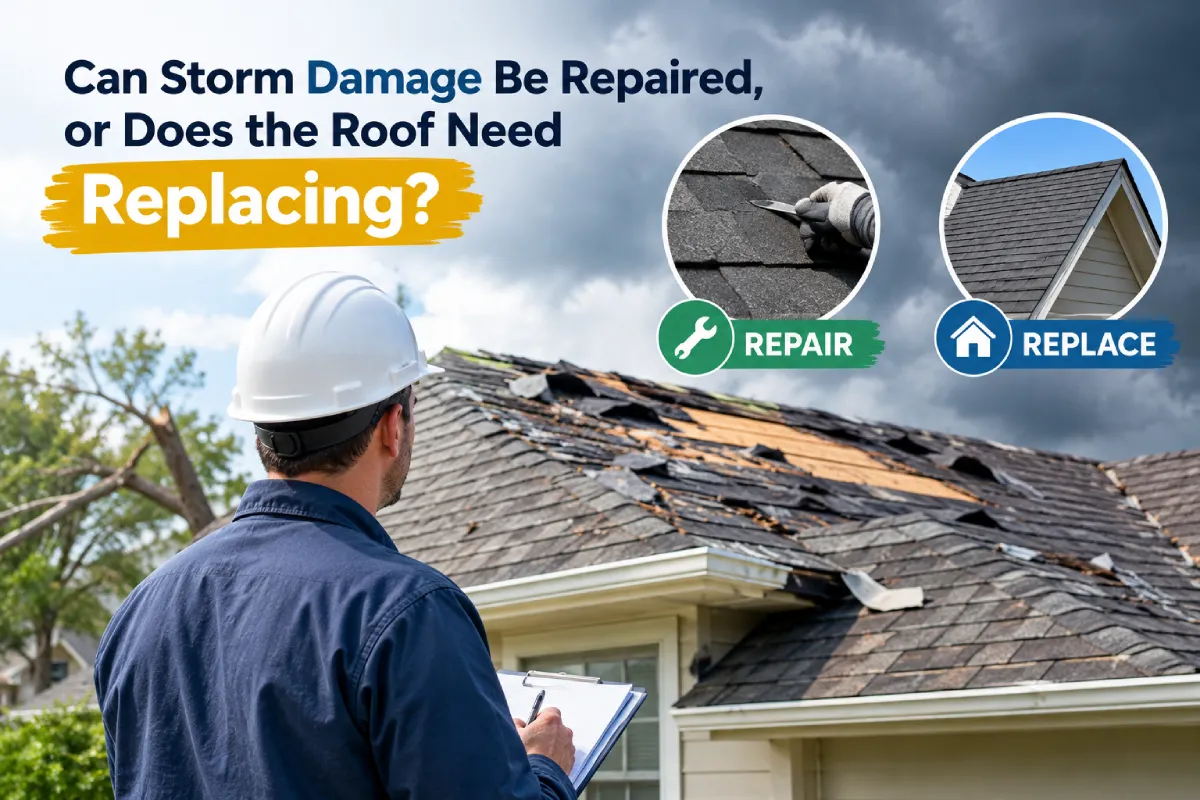
It depends on how widely the damage is spread rather than how bad any single part of it looks. A tree through the roof is dramatic and often repairable. Scattered hail bruising across every slope looks like nothing and often is not.
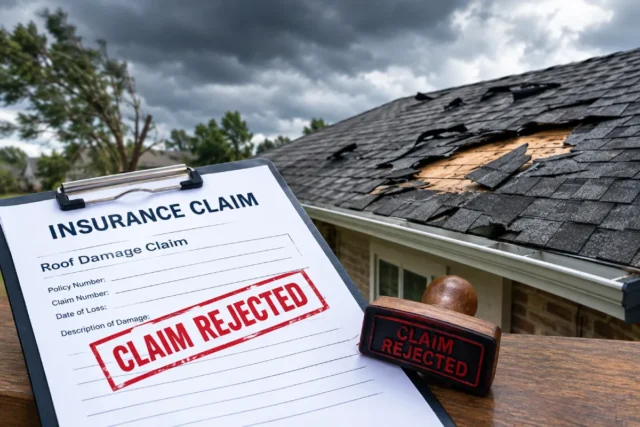
The question also has two answers that can differ: what is technically sound, and what an insurer will pay for. They usually agree, and where they do not, the gap is worth understanding before you argue about it.
The distinction that decides it
Damage that is local repairs well. General damage does not.
A branch strike, a section of ridge cap lost, a torn vent collar, missing shingles along one edge: these are defined areas with sound roof around them, and replacing the affected material restores the roof.
Hail bruising spread across multiple slopes is the opposite. Each mark is small, but the mat has been cracked in hundreds of places, and there is no defined area to cut out. This is why adjusters count impacts within a measured area rather than judging severity: they are measuring spread, not depth.
Age changes the answer
The same damage on two roofs of different ages produces different recommendations, and reasonably so.
On a roof in the first half of its life, repair is usually right. There are years of service left in the surrounding material, and the repair protects a substantial remaining asset.
On a roof in the last few years of its expected life, a repair puts new material into a covering about to be stripped off. It also tends to fail sooner, because the surrounding shingles are brittle and difficult to lift without breaking. Deciding between repair and replacement covers the full set of tests.
Matching, which is a bigger obstacle than it sounds
Shingle colours and profiles change, and manufacturers discontinue lines. After a decade, an exact match is often unavailable.
Weathering compounds it. Even a correct product will not match a roof that has faded for fifteen years, so a repaired section reads as a patch. On a rear slope that may not matter. On the elevation facing the street, it usually does.
Some policies address this with matching provisions, and some jurisdictions require insurers to consider uniformity. Where a matching argument applies, it can turn a repair settlement into a replacement, and it is worth raising explicitly rather than hoping it is considered.
What the deck does to the decision
If water has been getting in long enough to affect the decking, the calculation changes, because replacing the deck means opening the roof, and that is most of the cost of a replacement.
New covering nailed into soft or delaminated decking does not hold properly, which is a wind resistance problem rather than a cosmetic one. Any sagging visible along a roof line moves this out of the repair conversation entirely.
How the insurer sees it
Insurers pay to restore the roof to its pre-loss condition, not to improve it. Where a repair achieves that, a repair is what gets funded.
Where enough qualifying damage is found within the measured area, replacement is commonly approved on the basis that spot repairs cannot restore a roof uniformly. Below that, expect a repair settlement.
Two things frequently move the outcome: a matching argument, and the discovery that repairs cannot be carried out without damaging surrounding material. Both are technical points best made by a roofer in writing rather than by a homeowner on the telephone.
Where the incentives sit
A roofer paid to replace a roof has an interest in recommending replacement, and after a storm many of them are working at capacity. That does not make the recommendation wrong, but it does mean a second opinion is worth more here than on almost any other roofing decision. Ask for both prices from the same contractor, in writing, and ask directly how long a repair would be expected to hold. Then get an independent assessment before you commit, particularly if the recommendation arrived from somebody who approached you.
The partial replacement option
Between the two sits replacing whole slopes rather than the entire roof, and it is under-discussed.
Where damage is concentrated on the elevations that faced the storm, and the others are sound, replacing those slopes can be a reasonable outcome. It restores the damaged areas fully and avoids paying for undamaged material.
The drawback is appearance, since the new slopes will not match the old, and the roof then reaches the end of its life in two stages. On a roof past the midpoint of its life, that second point usually argues for doing the whole thing.
Conclusion
Repair when the damage is confined to identifiable areas, the roof has years of life left, and matching material is available. Replace when damage is spread across slopes, when the roof is late in its life, when the deck is affected, or when a repair would leave a visible patch on a prominent elevation.
Get both prices in writing from the same contractor, get a second opinion, and be aware that the technical answer and the funded answer are not always the same. The difference between them is a conversation with your insurer, supported by a roofer’s report rather than by argument.