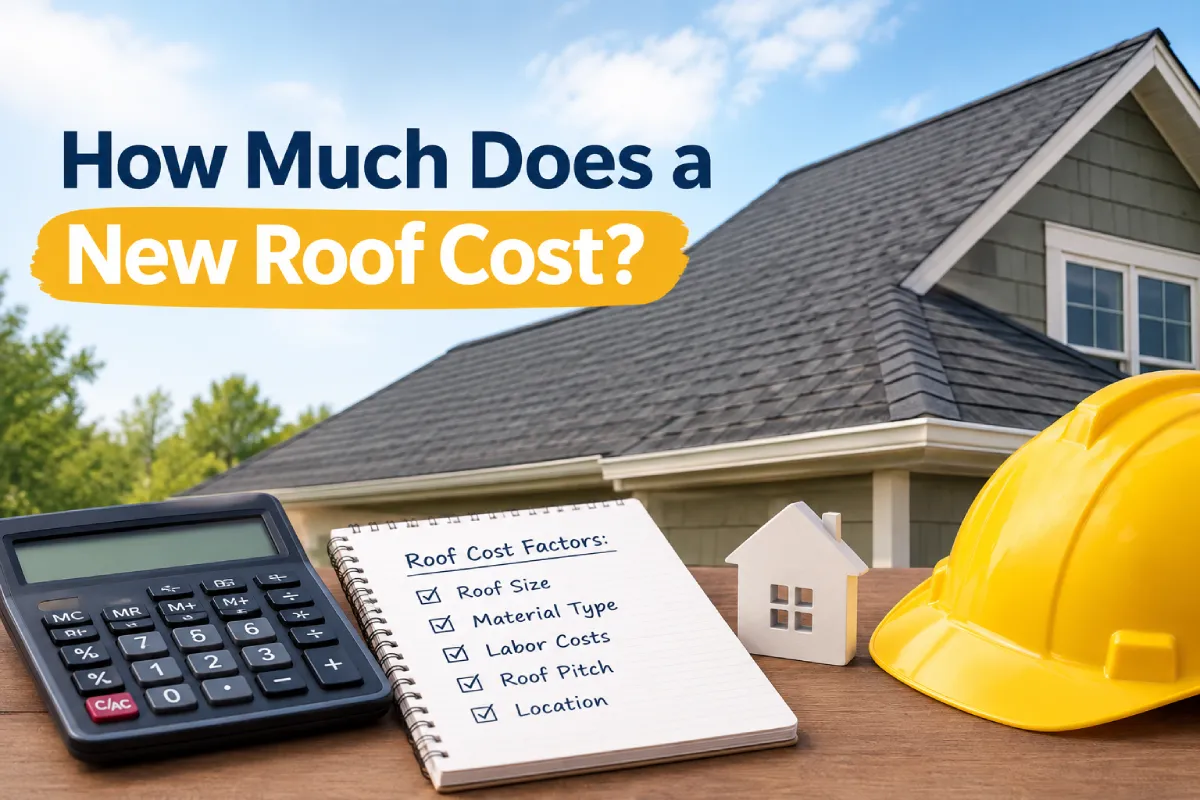
How Much Does a New Roof Cost?
A new roof is one of the most significant investments you will make in your home. It protects everything underneath it — your family, your belongings, your walls, your structure — and it does that job every single day, in every season, without a break. When the time comes to replace it, the cost is usually the first thing on a homeowner’s mind, and for good reason. A roof replacement is not a small purchase, and the range of prices you will encounter can be confusing if you do not understand what drives those numbers.
The national average cost of a new roof in the United States typically falls somewhere between $8,000 and $15,000 for a standard asphalt shingle roof on an average-sized home. However, that number can be misleading because the actual cost of your specific project depends on a wide range of factors, including the size of your roof, the materials you choose, the region you live in, the complexity of your roof design, the condition of the underlying structure, and the contractor you hire. Some homeowners spend as little as $5,000 on a straightforward roof replacement, while others spend $30,000, $50,000, or even more for premium materials on a large or complex home.
Understanding what goes into the cost of a new roof helps you budget properly, evaluate contractor estimates, and make informed decisions about materials and scope.
This guide covers everything you need to know about the cost of a new roof, from the major cost drivers to the hidden expenses that many homeowners overlook.
The Biggest Factor: Roof Size
The single most significant factor in the cost of your new roof is its size. Roofing contractors measure roof area in “squares,” where one square equals 100 square feet of roof surface. A typical American home has a roof that measures between 15 and 30 squares, which translates to 1,500 to 3,000 square feet of roof area. Larger homes, homes with complex rooflines, and multi-story homes can have significantly more roof surface.
The reason size matters so much is straightforward: a larger roof requires more materials and more labor hours. More shingles, more underlayment, more flashing, more nails, and more time on the job. Every additional square of roof area adds to both material and labor costs. A contractor will measure your roof — either physically or using satellite imagery — and calculate the total squares as the starting point for your estimate.
A number people get wrong
It is worth noting that the square footage of your roof is not the same as the square footage of your house. A home with a steep-pitched roof, multiple dormers, or a large overhang will have significantly more roof area than its floor plan suggests. Conversely, a home with a low-slope roof and minimal overhang may have less roof area than you would expect. This is why contractors measure the roof itself rather than relying on the home’s living area.
Material Choices and Their Cost Impact
The roofing material you choose has a dramatic effect on the total cost. Asphalt shingles are the most affordable option and the most commonly installed roofing material in the country. Architectural asphalt shingles typically cost between $4.50 and $7.00 per square foot installed, making them the go-to choice for homeowners who want reliable protection without a premium price tag.
Metal roofing costs more — generally between $6.00 and $16.00 per square foot installed, depending on the type (standing seam versus corrugated panels), the metal (steel, aluminum, copper, or zinc), and the finish. Metal roofs last significantly longer than asphalt, often 40 to 70 years, which means the higher upfront cost is spread over a much longer service life.
Wood shingles and shakes typically fall in the $7.00 to $15.00 per square foot range installed. They offer a beautiful, natural aesthetic but require more maintenance and are not suitable for all climates due to fire risk and moisture sensitivity.
Clay and concrete tiles are in the $7.00 to $25.00 per square foot range installed, with concrete toward the lower end and clay toward the upper. They are extremely durable and well-suited to hot, dry climates, but their weight often requires structural reinforcement of the roof framing, which adds to the cost.
Slate is the premium option, ranging from $15.00 to $35.00 per square foot installed. A natural slate roof can last 100 years or longer, making it a multi-generational investment. However, the material is heavy, fragile during installation, and requires specialized craftspeople to install properly.
Synthetic or composite roofing materials — products designed to mimic the look of slate, tile, or wood at a lower cost and weight — typically range from $7.00 to $14.00 per square foot installed. The quality and appearance of these products vary widely, so it is worth seeing samples and examples of completed installations before committing.
Labor Costs
Labor typically accounts for 40 to 60 percent of the total cost of a roof replacement. The exact percentage depends on the complexity of the job, the region you live in, and the materials being installed.
Roofing is physically demanding, skilled work. A good installation crew can mean the difference between a roof that lasts its full expected lifespan and one that develops problems within a few years. Experienced, reputable crews command higher rates, and for good reason — their work holds up, their safety record is strong, and they stand behind their installation with a meaningful workmanship warranty.
Labor costs vary significantly by region. In areas with a high cost of living — major metropolitan areas on the coasts, for example — labor rates are higher than in rural areas or regions with a lower cost of living. The availability of skilled roofers in your area also affects pricing. In regions where roofing contractors are in high demand — after a major storm, for instance — labor costs can spike.
The complexity of your roof also affects labor costs. A simple gable roof with two slopes is fast and straightforward to work on. A roof with multiple dormers, valleys, hips, steep pitches, and numerous penetrations takes much more time and skill to install properly. Every additional complexity factor adds labor hours and therefore cost.
Tear-Off and Disposal
Before the new roof goes on, the old one has to come off. Tear-off and disposal costs are included in most roofing estimates, but they are worth understanding because they can vary.
A single-layer asphalt shingle tear-off on a standard-sized roof might be included in the base price without much additional cost. However, if your existing roof has two layers of shingles, the tear-off takes roughly twice as long and generates twice as much debris. That additional labor and disposal cost will be reflected in your estimate.
Disposal costs include the dumpster rental and the fees charged by the landfill or recycling facility where the old materials are taken. These fees vary by location. Some areas have recycling programs for asphalt shingles — they can be ground up and used in road paving — which may reduce disposal costs.
If your existing roof involves specialty materials like heavy clay tile or slate, the tear-off process is more involved and more expensive due to the weight, fragility, and handling requirements of those materials.
Structural Repairs and Decking Replacement
Once the old roof is torn off, the decking underneath is inspected. If any sections are damaged by moisture, rot, or pests, they must be replaced before the new roof goes on. This is an additional cost that cannot always be predicted in advance.
Some decking replacement is common and expected — most estimates include an allowance for replacing a certain number of sheets of plywood or OSB. However, if widespread moisture damage is discovered, the cost of decking replacement can add up quickly. A sheet of half-inch plywood might cost $30 to $50 in materials, but the labor to remove the damaged section, install the new piece, and integrate it with the surrounding deck adds to the total.
In rare cases, structural damage extends beyond the decking to the rafters or trusses themselves. This is a more serious and expensive issue that may require a structural engineer’s assessment and specialized repair work. While uncommon on a well-maintained home, it is a possibility that homeowners should be aware of.
Ventilation and Insulation Upgrades
A roof replacement is an ideal time to address attic ventilation and insulation, which are critical to the performance and longevity of your new roof. Poor ventilation causes heat and moisture buildup in the attic, which can bake shingles from below, promote mold growth, cause ice dams in winter, and drive up energy costs.
Upgrading ventilation might include installing a ridge vent along the peak of the roof, adding or enlarging soffit vents for intake, or installing other ventilation components. The cost of ventilation upgrades depends on what is already in place and what changes are needed. A basic ridge vent installation on a standard roof might add $300 to $800 to the project. More extensive ventilation work can cost more.
Insulation upgrades in the attic floor are technically a separate project from the roof replacement, but many homeowners address both at the same time since the attic is accessible and already being evaluated. Proper insulation works hand-in-hand with ventilation to maintain a consistent temperature in the attic and reduce energy costs.
Flashing and Waterproofing Details
Flashing — the thin metal installed at joints, transitions, and penetrations — is one of the most critical components of a watertight roof. During a full replacement, all flashing should be replaced, not reused. This includes flashing around the chimney, in roof valleys, at wall-to-roof transitions, around plumbing vents, and at skylights.
The cost of flashing is generally included in the overall estimate, but the number and complexity of flashing details on your roof affect the total. A roof with a large chimney, multiple skylights, several plumbing vents, and intersecting walls will require more flashing work — and therefore more cost — than a simple roof with minimal penetrations.
Premium flashing materials like copper add to the cost but offer superior longevity and a distinctive appearance. Most residential roofs use aluminum or galvanized steel flashing, which performs well and is more affordable.
Permits and Inspections
Most municipalities require a building permit for a roof replacement. Permit costs vary widely by location — from as little as $100 to over $1,000 in some jurisdictions. The permit ensures that the work will be inspected by the local building department to verify code compliance.
Your contractor typically handles the permit application and includes the cost in the estimate. However, it is worth confirming this and understanding what the permit covers. Some areas also require separate inspections at various stages of the project.
Geographic and Regional Cost Variations
Where you live has a significant impact on roofing costs. Several geographic factors play a role.
Local labor rates are the most obvious factor. Roofing labor in a major city costs more than in a small town, reflecting differences in cost of living, demand, and competition. Material costs also vary by region due to transportation expenses and local supply and demand.
Climate affects both the materials you need and the installation requirements. Homes in hurricane-prone regions need roofing systems rated for high wind speeds, which may include special fastening patterns, enhanced underlayment, and impact-resistant materials. Homes in heavy snow areas need roofing that can handle snow loads and may require ice and water shield across a larger portion of the roof. These requirements add cost.
Local building codes also vary. Some areas have adopted stringent energy codes that require specific insulation or ventilation standards. Others have fire codes that restrict certain roofing materials in wildfire-prone areas. Code requirements can limit your material choices and affect the overall cost of the project.
Hidden and Often-Overlooked Costs
Beyond the headline numbers, there are several costs that homeowners sometimes overlook when budgeting for a new roof.
Permitting and inspection fees, as mentioned, are one. Another is the cost of repairing or replacing gutters. If your gutters are old, damaged, or incompatible with the new roofing system, it makes sense to address them at the same time. Gutter replacement typically adds $1,000 to $3,000 or more to the project depending on the size of your home and the type of gutters you choose.
Soffit and fascia repair or replacement is another potential cost. These are the boards along the edge of the roof that the gutters attach to. If they are rotted or damaged, they should be replaced during the roof project.
If your home has a chimney, the roofing project may reveal that the chimney crown, mortar joints, or chase cover need repair or replacement. Chimney work is specialized and can add several hundred to several thousand dollars to the project.
Landscaping repair is a minor but real cost. Despite a contractor’s best efforts, the process of tear-off, material delivery, and dumpster placement can damage grass, flower beds, or hardscaping near the house. Budgeting a small amount for post-project landscaping touch-ups is wise.
Finally, consider the cost of temporary living arrangements if needed. While most homeowners stay in their homes during a roof replacement, some prefer to stay elsewhere during the noisiest days. If you choose to stay at a hotel or with family, that is an out-of-pocket expense to factor in.
How to Get an Accurate Estimate
The best way to understand what your specific roof replacement will cost is to get estimates from multiple reputable contractors. Most roofing companies offer free estimates that include an on-site inspection of your roof.
When comparing estimates, make sure you are comparing apples to apples. Each estimate should specify the same materials (or clearly state which materials are being quoted), the scope of work, the warranty terms, and what is included in the price. A low bid that omits flashing replacement, ventilation upgrades, or decking repair is not truly comparable to a higher bid that includes all of those items.
Ask each contractor to break down the estimate so you can see what you are paying for materials, labor, tear-off, disposal, permits, and any additional work. This transparency helps you understand where your money is going and makes it easier to compare competing bids.
Is a New Roof Worth the Investment?
A new roof is not just an expense — it is an investment in your home. In the 2025 Cost vs Value Report from the Journal of Light Construction, an asphalt shingle roof replacement recouped an average of 68 percent of its cost at resale nationally, and a metal roof replacement recouped 50 percent. Individual markets vary widely around those averages. Beyond resale value, a new roof provides reliable protection against water damage, improves energy efficiency, enhances curb appeal, and gives you peace of mind.
When you consider the cost of a new roof, also consider the cost of not replacing it. An aging, failing roof can lead to interior water damage, mold remediation, structural repairs, and emergency fixes that far exceed the cost of a planned replacement. Proactive replacement on your own timeline is almost always less expensive and less stressful than reactive replacement after a failure.
Conclusion
The cost of a new roof depends on many factors — size, materials, labor, complexity, location, and the condition of the existing structure. For a typical home with asphalt shingles, you can expect to invest somewhere in the range of $8,000 to $15,000, though the actual number for your home could be higher or lower depending on your specific circumstances.
The best approach is to educate yourself about the cost factors, get detailed estimates from reputable contractors, compare them carefully, and make an informed decision that balances upfront cost with long-term value. Your roof protects everything you care about — it is worth getting it right.