How to Tell If a Roof Is Sagging and What It Means
A sagging roof is one of the most serious structural warning signs a homeowner can encounter. Unlike a missing shingle or a small ceiling stain, a sag indicates that the roof’s underlying support system — the rafters, decking, or trusses — has been compromised. It is not a problem that fixes itself, and it is not one that improves with time.
The challenge is that roof sagging often develops slowly. It may start as a subtle dip that is hard to notice from the ground, and it can progress over months or years before becoming clearly visible.
By that point, the structural issue behind it is usually well advanced. Learning how to spot sagging early — and understanding what causes it — can help you take action before the damage becomes severe.
What a Sagging Roof Looks Like
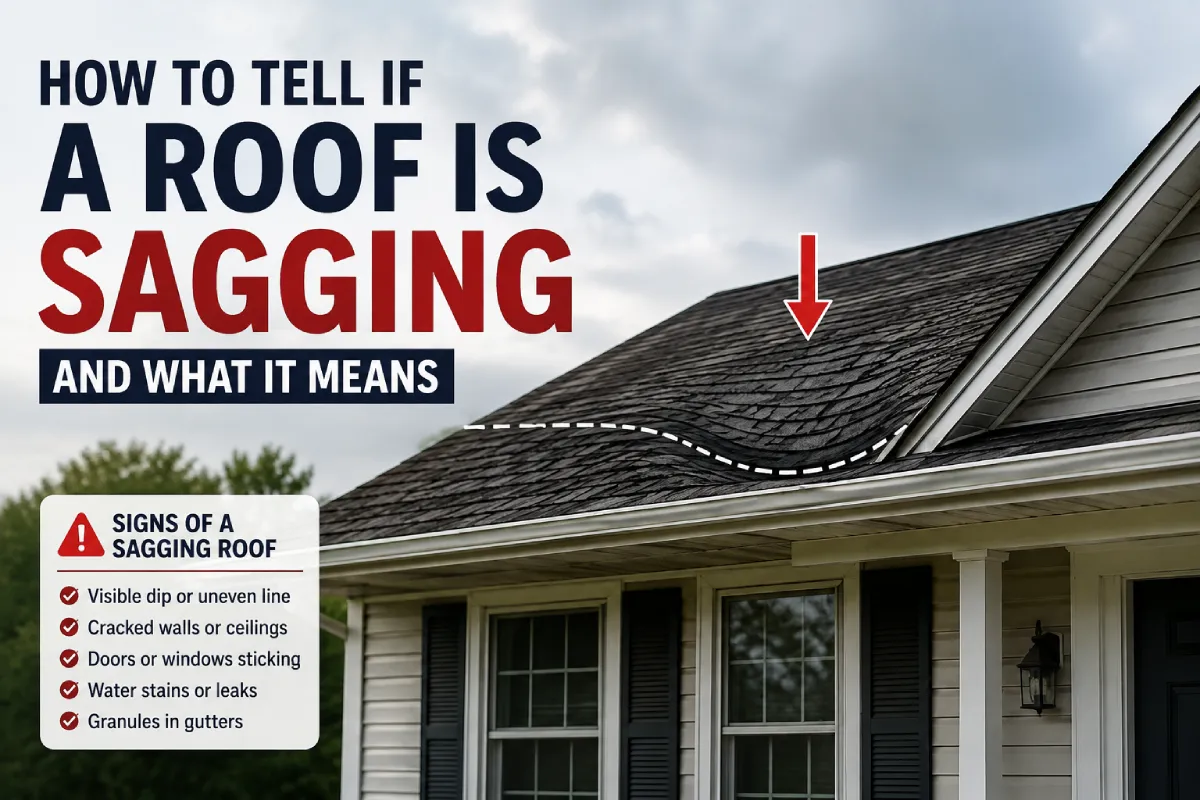
A sagging roof does not always look dramatically collapsed. In its early stages, it may appear as a slight dip or wave along the roofline that was not there before. You might notice that the ridge — the peak where two roof slopes meet — is no longer perfectly straight. Instead, it may bow slightly in one section or appear to dip in the middle.
From certain angles, you may also notice that a section of the roof surface appears lower or uneven compared to the surrounding area. This is especially visible when you stand back and sight along the roofline from one end of the house.
Inside the home, sagging can show up as a ceiling that is no longer flat. If you notice a ceiling that bows downward in one area, particularly on the top floor, it may indicate that the roof structure above it has begun to settle or weaken.
Where the dip sits tells you a lot. A roof that looks wavy, with a shallow hollow between each pair of rafters, usually has a problem in the decking rather than the framing: sheathing too thin for the rafter spacing, panels that swelled after getting wet, or panel edges left unsupported between rafters. That still needs fixing, but it is normally a smaller job than a ridge that bows or a whole slope that drops, both of which point to the rafters or trusses themselves.
Common Causes of Roof Sagging
Several factors can lead to a sagging roof, and most of them involve the slow deterioration of the structural components that hold the roof up.
1. Water damage
Water damage is the most common cause. When a roof leak goes undetected over an extended period, the moisture saturates the wooden rafters, trusses, and roof decking. Wood that remains damp for a long time begins to rot, losing its strength and rigidity. As the wood weakens, it can no longer support the weight of the roof above, and the affected section begins to sag.
This type of damage is insidious because it often happens out of sight. Water may be entering through a small gap in the flashing or a cracked shingle and slowly soaking the framing in the attic for months before any visible sign appears inside the home. By the time a sag is noticeable, the wood may be significantly compromised.
2. Excessive weight on the roof
Excessive weight on the roof can also cause sagging, particularly in regions that experience heavy snowfall. Roofs are engineered to handle a certain load, but when snow accumulates deeply and does not melt between storms, the weight can exceed what the structure was designed to bear. This is more common on older homes where the framing may have been built to different standards than modern construction.
Layers of roofing material stacked on top of each other can also contribute to excessive weight. Some homes have had new shingles installed over old ones more than once, even though the International Residential Code does not allow another layer on a roof that already has two. Each additional layer adds weight that the structure must support, and over time, that accumulated load can cause the rafters to bow.
3. Age-related deterioration
Age-related deterioration plays a role as well. Over decades, the wooden components of a roof can shrink, warp, and lose structural integrity. This is a natural process, but it is accelerated by moisture, poor ventilation, and pest damage. Older homes that have not had their roof structure inspected or reinforced may develop sagging simply because the original materials have reached the end of their serviceable life.
4. Foundation settling or shifting
Foundation settling or shifting can indirectly cause roof sagging. When a home’s foundation moves — due to soil conditions, moisture changes, or structural issues — the walls and framing above shift with it. This can create uneven loads on the roof structure, causing sections to dip or twist. In these cases, the sag may be accompanied by cracks in walls, doors that no longer close properly, or uneven floors.
5. Missing rafter ties or altered trusses
Some sags come from the framing itself rather than from damage. Rafters push outward at the tops of the walls, and rafter ties are the horizontal members that resist that thrust. Where they are missing, a forensic structural engineer at the engineering firm Vertex notes, the exterior walls tend to bow outward as the ridge deflects downward. Trusses are also vulnerable to later changes, which is why the International Residential Code (Section R802.10.4 in the 2015 edition) prohibits cutting, notching, drilling, or otherwise altering truss members without the approval of a registered design professional. A sagging ridge combined with exterior walls that bow outward is a reason to bring in a structural engineer as well as a roofer.
How to Check for Sagging Safely
You do not need to get on the roof to check for sagging. In fact, climbing onto a sagging roof is dangerous, as the weakened structure may not support your weight.
Start by standing back from your home at a distance where you can see the full roofline. Sight along the ridge from one end. A straight, healthy ridge line should look uniform from end to end. Any dips, bows, or uneven sections may indicate sagging.
Walk around to different sides of the house and repeat this check. Sometimes sagging is only visible from certain angles.
Inside the home, go to the top floor and look up at the ceiling. A ceiling that was once flat but now has a noticeable bow or dip in one area may be reflecting a structural issue in the roof above.
In the attic, if you can safely enter and move around, look at the rafters and trusses. Signs of concern include rafters that are visibly bowing, wood that appears darkened or soft, joints that have separated, and any evidence of long-term moisture damage such as water stains, mold, or rotting wood. If the attic floor feels uneven or spongy underfoot, that may also indicate structural compromise.
Any observation you make from the attic should be treated as preliminary information. A professional inspection is the only reliable way to determine the severity and cause of a sag.
Why Sagging Should Be Taken Seriously
A sagging roof is a structural issue, not a surface one. It means the framework that holds the roof up is failing. Left unaddressed, structural sagging can progress to the point where the roof partially collapses, particularly under additional stress from snow, wind, or heavy rain.
Beyond the immediate safety risk, a sagging roof often indicates that significant hidden damage exists. Rotting rafters, saturated decking, and compromised trusses do not just affect the roof — they can impact the walls and ceiling structures that connect to them. The longer the problem continues, the more extensive and costly the eventual repair becomes.
In some cases, a sagging roof also affects the home’s ability to shed water properly. A dip in the roof surface can create a low spot where water pools instead of draining. Standing water on a roof accelerates material breakdown and increases the likelihood of leaks, compounding the original problem.
What a Professional Will Evaluate
When you call a roofing professional about a suspected sag, they will assess several things. They will examine the extent and location of the sag, inspect the rafters and trusses for rot or structural failure, check the condition of the roof decking, and look for the underlying cause — whether that is water damage, excessive load, poor original construction, or foundation movement.
Depending on what they find, the repair may involve reinforcing or replacing damaged rafters, replacing compromised decking, addressing the leak or moisture source that caused the damage, or in some cases, recommending a partial or full roof replacement.
Foundation-related sagging may require a different type of professional altogether, such as a structural engineer, to evaluate whether the home’s foundation needs repair before the roof structure can be properly restored.
The Importance of Early Detection
The earlier a sagging roof is identified, the less extensive and less expensive the repair tends to be. A rafter that has just begun to weaken can often be reinforced before it fails. A small area of rotting decking can be replaced before it spreads. A slow leak can be fixed before it causes further structural decay.
Waiting until the sag is dramatic and obvious means waiting until the damage is widespread. At that point, the repair involves more materials, more labor, and more disruption to the home.
Regular visual checks of your roofline — simply stepping back and looking at the ridge a few times a year — are one of the easiest ways to catch sagging early. If anything looks off, even subtly, having it evaluated promptly is the safest course of action.
Do not wait on this
A sagging roof is not something to monitor and wait on. It is a sign that the structure of your home is under stress, and it deserves immediate professional attention. The good news is that when caught early, most sagging issues can be corrected effectively, restoring both the safety and the longevity of your roof.