How Do You Know When It’s Time to Replace Your Roof?
Your roof is your home’s first line of defense against rain, wind, snow, and harsh sunlight. But unlike the walls inside your home, you rarely look at your roof up close. That means damage can build up quietly for years before you notice something is wrong — and by then, you might be facing leaks, structural issues, or costly emergency repairs.
So how do you know when it is time to replace your roof? The answer depends on the age of your roof, the materials it is made of, the climate you live in, and the warning signs that are already visible.
In this article, we will walk you through every signal that your roof is nearing the end of its life so you can plan and avoid surprises.
Your Roof’s Age Is the Starting Point
Every roofing material has an expected lifespan. If your roof is approaching or has passed that number, it is time to start paying closer attention — even if everything looks fine from the ground.
Here is a general guide to how long common roofing materials last:
- Asphalt shingles (3-tab): 15 to 20 years
- Asphalt shingles (architectural/dimensional): 25 to 30 years
- Metal roofing: 40 to 70 years
- Wood shingles and shakes: 20 to 30 years
- Clay or concrete tiles: 50 to 100 years
- Slate roofing: 75 to 100+ years for hard slate, 50 to 75 for softer slate
- Synthetic or rubber roofing: 20 to 50 years
Keep in mind that these numbers assume proper installation, adequate ventilation, and reasonable weather exposure. A roof in a hurricane-prone coastal area or a region with extreme temperature swings will age faster than one in a mild climate.
Start here if you are unsure
If you do not know when your roof was last replaced, check your home purchase documents, ask the previous owner, or have a roofing contractor inspect it. An experienced roofer can estimate the remaining life of your roof based on its current condition.
Warning Signs You Can See from the Ground
You do not always need to climb a ladder to spot trouble. Many warning signs are visible from your yard or driveway if you know what to look for.
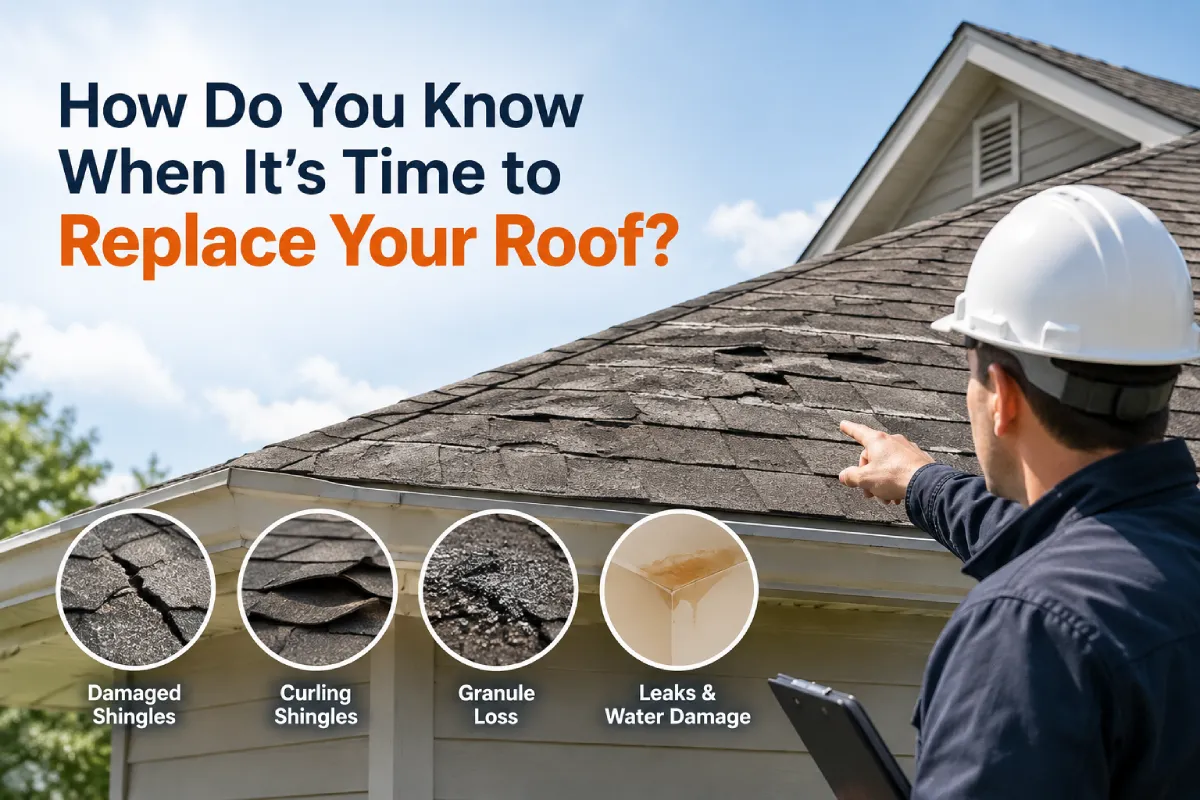
Missing, cracked, or curling shingles. If you can see shingles that are buckling, curling at the edges, or missing entirely, your roof’s protective barrier is compromised. A few damaged shingles can sometimes be repaired, but widespread damage usually signals that the whole roof needs attention.
Dark streaks or stains. Those dark streaks running down your roof are often caused by algae growth, especially in humid climates. The Asphalt Roofing Manufacturers Association treats algae as largely cosmetic, so streaks alone are not a reason to replace a roof, though they do mark the damp areas where moss can follow.
Moss or plant growth. Moss growing on your roof is more than a cosmetic problem. It holds moisture against the shingles and can lift their edges, which makes the roofing material break down faster. In cold climates, that moisture can freeze and cause further damage.
Sagging areas. If any section of your roof looks like it is sagging or dipping, that is a serious structural concern. Sagging can indicate water damage to the decking underneath, a problem with the roof’s support structure, or years of accumulated moisture. This requires immediate professional attention.
Visible daylight through the attic. Go into your attic during the daytime and turn off the lights. If you can see pinpoints of light coming through the roof boards, water can get in through those same gaps. Light at a ridge vent or another intentional vent opening is normal; light coming through the roof boards themselves is one of the clearest signs that your roof’s integrity is failing.
Warning Signs You Might Notice Inside Your Home
Some of the most telling clues about your roof’s condition show up inside your house, not on top of it.
Water stains on ceilings or walls
Brown, yellow, or dark spots on your ceiling or upper walls are a classic sign of a roof leak. By the time water stains appear inside, the leak has already passed through multiple layers of your roof and may have caused hidden damage to insulation, framing, and drywall.
Peeling or bubbling paint
Moisture from a roof leak can cause paint on your ceilings or walls to bubble, crack, or peel. If this is happening in rooms on your top floor, the roof is a likely culprit.
Musty odors or visible mold
A persistent musty smell in your attic or upper floors can indicate moisture intrusion from your roof. Mold growth in the attic — especially on the underside of the roof deck or on insulation — is a strong sign that your roof is no longer keeping water out.
Higher energy bills
On its own, a rising energy bill is a weak sign, because heating and cooling equipment, windows, and air leaks are far more common causes. It is worth connecting to the roof only if you also find wet or compressed attic insulation, which a leak can cause and which loses much of its insulating value.
What the Shingles Are Telling You Up Close
If you can safely inspect your roof up close — or if a roofing professional does it for you — there are additional signs to look for.
Granule loss
Asphalt shingles are coated with small mineral granules that protect them from UV rays and fire. As shingles age, these granules loosen and wash away. You might notice them collecting in your gutters or at the base of your downspouts. Significant granule loss means the shingles are deteriorating and losing their protective capability.
Cracked or brittle shingles
Shingles that crack easily when touched or that show multiple cracks across their surface are past their prime. They can no longer flex with temperature changes and will continue to break down.
Flashing damage
The metal flashing around your chimney, vents, skylights, and roof valleys is critical for preventing leaks. If the flashing is rusted, bent, lifted, or pulling away from the roof surface, water can seep in at these vulnerable points.
Soft or spongy decking
When a roofer walks on your roof and feels soft or bouncy spots, that usually means the decking (the plywood or OSB underneath the shingles) has absorbed moisture and is rotting. This is a structural issue that must be addressed during a roof replacement.
The Role of Storm Damage
Sometimes the decision to replace your roof is not about gradual aging but about sudden damage from a storm. High winds can rip shingles off entirely. Hail can crack shingles, dent metal roofing, and knock granules loose. Falling branches or trees can cause punctures and structural damage.
After any major storm, it is worth having your roof inspected — even if you do not see obvious damage from the ground. Some storm damage is subtle and only visible to a trained eye. Catching it early can mean the difference between a simple repair and a full replacement down the road.
Many roofers offer free inspections after severe weather, which can be useful, but choose the company yourself rather than hiring whoever knocks on the door, and check that they are licensed and insured. Insurance claims for storm damage are time-sensitive, so acting quickly matters; our guide to telling whether a storm damaged your roof covers documenting the damage and how claims usually work.
Repair or Replace: How to Think About It
Not every problem requires a full roof replacement. A small leak around a vent pipe, a few missing shingles after a windstorm, or minor flashing damage can often be repaired. But there are situations where repair is not a smart investment:
- The roof is near the end of its expected lifespan. Pouring money into repairs on a roof that needs to be replaced in a year or two is not cost-effective.
- Damage is widespread. If more than 25 to 30 percent of your roof is affected, replacement is usually the better option.
- Multiple layers of shingles already exist. Some building codes allow a second layer of shingles over the first, but if you already have two layers, you cannot add a third. The old layers must be removed, and at that point, a full replacement makes the most sense.
- The decking is compromised. If moisture has damaged the roof decking underneath, surface repairs will not solve the underlying problem.
A trustworthy roofing contractor will help you weigh these factors honestly. Be cautious of anyone who pushes for a full replacement when a repair would be sufficient — and equally cautious of anyone who suggests patching a roof that clearly needs to come off.
What Happens If You Wait Too Long
It is tempting to put off a roof replacement, especially if the problems seem minor. But delaying can lead to much bigger and more expensive issues:
- Interior water damage to ceilings, walls, insulation, and personal belongings
- Mold and mildew growth that can affect your family’s health and require professional remediation
- Structural damage to rafters, trusses, and decking that goes far beyond the cost of a new roof
- Pest intrusion through gaps and deteriorated areas
- Decreased home value and potential issues during a home sale inspection
- Denied insurance claims if the damage is judged to come from neglect or wear rather than a covered event
A roof replacement is a significant investment, but it is almost always less expensive than the chain reaction of problems that a failing roof creates.
How to Stay Ahead of Roof Problems
The best approach to roof replacement is to plan for it rather than react to it. Here are some practical steps:
- Know your roof’s age. Keep records of when it was installed and what materials were used.
- Schedule regular inspections. Have a professional inspect your roof at least once every two to three years, and after any major storm.
- Keep gutters clean. Clogged gutters cause water to back up under your shingles and accelerate deterioration.
- Trim overhanging branches. Trees that hang over your roof drop debris, encourage moss growth, and pose a risk during storms.
- Address small problems quickly. A minor repair today can prevent a major replacement tomorrow.
- Start budgeting early. Once your roof reaches the midpoint of its expected lifespan, start setting aside money for a replacement so the cost does not catch you off guard.
Conclusion
Your roof will not last forever, and the signs of aging are usually visible if you know where to look. Age, shingle condition, interior water damage, storm exposure, and structural issues are all indicators that tell you when replacement is approaching.
The key is to act before a small problem becomes an emergency. A planned roof replacement on your schedule is far less stressful — and far less expensive — than an emergency replacement forced by a sudden leak or structural failure.
If you have noticed any of the warning signs we have discussed, or if your roof is approaching the end of its expected lifespan, the next step is to schedule a professional inspection. A qualified roofing contractor can give you an honest assessment of your roof’s condition and help you decide whether repair or replacement is the right move for your home.