How to Find a Roof Leak Before It Causes Major Damage
A roof leak rarely announces itself with an obvious waterfall in your living room. More often, it starts as a small, slow intrusion — a few drops of water seeping through damaged material — and quietly worsens over weeks or months. By the time most homeowners notice visible water damage, the leak has often been active long enough to affect insulation, framing, and even interior walls.
Finding a roof leak early is the difference between a manageable repair and a costly restoration.
This guide explains where leaks commonly start, what warning signs to look for, and how to spot problems from safe positions around your home before they escalate.
Why Roof Leaks Are Difficult to Catch Early
Water is surprisingly deceptive. A leak in your roof may not drip straight down from the point of entry. Instead, water often travels along rafters, sheathing, or insulation before it finally shows up as a stain on a ceiling or a damp patch on a wall — sometimes far from the actual source.
This delayed appearance is what makes early detection tricky. The entry point on the roof might be small, and the water may take a winding path through the structure before becoming visible inside your home. By that time, materials behind the walls or above the ceiling may have already absorbed significant moisture.
The thing that catches people out
Understanding this behavior is important because it means you cannot always trace a leak back to its source simply by looking at where the water appears indoors. You need to know what signs to watch for and where to focus your attention.
Not all water in an attic comes from a leak, either. In cold weather, warm, moist air from the house can condense on the underside of the roof deck and drip onto insulation and ceilings, leaving stains that look exactly like a leak. If the water shows up after a cold snap rather than after rain, read about telling a roof leak from attic condensation before paying for a roof repair.
Common Causes of Roof Leaks
Roof leaks can develop for many reasons, and most of them relate to wear, weather exposure, or vulnerable points in the roof’s structure.
- Damaged or missing shingles are among the most common causes. Shingles can crack, curl, or blow off during storms, leaving the underlayment or decking exposed to rain. Even a single missing shingle can allow enough water in to start a problem.
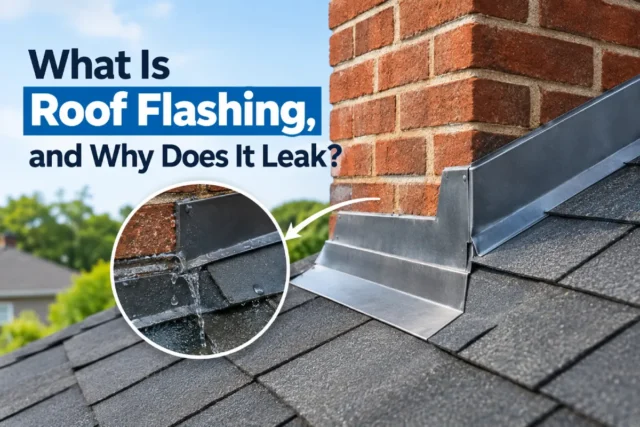
- Flashing failures are another frequent source. Flashing is the thin material — usually metal — installed around chimneys, vents, skylights, and roof joints to direct water away. When flashing deteriorates, lifts, or separates from the surface, water can slip behind it and enter the structure below.
- Clogged gutters may not seem directly related to leaks, but when gutters cannot drain properly, water backs up under the edge of the roof. Over time, this pooling can rot the fascia board and allow moisture into the roof deck.
- Aging sealant around roof penetrations such as pipe boots, vents, and satellite mounts can crack and shrink over time. These small gaps are easy to overlook but can let in a surprising amount of water during prolonged rain.
- Valley areas — where two roof slopes meet — are particularly prone to leaks because they channel large volumes of water. If the valley lining is damaged or improperly installed, water can work its way beneath the roofing material.
Warning Signs Inside Your Home
Some of the clearest indicators of a roof leak are visible inside, often without any special effort or inspection.
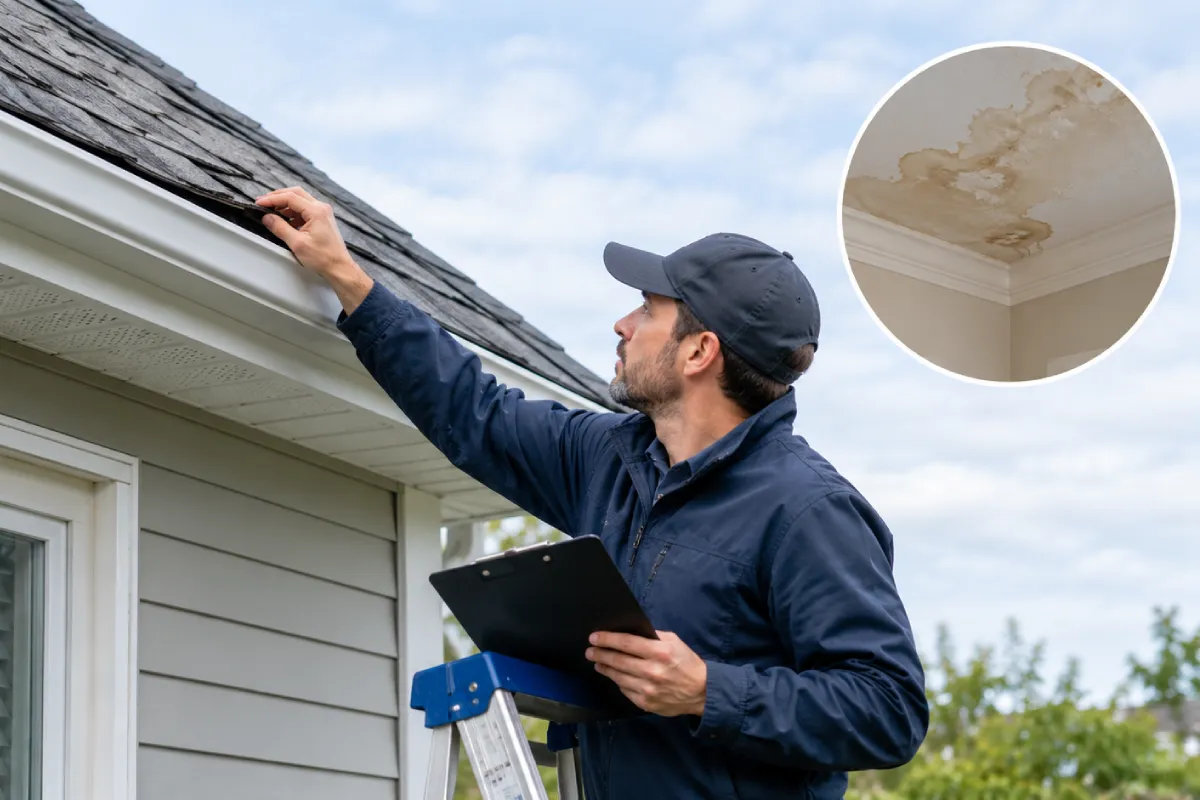
- Ceiling stains are one of the most recognizable signs. These typically appear as discolored patches — yellowish, brownish, or dark rings — on ceilings or upper walls. A stain that grows or darkens after rain almost certainly points to moisture entering from above.
- Peeling or bubbling paint on ceilings or walls near the roofline can indicate trapped moisture. When water gets behind painted surfaces, it breaks the bond between the paint and the wall, causing visible distortion.
- Damp or musty odors in rooms directly below the roof — especially in upper floors or attic spaces — often signal slow moisture intrusion. You may not see water, but the smell can reveal its presence.
- Mold or mildew growth on ceilings, walls, or in attic spaces is a serious indicator. Mold requires consistent moisture to grow, and its presence near the roofline usually means water has been entering over an extended period. Small spots of mold should not be ignored, as they often represent a much larger problem behind the surface.
- Wet insulation in the attic is another sign that many homeowners miss simply because they rarely go into the attic. If your attic insulation feels damp, clumpy, or compressed in certain areas, it may be absorbing water from a leak above.
Warning Signs Visible From the Ground
You do not need to climb onto your roof to notice many early warning signs. A careful visual inspection from ground level can reveal a great deal.
- Missing or displaced shingles are often visible from the street or yard, especially after storms. Scan your roofline for any areas where shingles appear uneven, lifted, or absent.
- Sagging sections along the roofline or between rafters can indicate that the decking beneath the roofing material has absorbed water and begun to weaken. A sagging roof is a structural concern that warrants prompt professional attention.
- Granule buildup in gutters may indicate that asphalt shingles are deteriorating. While some granule loss is normal over time, excessive amounts collecting in your gutters suggest the shingles are aging and may no longer be providing full protection.
- Damaged or displaced flashing around chimneys, vents, or skylights is sometimes visible from the ground with a pair of binoculars. Look for metal pieces that appear bent, rusted, or pulled away from the roof surface.
- Moss or algae growth on the roof surface can hold moisture against the roofing material, accelerating deterioration. While moss itself does not cause leaks directly, its presence often indicates areas where moisture lingers — and where problems may develop.
What You Can Safely Check
There are several things you can inspect from safe positions without ever stepping on the roof.
Start inside your home. On a dry day, go into the attic with a flashlight and look for any signs of water intrusion — dark stains on the underside of the roof deck, streaks along rafters, wet insulation, or daylight peeking through the roof. Daylight visible through the roof is not always a leak, as some ventilation gaps are intentional, but any light coming through where it should not is worth investigating.
A dry-day check shows old stains; it does not show where water is coming in now. If it is safe to do so, go back up during or shortly after a heavy rain, when an active drip or a wet track along a rafter is far easier to follow uphill to its source.
Inside your living spaces, check ceilings and upper walls for stains, especially after heavy rain. Pay particular attention to areas directly below the roofline, around skylights, and near interior walls that back onto chimneys.
From outside, walk the perimeter of your home and look up at the roof. Check gutters for clogs, sagging, or separation from the fascia. Look for obvious shingle damage or debris buildup in valleys. Examine the areas around chimneys and vents as closely as ground-level visibility allows.
If you have a pair of binoculars, use them to inspect the roof surface more closely. This is a safe and effective way to spot curled, cracked, or missing shingles without leaving the ground.
If none of this finds the source, the next step is a controlled hose test: one person runs water over one section of roof at a time while another watches from the attic. Because it puts someone on the roof, it is only for a roof that is safe to walk, and our article on why roofs leak explains how to run one.
When to Call a Professional
Some situations clearly call for a professional roofing inspection rather than a homeowner’s visual check.
If you notice active dripping, a growing ceiling stain, or a sagging section of ceiling, the leak is likely significant enough to require professional diagnosis and repair. Waiting for it to worsen is rarely a good decision.
If you suspect a leak but cannot identify the source from inside or from ground level, a professional roofer has the tools and experience to trace water paths accurately. They can perform targeted water tests and inspect areas that are not safely accessible from a ladder.
If your roof is nearing the end of its expected lifespan — which varies depending on the material — periodic professional inspections become especially valuable. An aging roof may develop multiple small vulnerabilities that are easy to miss individually but collectively represent a growing risk.
Any visible structural concern, such as sagging decking, significant mold growth, or widespread shingle deterioration, should be evaluated by a professional rather than investigated further on your own. These issues may involve safety risks beyond what a homeowner should handle.
How to Reduce the Risk of Roof Leaks
While no roof lasts forever, regular maintenance can significantly reduce the chance of unexpected leaks.
- Keep gutters clean and functional. Clearing debris from gutters at least twice a year — typically in spring and autumn — allows water to flow freely off the roof. Clogged gutters force water into places it should not go.
- Trim overhanging branches. Trees that hang over your roof drop debris, encourage moss growth, and can damage shingles during storms. Keeping branches trimmed back reduces these risks.
- Inspect after major storms. After heavy wind, hail, or rain, take a few minutes to walk around your home and look for any visible damage. Early detection after a storm is one of the simplest ways to prevent a small problem from becoming a large one.
- Address minor damage promptly. A single cracked shingle or a small gap in sealant may not seem urgent, but small vulnerabilities are exactly how most leaks begin. Repairing minor issues when they appear is far less costly than dealing with water damage later.
- Schedule periodic professional inspections. Having your roof inspected by a qualified roofer every few years — or more frequently as it ages — can catch problems that are not visible from the ground. This is particularly important for roofs that have experienced severe weather.
Finding Roof Leaks Early Protects Your Home
A roof leak that goes undetected can quietly damage insulation, wood framing, drywall, and electrical systems long before it becomes obvious. The cost of repairing these secondary damages often far exceeds the cost of fixing the original leak.
The most practical thing you can do as a homeowner is stay observant. Pay attention to stains, odors, and changes in your ceilings and walls. Make a habit of glancing at your roof from the ground after storms. Keep your gutters clear and your trees trimmed. And when something does not look right, have it checked sooner rather than later.
Early detection does not require specialized knowledge — it simply requires attention. A few minutes of observation at the right time can prevent months of hidden damage.