Can You Replace Gutters Without Replacing the Fascia?
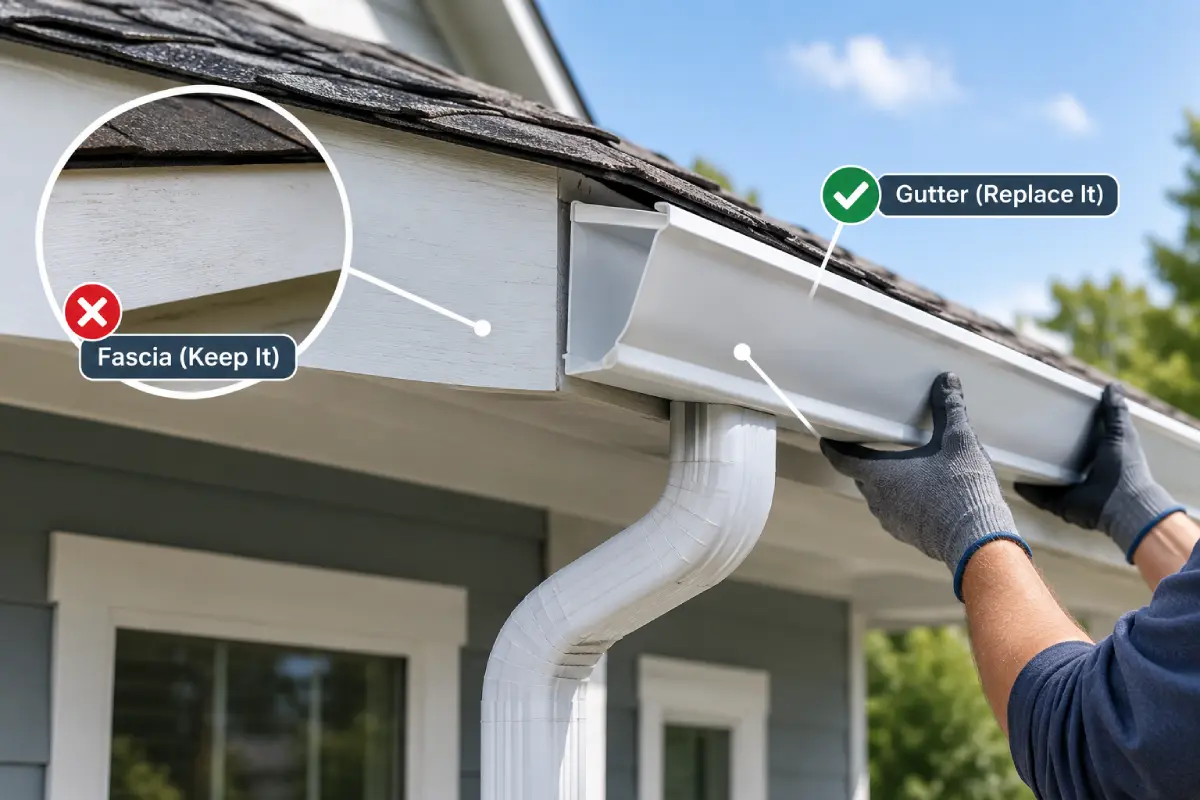
Yes, if the fascia is sound. The difficulty is that by the time gutters need replacing, the fascia behind them frequently does not qualify, because the same water that ruined the gutters has been soaking the wood they are screwed to.
The two are worth thinking about as one job even when only one of them ends up being done, because the decision is made much more cheaply while the gutters are off than afterwards.
Why the two go together
The fascia is the board along the roof edge, and it is what the gutter brackets are fixed into. It carries the weight of the gutter, the water in it, and any ice that forms in winter.
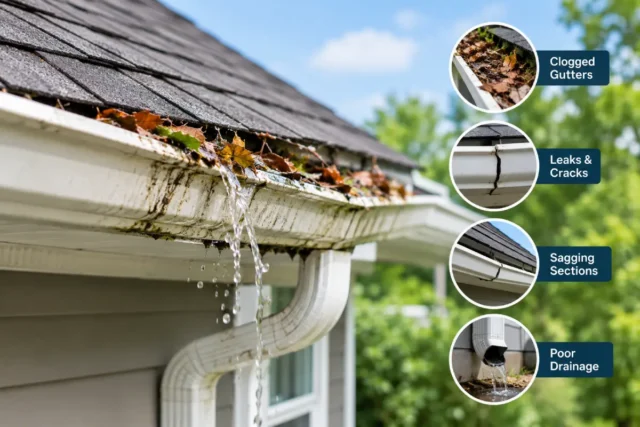
When a gutter blocks or leaks, water escapes over the back edge and runs down the fascia. Wood that stays wet rots, and rot in the fascia loosens the fasteners, so the gutter sags and drains worse, which puts more water against the board. It is a loop, and it means a long-standing gutter problem has usually been a fascia problem for some time.
The consequence is that fitting new gutters onto rotten fascia produces a new gutter that sags within a couple of years, fixed into wood that will not hold a screw.
Assessing the fascia before you decide
Most of this can be judged from the ground with binoculars, and properly when the gutter comes off.
From the ground, look for dark staining along the board, paint that is flaking or blistered, green growth, a board that has lost its straight line, or visible gaps between the fascia and the back of the gutter. Sagging or displaced soffit panels below suggest water has been getting behind for a while.
Close up, the test is whether the wood is sound where the fasteners go. Soft or spongy wood, screws that turn without biting, or visible crumbling means replacement. Surface weathering on otherwise firm wood does not.
When gutters alone is the right call
Replacing gutters on their own makes sense when the fascia is genuinely sound, when the gutters are failing for a reason unrelated to water damage, such as brittle plastic or corroded steel at the end of its life, or when you are upsizing for capacity rather than replacing a failed system.
It also makes sense on a house where the fascia was replaced relatively recently and the gutters were reused at the time, which happens more often than it should.
Ask for this before the work is priced
Ask the contractor to inspect and report on the fascia condition as part of the quote, and to price fascia replacement as a stated rate per length in case it is needed. The fascia cannot be fully assessed until the gutter is off, so the honest answer beforehand is that some of it may need replacing. A quote that states a unit rate for that eventuality is one where the cost has been agreed in advance. A quote that ignores the fascia entirely is one where that conversation happens with the gutters already down and your leverage gone.
Why doing both together is usually cheaper
The access is the expensive part. Ladders or scaffolding, setting up along the whole run, and working at height cost much the same whether one component is being replaced or two.
Doing them separately means paying for that access twice, and the second visit involves taking the new gutters off again to reach the board behind. Where the fascia is marginal, doing both at once is frequently cheaper than doing gutters now and fascia in three years.
It is also the moment when the roof edge is genuinely accessible. Drip edge can be checked or fitted, soffit ventilation can be inspected and cleared, and the bottom course of the roof covering can be looked at. Those are all awkward jobs at any other time.
Replacing gutters and fascia together: what the job involves
The order is the same on most houses:
- Remove the gutters and downspouts, which exposes the fascia for the first time.
- Cut out rotten fascia back to sound wood, including the ends of the rafters if they are soft, and replace it with primed or rot-resistant board.
- Check the drip edge and soffit while the edge is open, and clear any blocked vents.
- Refit the gutters with the right fall toward the downspouts and fasteners that reach solid wood.
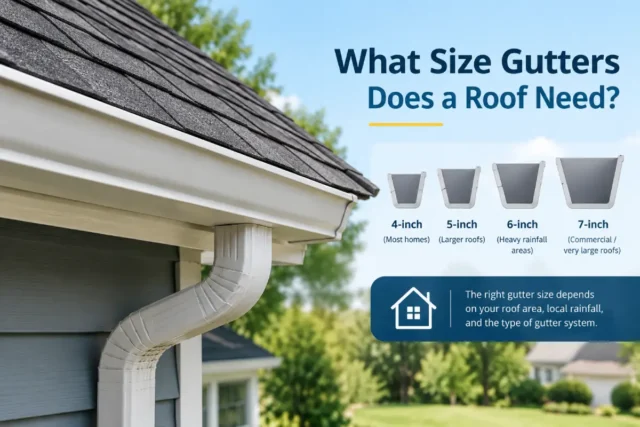
This is also the point to ask whether the gutters are big enough. The Gutter and Downspout Calculator works out the size and the number of downspouts.
The soffit question
Soffit usually gets discussed alongside fascia, and it is worth being clear about what it does beyond appearance.
Soffit vents are the intake for the whole roof ventilation system, and blocked or absent intake disables it. If the soffit is being replaced or opened up, that is the moment to confirm the intake is adequate and clear, since a roof with exhaust and no intake is not ventilated at all.
It is also worth checking for gaps that let birds and squirrels into the attic, since the fascia and soffit junction is one of the common entry points.
Can you replace soffit without removing the fascia?
Often yes, but it depends on how the soffit edge is held. Soffit panels are usually carried by a channel on the wall side and by a groove or ledge on the fascia side. Where the panels can slide out of that groove, they can be replaced from below with the fascia and gutters left in place.
Where the outer edge is tucked behind the fascia board or its trim, that edge has to be freed first, and that can mean lifting the trim or taking the gutter off. If the fascia is rotten, replace the soffit and fascia together rather than patching one against the other.
Can you replace gutters without replacing the roof?
Yes. Gutters hang from the fascia, not from the roof covering, so replacing them does not disturb the shingles. Two things are worth checking. The drip edge should finish over the back of the gutter so water runs into it rather than behind it. And if a re-roof is planned within a year or two, do the gutters afterwards or at the same time, since tear-off debris and ladders are hard on new gutters.
A note on materials
Modern fascia is commonly a plastic board, either replacing the wood or capping over it. Capping over existing wood is quicker and cheaper, and it conceals whatever condition that wood is in, which is fine over sound wood and stores up trouble over damp wood.
If capping is being proposed, ask what is being done about the wood underneath and whether it has been assessed. Sealing damp wood behind a plastic board does not stop it rotting.
More gutter and drainage guides
- What size gutters a roof needs
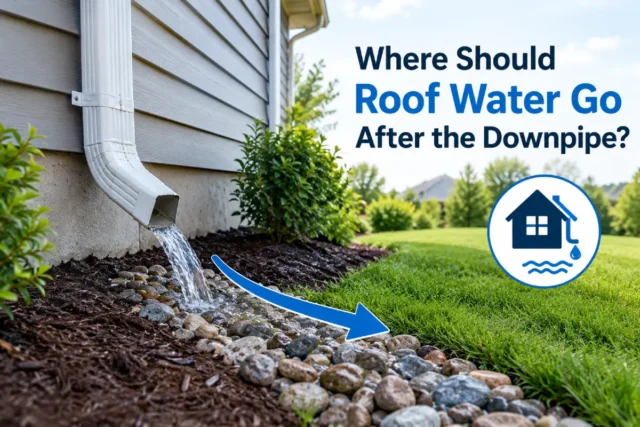
- Where roof water should go after the downspout
- How to tell if a downspout is blocked
- Do gutter guards actually work?
- Signs your gutters are failing
- How often to clean your gutters
- Why gutters overflow when clean
- How blocked gutters damage a roof
The gutter and downspout calculator, roof rainwater calculator and soffit and fascia calculator do the arithmetic.
Conclusion
You can replace gutters alone, and it is the right answer when the fascia is sound. Check that first rather than assuming, because a new gutter fixed into soft wood fails quickly and the money is wasted.
Get the fascia assessed as part of the quote with a stated rate for replacement, and if it is marginal, do both together. The access is most of the cost, and paying for it twice is the expensive way to save money.