What Should a Post-Storm Roof Inspection Cover?
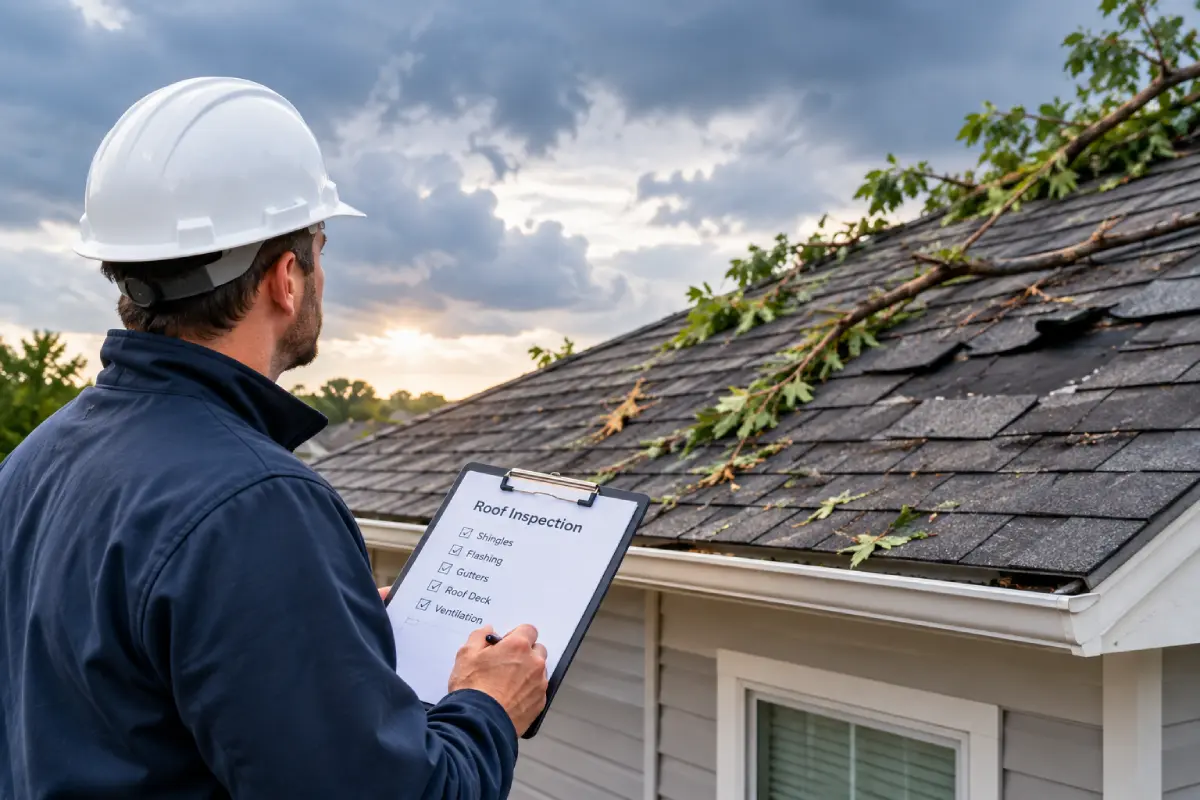
A post-storm inspection should produce a document, not an opinion. If what you receive at the end is a verbal summary and a price, you have had a sales visit rather than an inspection, and the two are easy to confuse because they look identical from the driveway.
What follows is what a proper inspection covers, so you can tell which one you are getting while it is happening.
The roof surface, slope by slope
Every slope should be assessed separately and recorded separately, because the direction of damage is itself evidence.
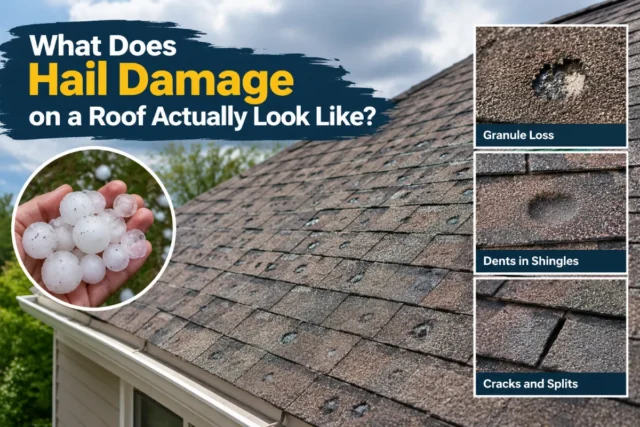
On the covering, the inspector is looking for missing units, creased shingles where wind lifted and dropped them, lifted or unsealed tabs, hail bruising confirmed by the push test rather than by eye, granule loss beyond what the age of the roof explains, and displaced ridge or hip caps.
A useful inspection distinguishes storm damage from ordinary wear rather than listing everything wrong with the roof. Those are different findings with different consequences, and merging them weakens a claim.
Flashing, penetrations and edges
This is where inspections most often go shallow, and where leaks most often start.
Flashing at chimneys, wall junctions and valleys should be checked for lifting, rippling and separation. Vent pipe collars perish and split, and wind tears them. Skylights, satellite dish and antenna mounts all penetrate the covering. Ridge vents and their end caps come loose. Drip edge and rake edges take the highest wind pressures on the roof.
Roof edges and corners deserve specific attention for the same reason: air accelerates around them, so failures start there even when the middle of the slope is untouched.
The soft metal and the ground
An inspector who does not look at your gutters, vent caps, and air conditioning unit is not documenting hail properly.
Dents in soft metal establish that hail of a damaging size fell on the property, and they photograph far more clearly than a bruise on a shingle. Debris on the ground, granule accumulation at the downspouts, and displaced material all belong in the report as well.
Inside the house and the attic
An exterior-only inspection is incomplete because the interior establishes whether the covering was actually breached.
Ceilings and the tops of exterior walls should be checked for new staining. The attic should be entered where access allows, looking for daylight through the deck, damp or stained sheathing, wet insulation, and water tracking down rafters.
A competent inspector will also form a view on whether what they are seeing is storm-related or is condensation, because a winter stain is frequently neither a leak nor storm damage.
The report itself
This is the deliverable, and it is what separates an inspection from a visit.
- Date of inspection and the date of the storm being assessed.
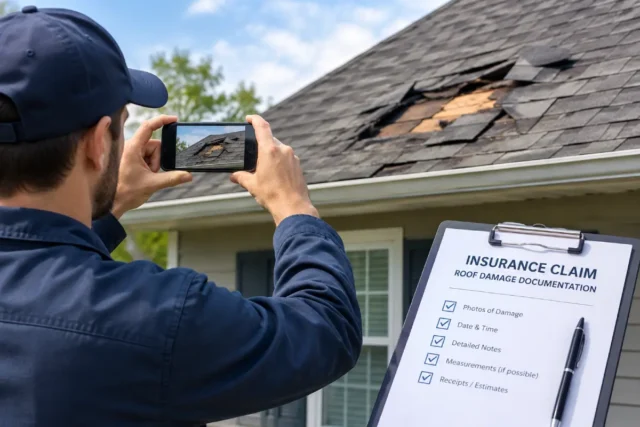
- Dated photographs, keyed to locations on the roof rather than presented loose.
- Findings by slope and by elevation.
- A clear separation of storm damage from pre-existing wear.
- A stated opinion on cause, since that is the point on which claims turn.
- Recommended scope of work, itemized.
- The inspector’s name, company, license number and insurance details.
The test that tells you which one you are getting
Ask, at the start, for a written report with dated photographs, whether or not you go on to use the company for the work. A firm carrying out a genuine inspection will agree without hesitation, and may charge for it, which is reasonable. A firm that is really there to sell a roof will find reasons not to put findings in writing, or will produce a quote instead of a report. That single request separates the two reliably, and it costs nothing to make.
Who should do it
Ideally somebody you approached rather than somebody who approached you, and ideally somebody with no stake in the outcome.
Independent inspectors and building surveyors carry out inspections without also bidding for the work, which removes the obvious conflict. A roofing contractor’s inspection is generally free and generally competent, and it comes with an interest in finding work. Neither is disqualifying; knowing which you have is the point.
Verify credentials before anybody goes up, exactly as you would for the work itself. Checking licensing and insurance matters as much for an inspection, because somebody uninsured on your roof is your problem if they fall.
Timing
Soon, but not on the day. The roof needs to be dry enough to walk safely, and evidence on the ground should be photographed before anybody clears it.
Book within days rather than weeks, both because insurers have notification windows and because further weather degrades the evidence. If you are claiming, arrange for your own roofer to attend the adjuster inspection, since the scope produced there becomes the basis of the settlement.
Conclusion
A real inspection covers every slope separately, examines flashing and penetrations rather than just the field of the roof, looks at the soft metal, goes inside and into the attic, and produces a dated written report with photographs and a stated view on cause.
Ask for that report up front. Everything else about the visit follows from whether the answer is yes.