How Do You Document Roof Damage for an Insurance Claim?
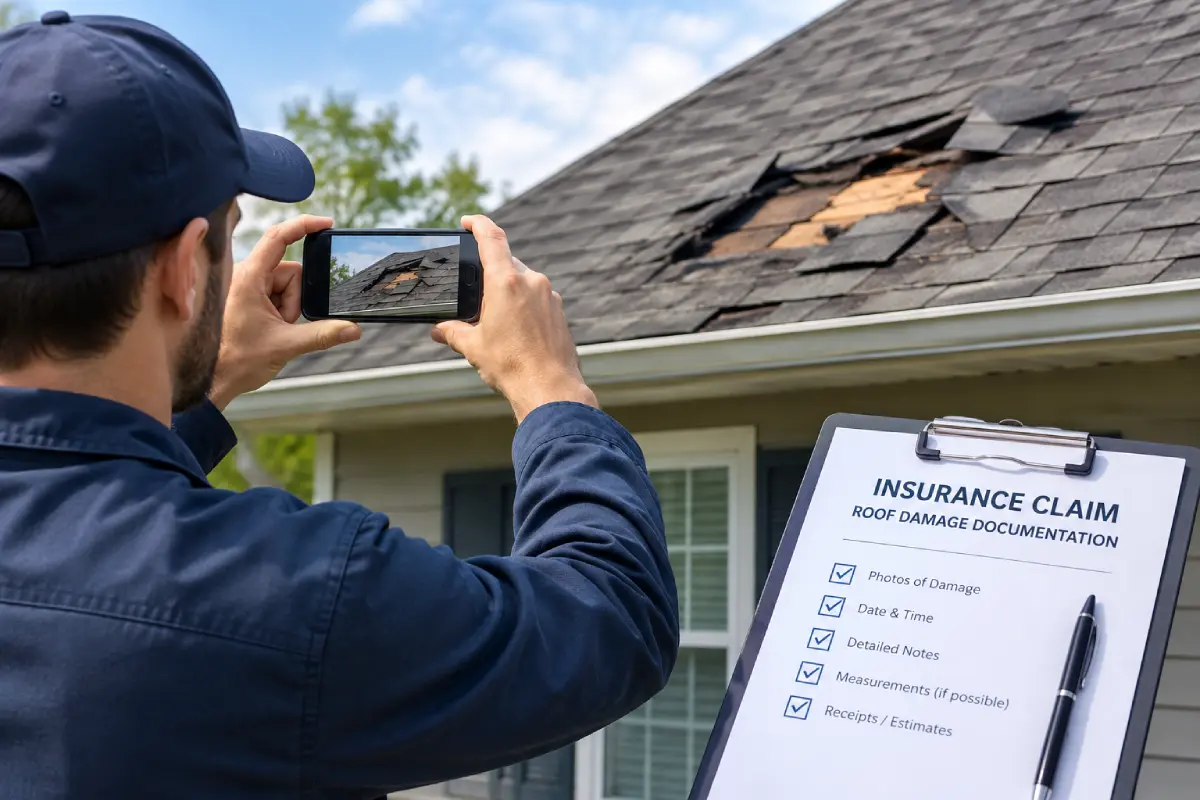
A roof claim is decided on evidence, and the person best placed to gather it is you, in the first day or two, before anything is tidied away. Adjusters see the roof once, weeks later, after weather and clearing up have removed a good deal of what was there.
The aim is not to build a case against your insurer. It is to make sure the damage that exists is recorded, because damage that is not documented at the start is very difficult to add later.
Establish the event first
Insurers cover sudden damage from an identifiable incident, so the first thing to evidence is the incident itself.
Note the date and, if you can, the time. Save any weather warning, local news report or official record for your area. Screenshot it rather than bookmarking it, since pages disappear. If neighbors had damage, that corroborates the event, and photographs of a neighbor’s dented gutters are worth having in the file.
This matters because the most common dispute is not whether damage exists but whether the storm caused it or the years did.
Photograph in layers
A folder of close-ups without context is weak evidence. Work outwards to inwards.
Start with wide shots of every elevation of the house, showing the whole roof in relation to the building. Then medium shots of each affected slope. Then close shots of specific damage. Anybody reviewing the file needs to be able to place each close-up on the building, and a sequence does that where a single image does not.
Photograph the undamaged elevations too. Showing that damage is concentrated on the slopes that faced the storm supports the claim that wind or hail caused it.
The ground, before you clear it
This is the evidence most commonly lost, because tidying up is the natural response.
Photograph shingle fragments, whole tabs, ridge cap pieces, torn underlayment, and any metal on the lawn where they lie. Photograph granule deposits at the base of downspouts. Then keep a sample of the debris rather than binning it.
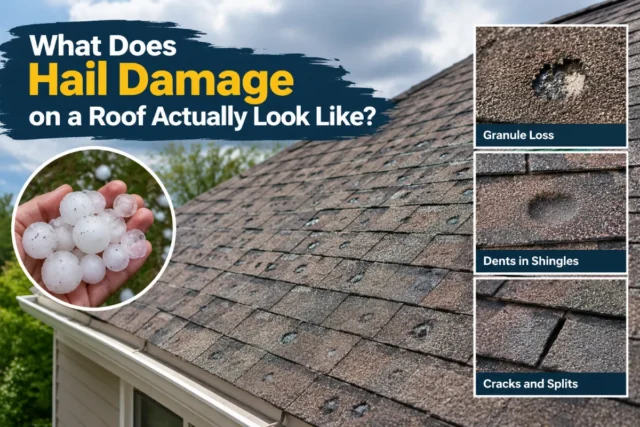
Dented soft metal is the corroboration that matters most for hail: gutters and downspouts, vent caps, air conditioning fins, garage doors, mailboxes and window trim. Those dents are at eye level, easy to photograph clearly, and they establish that hail of a damaging size actually fell on your property.
Inside and in the attic
Interior damage evidences that the covering was breached, which is a different point from the roof being marked.
Photograph ceiling and wall staining with a date, and photograph it again as it develops rather than once at the end. A stain that grows across three dated photographs is far more persuasive than a single image.
In the attic, look for daylight through the deck, wet timber, a dark track down a rafter, and damp insulation. Photograph damaged contents individually, and list them with approximate values and dates of purchase.
The photograph that is worth the most
The one you take before anything happens. Photograph your roof, gutters and elevations on a clear day once a year, and keep the files with their dates intact. When a claim is disputed on the basis that the damage looks like age rather than weather, a dated image of the same roof in good condition six months earlier settles the argument in a way nothing else does. It costs ten minutes and it is the single most useful thing in this article.
The paperwork half of the file
Photographs are only part of it, and the written record is what supports the sums.
Keep receipts for every temporary repair, for materials, for a dehumidifier, and for accommodation if the house became uninhabitable. Keep a written log of every conversation with the insurer: date, time, the name of the person, and what was said. Confirm anything important by email so there is a record.
Keep whatever you have about the roof itself: age, original invoice, permit and inspection sign-off, material specification and warranty. A roof documented as eight years old and professionally installed is treated very differently from a roof of unknown age.
At the adjuster inspection
You are generally entitled to have your own contractor present, and it is usually worth arranging, because the scope of work produced at that visit becomes the basis of the settlement.
Have your file ready and offer it. Walk through what you found and where. Ask for the adjuster’s scope in writing afterwards and read it against your own evidence, checking specifically for items omitted rather than only for numbers.
Wind damage is the category most often under-recorded, because creased and unsealed shingles are still on the roof and are missed by an inspection done quickly. That is exactly what your own roofer is there to point out.
Conclusion
Photograph in layers, capture the ground before you clear it, photograph the soft metal, document the interior over several days, and keep every receipt and every conversation.
Then do the one thing that makes all of it easier next time: photograph the roof while it is undamaged, and date the file. Most rejected claims turn on whether the damage was sudden or gradual, and that is the only evidence that answers the question directly. The other grounds insurers rely on are set out in why storm damage claims get rejected.