Why Do Insurers Reject Roof Storm Damage Claims?
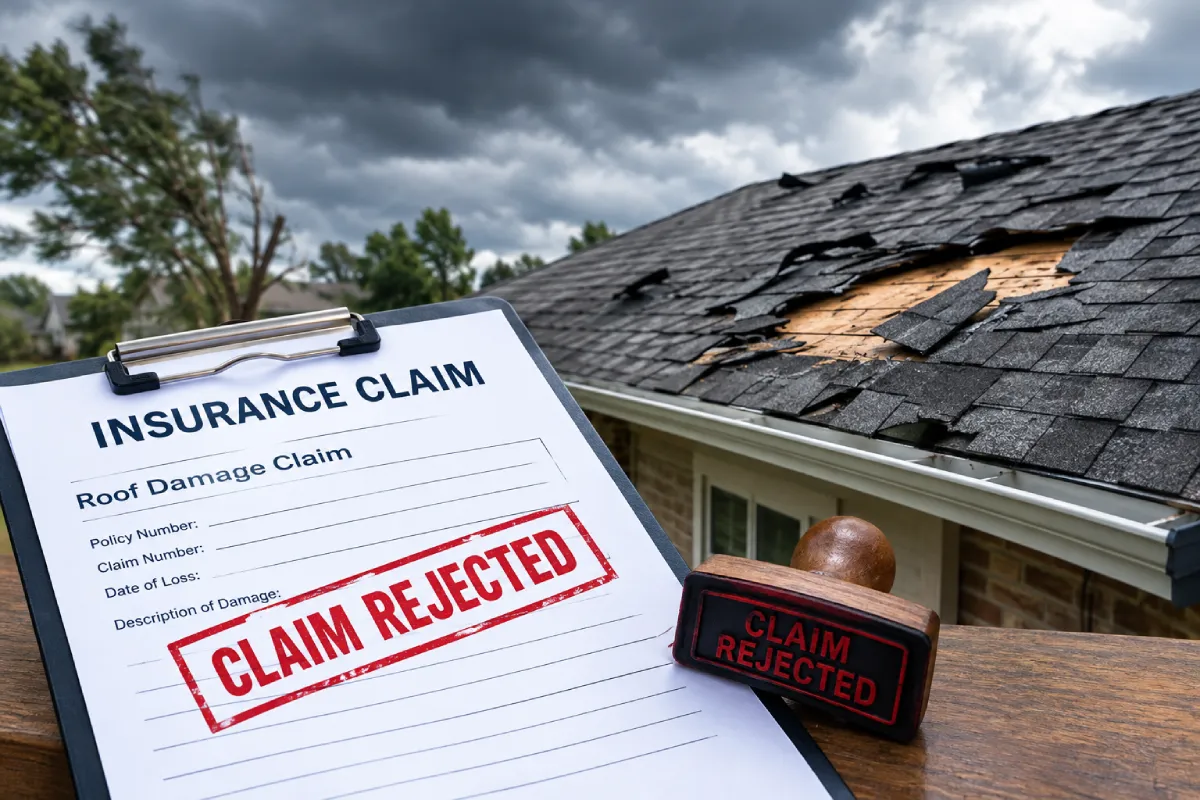
Most rejections come down to one argument: the insurer says the damage is age rather than weather. Everything else is a variation on that theme, or a procedural failure that gave them an easier reason.
Knowing the grounds in advance is useful, because almost all of them are affected by what you do in the first week, and several are decided before the storm arrives.
Wear and tear, which is the main one
Policies cover sudden accidental damage from a covered peril. They exclude deterioration. A roof at the end of its life is not an insured loss, however genuinely it needs replacing.
The difficulty is the middle ground: an older roof that a storm has finished off. The insurer will argue the material was already failing, and the wind merely revealed it, and that argument is often reasonable. What defeats it is evidence that the roof was sound beforehand, which in practice means dated photographs and maintenance records.
This is also why blistering is worth identifying correctly before you file. It is generally treated as wear, defect, or a ventilation problem, and presenting it as hail damages your credibility on the rest of the claim.
Neglected maintenance
Separate from age, it gets used more than people expect.
An insurer may argue that blocked gutters, moss left to establish, missing shingles never replaced, or a known leak left unrepaired contributed to the loss. Failure to maintain is a standard exclusion, and roofs carry visible evidence of neglect that other parts of a house do not.
The defence is a record: dated photographs, invoices for cleaning and repairs, inspection reports. Keeping receipts for gutter clearing sounds excessive until a claim turns on it.
Cosmetic damage exclusions
A growing number of policies exclude damage that marks a roof without affecting how it sheds water. Hail that dents metal or bruises granules without cracking the mat can fall into this category.
Where such an endorsement exists, the argument is not about whether hail fell. It is about whether the damage is functional. That is a technical question, and it is one where an independent roofing report carries weight.
Not enough damage to meet the threshold
Adjusters generally count qualifying impacts within a defined area of the roof. Below the threshold, the outcome is a repair or nothing, even though damage genuinely exists.
This surprises homeowners who have been told by a contractor that they have a full replacement coming. It is worth knowing that a contractor’s assessment and an adjuster’s threshold are different measures, and the second one decides the payment.
The procedural failures
These are the avoidable ones, and they account for a substantial share of refusals.
- Late notification. Policies specify a period for reporting, and it can be short. Missing it is a clear ground for refusal regardless of the merits.
- Failure to mitigate. Most policies require reasonable steps to prevent further damage. Leaving a roof open to the next storm can reduce or void the additional loss.
- Repairs before inspection. Permanent repairs carried out before the adjuster attends destroy the evidence. Temporary protective work is expected; a completed reroof is not.
- Damaged material discarded. Binning the shingle fragments removes the proof.
- Inconsistent accounts. A claim describing a different date or cause from the original notification invites scrutiny.
The two that end a claim entirely
Do not let anybody encourage you to describe pre-existing damage as storm damage, or to include work on undamaged slopes to make a claim worth doing. That is fraud; it is the homeowner who signs the claim, and the consequences run past a refusal to policy cancellation and prosecution. The same applies to any contractor offering to waive, cover, or absorb your deductible, which misrepresents the loss to the insurer and is illegal in many jurisdictions.
Terms that limit the payout rather than refuse it
Some outcomes feel like a rejection and are actually the policy working as written.
An actual cash value settlement pays the depreciated value rather than replacement cost, and on an older roof that can be a small figure. Insurers also commonly move older roofs onto that basis at renewal while the rest of the policy stays on replacement cost. A percentage wind or hail deductible can exceed the value of a modest claim entirely. Which basis applies is set out in your policy schedule, and it is worth reading before a storm rather than after.
If the claim is declined
A refusal is a position rather than a verdict, and the first step is to get the reason in writing with the specific policy wording relied on.
Then get an independent roofing report or a survey addressing that specific ground. Most insurers have an internal appeals process, and beyond that, an ombudsman, regulator, or public adjuster route depending on where you are. A licensed public adjuster works for you rather than the insurer, for a percentage, and is worth considering on larger claims.
Appeal on evidence rather than on argument. A report that addresses the stated ground directly moves a claim; a letter expressing dissatisfaction does not.
Conclusion
Claims fail mostly because the damage looks like age, because maintenance was neglected, or because a deadline was missed. All three are affected by what you do before anything happens.
Photograph the roof annually while it is undamaged, keep receipts for maintenance, read how your policy settles a roof claim, and notify promptly. That is unglamorous preparation, and it is what separates a claim that pays from one that becomes an argument.